

What will it take for AEM, Cordlife to rebound?
Investors wading in now are taking a gamble, as the implications of the problems uncovered at the two companies are probably still unclear

BUYING good stocks during troubled times can lead to spectacular gains. Some of the biggest returns I have ever earned came from shares of solid companies purchased in the wake of financial crises and recessions.
Buying troubled stocks is another matter, even during the best of times. When a company is suddenly beset with difficulties out of the blue, it is often difficult to figure out how quickly they will be resolved and the extent to which the long-term value of its shares will be affected.
There is never a shortage of buyers at the right price, of course – markets are price discovery machines.
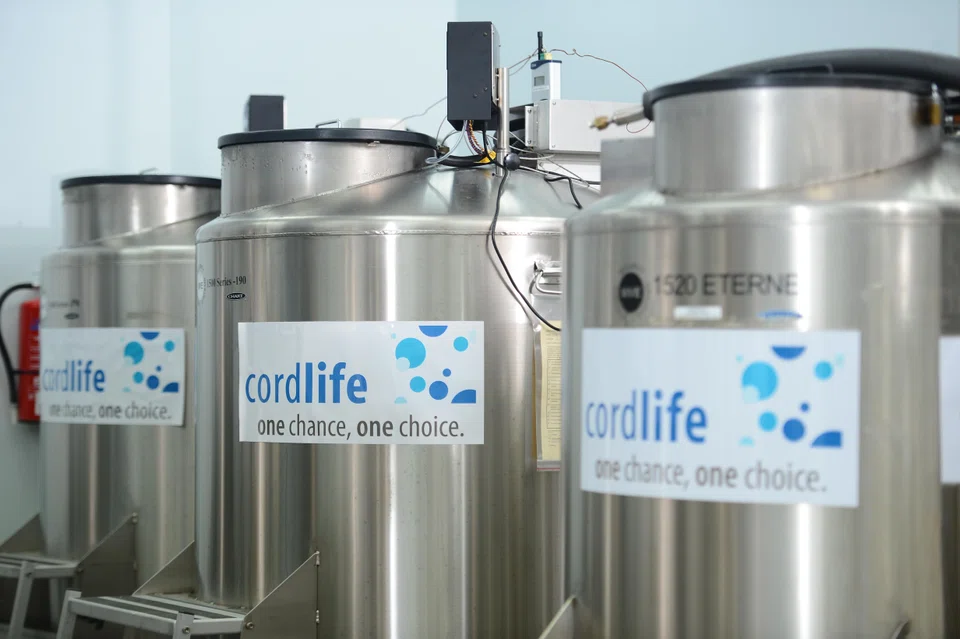
Take Cordlife Group, for example. On Nov 30, the company announced it had been handed a six-month suspension by the Ministry of Health (MOH) from collecting any new cord blood and human tissues after seven of its cryogenic storage tanks were found to have been exposed to temperatures outside of the normal range since November 2020.
The market value of its shares ended the following day 31.9 per cent lower. More than 1.26 million shares changed hands – equivalent to 17.2 times the total traded volume of its shares during the preceding five market days.
Then there was AEM Holdings. On Jan 14, the company said an internal stock-taking exercise had uncovered a shortfall in its inventories of between 5 per cent and 7 per cent.
The market value of AEM’s shares dived 8.8 per cent the following day. Nearly 11 million shares were traded – equivalent to 4.2 times the total number of shares that changed hands during the preceding five market days.
Investors who piled into AEM and Cordlife immediately after their troubles came to light were taking a gamble, in my view.
The full extent of the problems at these two companies is probably unknown at this point, and the manner in which their boards will deal with the fallout is unclear.
Only last week, Cordlife said further lapses in its processes had been unearthed by MOH.
Meanwhile, AEM was pressed by the Securities Investors Association (Singapore) for more information about its inventory shortfall, and the impact that will have on the company’s operations and financial statements, among other things.
In the weeks ahead, the boards of Cordlife and AEM may also have to make some tough decisions to prevent a recurrence of their problems and protect the value of their shares.
Tellingly, neither Cordlife nor AEM have rebounded from their initial sell-offs. If anything, they have slipped lower.
Last Friday (Jan 26), Cordlife closed at S$0.305. This was nearly 33 per cent below its last closing price before the announcement of the process lapses, and 1.6 per cent below its closing price the following day.
AEM closed on Friday at S$2.80. This was 17.6 per cent below its closing price before the inventory shortfall was revealed, and 9.7 per cent below its closing price the day after.
Investor confidence dented
Based on AEM’s disclosures so far, it seems unlikely the shortfall in inventories will upend the company financially.
AEM said in its initial announcement that the shortfall was the result of human error, and that it occurred during the migration of production to its Penang facility from Singapore.
In a further announcement on Jan 22, AEM said it had found no evidence of fraud, illegal activity or physical loss of inventory.
The company also said its inventory value and profit before tax in Q4 2023 will be adjusted down by between S$18 million and S$25 million.
While this will have a big negative impact on AEM’s reported earnings for 2023, it seems unlikely to me that the long-term value of the company will be significantly impaired.
Yet, the slump in AEM’s shares since the inventory shortfall was uncovered has reduced its market capitalisation by S$185.3 million – from more than S$1.05 billion to S$864.9 million.
One explanation for the seemingly outsized market reaction is that investor confidence has been dented at a moment of uncertainty for the company.
For the nine months to Sep 30, 2023, AEM reported a 96.9 per cent decline in net profit to S$3.5 million. Revenue fell 48.2 per cent to S$387 million.
The company attributed the decline in revenue to sluggishness in the semiconductor industry, and delays in capital expenditure by its customers. Profitability in Q3 2023 was also affected by a confidential arbitration settlement of US$20 million.
AEM said the semiconductor industry appears to be passing the trough of the cycle now, and it sees the growth of generative artificial intelligence providing it with a secular tailwind.
After the inventory shortfall episode, however, many investors might be waiting for clearer signs of a turnaround before taking advantage of the recent sell-off.
AEM’s board could hasten a return of investor confidence with a review of its internal controls, and clearly communicated assurance that the problem will not recur. The board should perhaps also ensure that it properly enforces accountability for the mistakes that have been made.
Weigh strategic options
The situation at Cordlife is far more serious, in my view.
The company has said it will work hard to regain the trust of MOH and the public in its internal protocols, processes and standards of clinical governance. Yet, it should perhaps also begin considering what it will do to preserve shareholder value in the event that trust is not regained.
Besides the so-called “temperature excursions” in some of its storage tanks, Cordlife’s temperature monitoring system was found to be faulty; six-monthly preventative maintenance was found to have not been carried out on two tanks in 2022; and a new cord blood processing method was implemented in August 2023 without being properly validated.
Most galling of all, the internal shortcomings at Cordlife were not immediately disclosed.
On Dec 10, 2023, Cordlife said in response to queries from the Singapore Exchange that certain members of its management team were aware that one of its storage tanks had been exposed to irregular temperatures for several days in June 2022. Yet, this incident was only reported to the board in February 2023.
The board then took the view that the incident would have no material impact on its financial performance for 2022 or 2023 – as Cordlife had sufficient provisions to cope with any fee refunds and waivers that it might have to offer to its customers as a result of the incident.
It is also worth mentioning that Cordlife announced on Oct 27, 2023 that its chief executive Tan Poh Lan is “retiring to pursue her personal interests”. The company said her last day will be Mar 31, and that the board is looking for a replacement.
The way I see it, Cordlife should not assume that it will be able to conduct its business as usual after this fiasco.
Even if the ban that the company faces on collecting new cord blood and human tissue is eventually lifted by MOH, it is not clear that customers will return.
Can Cordlife rethink its business model to keep it financially viable? Can its business operations be sold to another corporate group at a reasonable price? Could a merger with a large healthcare group make sense for its shareholders?
While Cordlife is in good financial shape at the moment, it should begin weighing its strategic options before too much value is lost.
TRENDING NOW

Philippine power giant First Gen rebuffs foreign offers, plans up to US$2.6 billion in expansion

Cliff Tan has 7 million followers and a 4-month waitlist. Why won’t he expand his business?

Could stablecoins be the future of money?
From finance aspirant to Asean CEO: TUV SUD’s Jonas Strahberger on finding people who believe in you

