

When the gates close – designing the resilient city
Each crisis – including the current conflict in the Middle East – has shown how global supply chains buckle. Will Singapore rethink its urban planning and design?
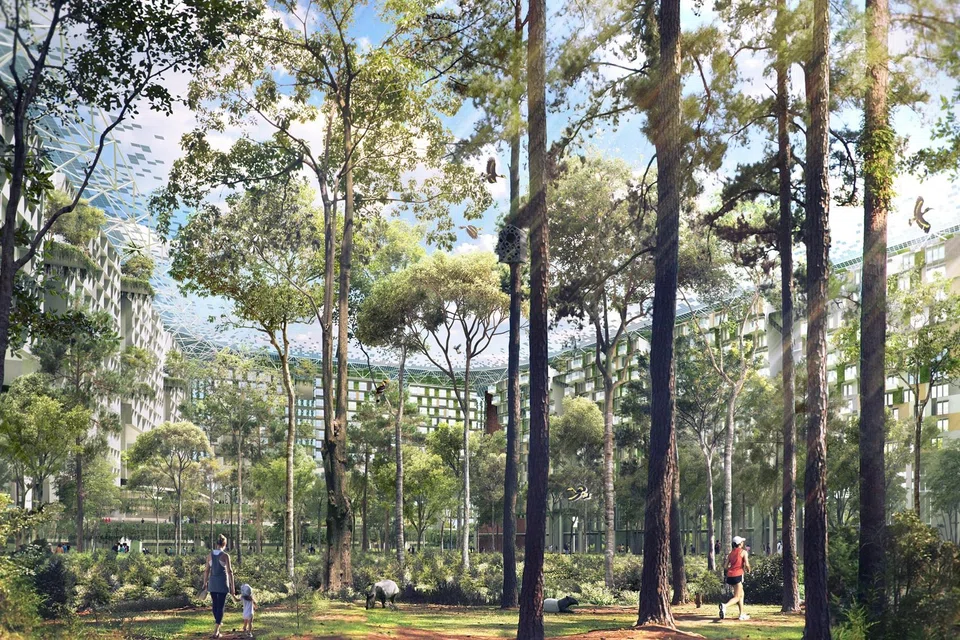
FOR decades, cities have operated on a simple premise: What they need will arrive.
Food arrives. Energy arrives. Water arrives.
It was not always so. Ancient cities were planned with siege in mind. Gates could be sealed. Granaries and wells were built within the walls. Food was grown nearby, but there were gardens, orchards and sometimes livestock within.
Resilience was not an environmental add-on – it was a matter of survival.
Somewhere in the post-war expansion of global trade, the modern city became a consumer endpoint – a machine for importing comfort and exporting inconvenience. Production was pushed outward – first to the fringes, then to industrial zones, and eventually offshore.
Today, the Middle East crisis that dominates headlines is also, implicitly, a test of the resilience of cities.
The crisis and its lessons
The effective closure of the Strait of Hormuz following strikes on Iran has removed more than a quarter of the world’s seaborne oil trade and a fifth of global liquefied natural gas supply from the market at a stroke. Brent crude surged past US$150 a barrel at its peak.
The energy shock is not the full picture. There is also the question of food.
Almost half the world’s traded urea – the nitrogen fertiliser that underpins rice, wheat and corn – transits the Gulf. Urea prices jumped 32 per cent in a week at US import hubs.
India, which sources more than 40 per cent of its urea from the region, is dealing with tightening domestic supply. Brazil – the world’s largest fertiliser importer – faces planting-season shortfalls.
This is not the first such warning. The Russia-Ukraine war in 2022 sent fertiliser prices to record highs. The Covid-19 pandemic revealed how quickly global supply chains buckle.
Each time, the lesson was absorbed and set aside when prices ease and ships start moving again.
“The resilient city may not fully retreat from global trade. But it will take responsibility for a larger share of what it consumes.”
A different way of building cities
There is now a case for reinstating the production of food, energy and water closer to where people live.
When sourcing is pushed to the periphery, cities become structurally dependent on systems they do not control. A shock anywhere in those supply chains – a drought, a distant political decision, a closed shipping lane – transmits directly into urban life. There is no buffer.
At the country scale, the divergence is already visible.
Spain generates more than 56 per cent of its electricity from renewables – large-scale wind and solar farms within its borders.
By contrast, Japan sources 94 to 95 per cent of its crude from the Middle East; South Korea routes around 70 per cent of its imports through Hormuz; the Philippines, which imports 98 per cent of its crude from the Gulf, has declared a national energy emergency.
The gap between Spain and the others comes down to choices made, or not made, over decades.
But countries and cities operate at different scales. Spain’s renewables are spread across its interior – wind farms in Castile, solar fields in Andalusia.
Unlike Barcelona or Madrid, Singapore has no hinterland to draw on. What cannot be produced within its metropolitan boundaries cannot be produced at all. National resilience and urban output become a single challenge.
Here is where local sourcing matters. The technologies for this to happen – say, building-integrated food systems, neighbourhood-scale energy microgrids, decentralised water harvesting – are not new.
What is missing is institutional permission: recognition in planning law, financing structures and land-use policy that production is a legitimate urban function.
Singapore – from the water story to what comes next
Singapore has proof that this can be done. The decision to treat water security as a matter of national importance changed not just how water is managed, but how the city is imagined.
Rivers were dammed to create reservoirs. About two-thirds of Singapore’s land area is designated catchment. NEWater shifted from experiment to essential supply. Floating solar panels on the reservoirs integrate water and energy infrastructure within a single space.
Bishan-Ang Mo Kio Park illustrates the principle of integration best – a concrete canal converted into a naturalised river that not only manages water but also creates room for biodiversity and serves as public space.
Since the park opened, biodiversity rose by 30 per cent, the number of visitors effectively doubled to six million a year.
On energy and food, good intentions are visible across Singapore, but the ambition does not yet rise to meet risk.
Solar panels on Housing & Development Board (HDB) flat rooftops, factory roofs and reservoirs account for around 2.5 per cent of the electricity mix.
Singapore has raised its solar target to 3 gigawatt-peak by 2030 – enough to power roughly half a million households – by pushing solar panels across more surfaces: rooftops, carparks, reservoirs, industrial roofs.
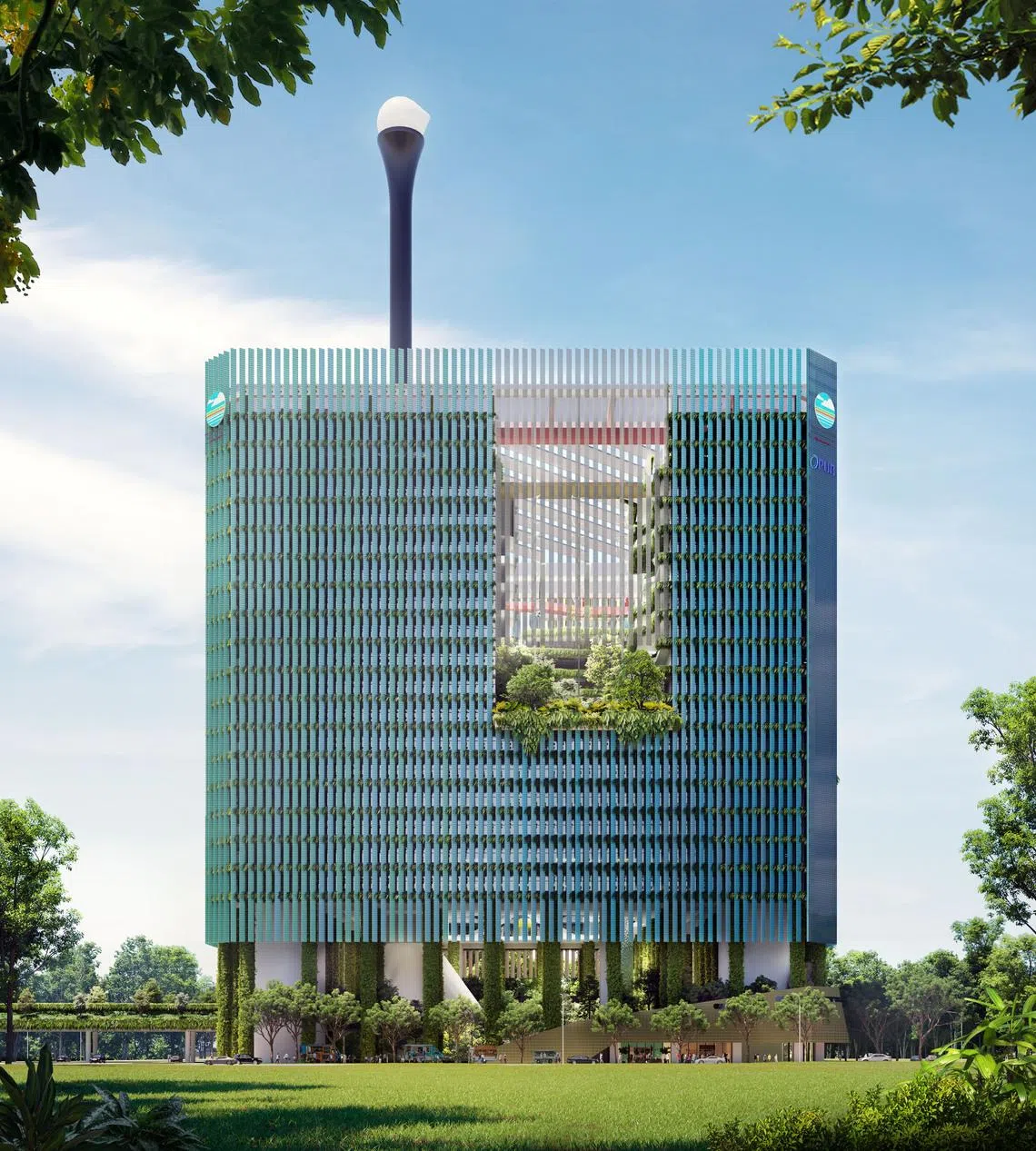
The Energy Market Authority’s own analysis suggests domestic solar can contribute at most around 10 per cent of national electricity needs by mid-century. The city does not have room to do more.
The story of food is also constrained, but for different reasons.
Singapore’s 390-hectare Lim Chu Kang agri food cluster, when fully redeveloped, would have more than tripled current production. But in November 2025, Singapore replaced its 30 by 30 food target with revised 2035 goals, citing the commercial difficulty of local farming. This was three months before Hormuz closed.
What if the city were designed to produce?
Singapore’s water story has taught us that we must invest in strategic integration, not rationalise isolated additions.
Could this logic extend to energy and food?
What if all new or retrofitted buildings were expected to generate a share of their own energy?
Flat low-rise structures – MRT maintenance depots, university campuses, Tuas Megaport – could double as solar farms. Larger precincts managed by HDB and JTC are well-placed to pilot production at district scale.
Another possibility is that reserve land – say, reclaimed parcels near Changi Airport or Marina South – were offered on short-term low-cost leases for urban farming.
Community farms could offset consumer demand in modest ways. Some farming could also move underground, consistent with Singapore’s push into subterranean real estate.
Adding to the water story, what if every building captured and recycled rainwater on-site, with larger developments sharing treatment facilities for non-potable uses?
Much of the rain that falls on the island moves through drains and reservoirs, where significant volumes are lost to evaporation. Bringing collection and processing closer to consumption would be a more efficient use of what we have.
And why not bring private developers into the picture? In other cities, they are rewarded – through density bonuses and planning concessions – for being productive in ways that benefit the city at large.
Added up, these gains could both improve resource resilience and quality of life – in the same way that Bishan-Ang Mo Kio Park changed how Singaporeans experience waterways.
The lesson that keeps arriving
The Strait of Hormuz will reopen. Prices will ease. This crisis will pass. Each time this happens, the global system resets just enough for the underlying dependency to remain intact.
It is time to rethink the consumer city that is organised around imports, supply chains and outsourced production.
The resilient city may not fully retreat from global trade. But it will take responsibility for a larger share of what it consumes – making production visible, and giving it legitimacy and urgency in design and planning so that it is ready for the next time the gates close.
The writers are collaborators in research and teaching at the department of architecture, National University of Singapore. Wong Mun Summ is also co-founding director of design firm WOHA.
TRENDING NOW

Britain’s mansion tax shows the difficulty of targeting wealth

Once staunchly pro-China, Malaysian Chinese businesses are now distancing themselves from Beijing

The only common thing in S-E Asia is that we all eat rice: Cisco’s Asean president
Singapore data centre operator DayOne opts for US IPO at likely US$20 billion valuation

