

When private-hire vehicles operate like taxis, they should not bid for passenger car COEs

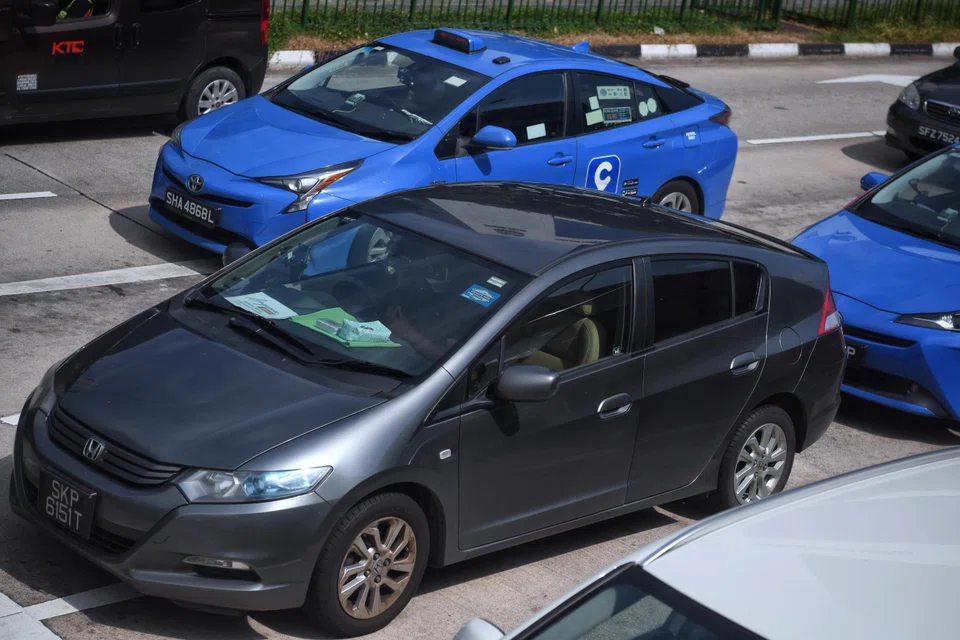
PRIVATE-hire vehicles (PHVs) have eclipsed taxis as Singapore’s leading type of point-to-point commercial transport. It is time their owners are excluded from the bidding pool for Certificates of Entitlement (COEs).
When they first arrived in Singapore, PHV platforms were a way for vehicle owners to generate income on the side – a real estate agent offering a ride between viewings, a musician with an afternoon to kill before a night-time gig, a salesperson with a slow day.
Most Singapore residents still relied on taxis for point-to-point coverage, as there were not enough PHV drivers to fulfil everyone’s needs.
These days, however, PHV drivers are much more likely to be doing so for a living. More than a decade since the debut of ride-hailing here, the industry has evolved to a point at which chauffeured PHVs and taxis are more alike than dissimilar.
PHVs also dominate the point-to-point market.There were 79,921 such PHVs registered as at November, up from just 16,396 in 2013.
The figure includes chauffeured cars on ride-hailing platforms, as well as self-driven cars on sharing platforms such as GetGo or BlueSG.
Meanwhile, the taxi population has fallen to 13,662 – around half of the 2013 figure.
Despite this dominance, PHVs are still treated much like regular passenger cars in that their owners are required to bid in the open market for a COE from either Category A, B or E.
In contrast, taxi companies do not bid for COEs. Taxis are instead registered with Category E COEs priced at the prevailing quota premium of the Category A three-month average.
The number of COEs available to the taxi operators is determined by demand, but capped at an annual growth rate of 2 per cent.
Birds of a feather
This differentiated approach to PHVs and taxis made sense in the past. Taxis used to have a minimum daily mileage requirement, for instance.
This was scrapped in 2016, and both PHV and taxi drivers are free to choose their working hours.
Requirements for taxi drivers also used to be more stringent. Today, both types of drivers are required to have a vocational licence, with the same basic eligibility requirements – being at least 30 years old and Singaporean, and having a valid driving licence.
There are still some regulatory differences that would appear to favour taxi drivers. For instance, a taxi driver can drive a PHV but not vice versa.
Also, a taxi can take street hails but a PHV cannot; and a regular passenger car can be converted to a PHV, but not into a taxi.
These are minor, though, and make little practical difference. Some might argue that a PHV doubles up as a personal vehicle, and should therefore be treated as one. Yet, taxi drivers have long used their taxis as personal vehicles too.
A major attraction of PHVs to taxi drivers – and one reason why some have switched over – is that the PHV looks very much like a personal vehicle, having only to bear a small sticker.
As more taxi drivers switch over to PHV platforms, the business models of the two segments are converging.
Almost all taxis are rented from cab companies by their drivers. The PHV market used to be made up mostly of individuals who owned their own cars, but that is changing.
There is no authoritative data on how many PHVs are privately owned, but a senior manager at a major car rental company estimates around 60 per cent of PHVs are leased from car rental companies.
Even the taxi companies – including SMRT and ComfortDelGro – offer PHV rentals.
History repeated
A new COE category for PHVs, or removing them from bidding for passenger car COEs at the very least, seems a natural evolution of the market, especially when considered against a historical backdrop.
In 2012, the Land Transport Authority removed taxis from the COE bidding process. Before the change, taxi operators had to bid for COEs in Category A.
Then-transport minister Lui Tuck Yew acknowledged taxis had been taking up a larger proportion of COEs, with some evidence this was affecting premiums. COE prices in 2012 ranged from S$50,000 to S$80,000 for Category A – a level that was seen at the time as prohibitively high for individuals.
COE prices have hit similarly prohibitive levels over the past year. They have come down slightly of late, but are probably artificially inflated by commercial elements.
Rental companies tout PHVs as a route to car ownership. Renting – with the option to own the vehicle after an extended leasing contract – offers a loophole to get around car loan limitations that require a 30 to 40 per cent downpayment.
A separate COE category for PHVs would properly recognise their status as cars with a commercial purpose.
The government has countered that PHV demand is unlikely to be the main driver of COE prices. Yet, removing this source of demand – even if it is not the main source – would still relieve some pressure on the passenger car COE market.
The idea of using a privately owned car to offer transport services is almost 100 years old. Privately owned taxis, known as yellow tops, were introduced to Singapore in 1933.
Since the 1970s, however, the government has issued taxi licences only to entities. From around 3,800 in the 1960s, the number of yellow tops has dwindled to 25 as at November.
In time, the privately owned PHV may be just as rare. We shouldn’t have to wait till that happens to adjust the COE system and account for the market’s evolution.






