When putsch comes to shove, stay reasonable
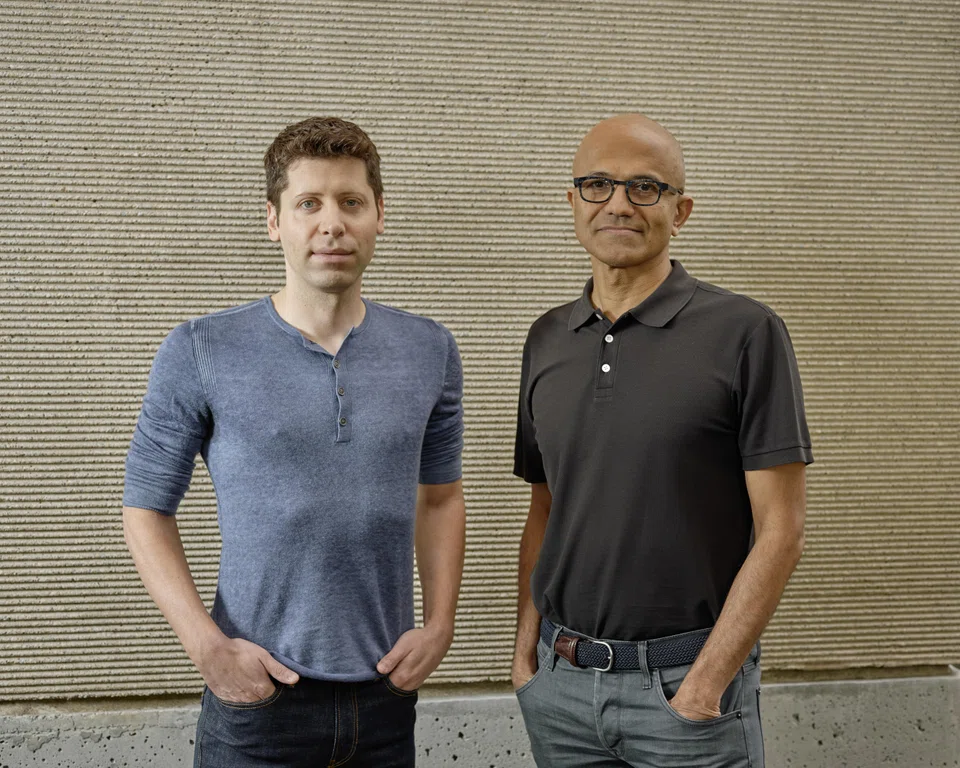
JUST when Sam Altman thought he was out, they pulled him back in. After a week of nail-biting intrigue that would have captivated author Mario Puzo, Altman is back at the helm of OpenAI, and all of Silicon Valley knows now who is truly boss or, rather, the Don.
Forget for a moment artificial intelligence (AI), and consider the significant mismatch of human intelligence that unfolded last week. Against the Godfather-esque manoeuvrings of Microsoft’s Satya Nadella, the OpenAI board members that had pushed Altman out never stood a chance.
Instead of responding with furious bluster, Nadella took several pages from Don Vito Corleone’s book. When negotiating, “Never get angry. Never make a threat. Reason with people,” Don Corleone had said in Puzo’s The Godfather.
And so, no one sounded more reasonable than Nadella last week as he deftly turned the tables on OpenAI’s then board.
“We love their mission. We even love their independence. We have no issues with any of it,” he told tech journalist Kara Swisher last week. Like the Don, Nadella remained eminently reasonable even as Microsoft’s investment in OpenAI had been placed in public jeopardy by Altman’s firing.
Sure, Microsoft remained “deeply committed” to OpenAI and, of course, it would “be supportive” of the whole team, Nadella said serenely.
How then, to reason with people instead of threatening them? Here too, Nadella’s hypothetical copy of The Godfather would’ve contained this highlighted paragraph: “Nothing was more calming, more conducive to pure reason, than the atmosphere of money.” And so, Microsoft made OpenAI’s team an offer they couldn’t refuse by promising to match their pay if they joined the tech behemoth’s atmosphere of money.
Without Altman and his people, OpenAI would have ceased to be OpenAI as we’d known it, resembling instead a horse whose head has been separated from its body – only with far less influence.
Mercifully, Nadella did not need to decapitate a horse to make his point. Even as he spoke softly last week, the big stick that he carried could be heard: “If tomorrow, if OpenAI disappeared... we can, you know, go and just do what we were doing in partnership ourselves. And so we have the people, we have the compute, we have the data, we have everything.”
Even after Altman was re-installed at OpenAI, it was clear that those behind this coup would pay – for, as in The Godfather, “treachery can’t be forgiven”. In a tweet, Nadella lauded Altman’s return as the first step towards a “more stable, well-informed, and effective governance” at OpenAI.
Sure enough, most of the board members behind the ouster now sleep with the figurative fishes. Silicon Valley chatter indicates that Altman and Microsoft might eventually gain board representation at OpenAI.
Now, Altman’s clout and Microsoft’s cloud computing power are set to form a tighter grip over an organisation that holds the code to humanity-ending technology. Of the various AI contenders, OpenAI is best-placed for dominance given its focus on being a platform for chatbots for anyone who wants to build one.
Its technology will proliferate relentlessly through these chatbots, become a proxy for mass-market creativity and do the heavy cognitive lifting when mankind no longer can or wants to.
Nadella might have shown Silicon Valley who its Godfather is, but it is the rest of the world that will kiss Microsoft’s ring.