

When supply shocks outlast conflict
Markets brace for prolonged economic shock sparked by energy disruptions
THE trajectory of the current Middle Eastern conflict – as it pertains to the US, Israel and Iran – remains highly uncertain with no clear indication of de-escalation.
Market participants are tentatively bracing for a several-week duration, but this short-term horizon does not alleviate the deeper concern that the economic consequences may persist well beyond the cessation of hostilities.
This divergence between the expected timeline of the conflict and its resulting economic fallout is shaping investor behaviour in a number of ways.
The extent of disruption to critical supply routes, particularly through the Strait of Hormuz, will determine whether the shock is transitory or enduring.
Markets are already pricing in scenarios in which energy flows remain constrained for months due to prolonged closures, physical damage to infrastructure or escalation involving additional regional producers.
In this sense, the conflict stands to become a potential catalyst for a sustained energy shock, with far-reaching implications for inflation, growth and financial stability.
'%3e%3cpath%20d='M12.1475%2025.5262C13.7713%2025.4295%2014.94%2023.913%2014.94%2021.8832C14.94%2019.5359%2013.474%2018.093%2011.5917%2018.093C11.3745%2018.093%2010.9582%2018.093%2010.8393%2018.1413V25.2086L11.8891%2025.5745C11.8891%2025.5745%2012.207%2025.5262%2012.1475%2025.5262ZM11.4934%2017.6281C13.2567%2017.6281%2014.3843%2016.4292%2014.3843%2014.4501C14.3843%2012.372%2013.275%2011.2973%2011.4339%2011.2973H10.8393V17.6305H11.4934V17.6281ZM6.66078%2025.6482L7.39265%2025.5492C8.02617%2025.4502%208.26403%2025.3053%208.26403%2025.1097V11.6149C8.26403%2011.4193%208.1451%2011.3709%207.23484%2011.249L6.68137%2011.173L6.6219%2010.7588H11.9508C15.7153%2010.7588%2017.0624%2012.0797%2017.0624%2014.1578C17.0624%2015.9666%2015.7748%2017.1909%2013.4969%2017.6305V17.7041C16.111%2017.948%2017.6571%2019.5382%2017.6571%2021.7636C17.6571%2024.3318%2015.8937%2026.0417%2012.1109%2026.0417H6.60132L6.66078%2025.6482Z'%20fill='%232B2B2B'/%3e%3cpath%20d='M20.6287%2025.6505L21.5596%2025.5515C22.1725%2025.4779%2022.4104%2025.3076%2022.4104%2025.112V11.249H21.9346C20.073%2011.3479%2018.982%2013.0095%2018.408%2014.6227L18.1907%2015.5018H17.6555L18.1701%2010.7588H29.3837L29.6421%2015.4787H29.1664L28.9491%2014.6227C28.3728%2012.8645%2027.3047%2011.2743%2025.5002%2011.249H24.9856V25.1856C24.9856%2025.3812%2025.1251%2025.4548%2025.9965%2025.5515L26.7695%2025.6505L26.829%2026.0417H20.5693L20.6287%2025.6505Z'%20fill='%232B2B2B'/%3e%3c/g%3e%3cdefs%3e%3cclipPath%20id='clip0_5242_21648'%3e%3crect%20width='24'%20height='16.8'%20fill='white'%20transform='translate(6%2010)'/%3e%3c/clipPath%3e%3c/defs%3e%3c/svg%3e)
Shifting expectations
Currency markets have been among the most immediate transmitters of this risky environment. The US dollar has strengthened markedly, reaching levels not seen since the end of 2025. This reflects a renewed demand for US dollar-denominated assets as investors seek safety amid heightened uncertainty.
The move has been reinforced by relative weakness in other major currencies, particularly those of economies more exposed to rising energy costs. Both the euro and the yen have come under pressure, emphasising the asymmetric impact of the shock across advanced economies.
Importantly, the US dollar’s appreciation is not solely a function of risk aversion. It is also being supported by a recalibration of monetary policy expectations.


As energy prices rise and inflation risks intensify, markets have tempered their expectations for interest rate cuts in the US. Higher-for-longer rate assumptions increase the relative attractiveness of US dollar assets, further amplifying their safe-haven appeal.
In contrast, gold’s performance has been more nuanced. After an extended rally earlier in the year, the metal has recently slipped below the US$5,000 per ounce. This reflects the influence of higher expectations for borrowing costs, which tend to weigh on non-yielding assets.
Yet despite this short-term weakness, gold remains significantly higher, suggesting that investors continue to view it as a hedge against broader macroeconomic risks, particularly those associated with stagflation.
Gold’s role in the current context extends beyond the immediate dynamics of conflict. It serves as a form of insurance against the secondary effects of geopolitical shocks such as currency depreciation, fiscal deterioration and slowing growth.
Should the energy shock translate into a more persistent inflationary environment combined with weaker economic activity, the case for gold as a store of value may strengthen once again.
Regional impacts of the conflict
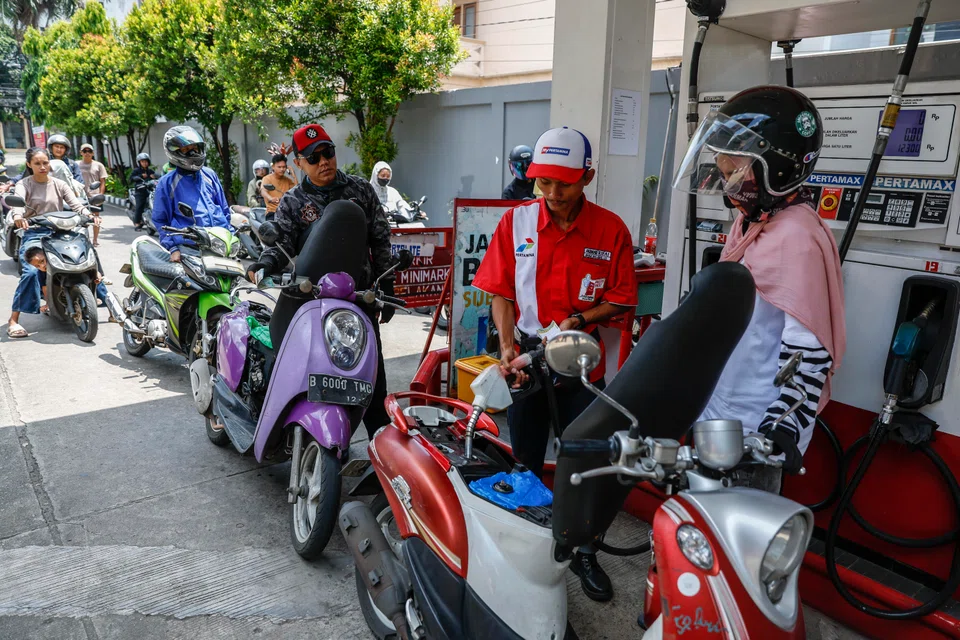
Nowhere are the real-economy implications of the conflict more evident than in emerging markets, particularly Asia. The region’s heavy reliance on imported energy, much of which transits through vulnerable routes, makes it acutely sensitive to supply disruptions.
For many Asian economies, this is not merely a question of higher prices but of physical availability. While price shocks can be mitigated through subsidies or monetary policy, supply shortages necessitate more immediate and often disruptive adjustments.
Governments across Asia have already begun to implement such measures. In Vietnam, Thailand, the Philippines and Pakistan, policies have been implemented, aimed at curbing energy consumption and preventing panic buying.
From adjustments to work arrangements and travel restrictions to the reallocation of fuel supplies and reductions in industrial usage, these interventions highlight the situation’s severity as well as the structural vulnerabilities that underpin it. They also point to the broader economic costs of the shock, as efforts to conserve energy inevitably weigh on productivity and growth.
China presents a somewhat different picture. While the oil shock has exerted downward pressure on its currency, the impact has been relatively contained. This reflects a combination of active policy management and longer-term structural shifts in the energy mix.
Investments in renewable energy, the expansion of electric vehicle adoption and efforts to enhance domestic energy security have all contributed to reducing the economy’s sensitivity to external shocks. As a result, while not immune, China appears better positioned than many of its regional peers to absorb the immediate impact.
Beyond Asia, the effects across emerging markets rely on the distinction between energy importers and exporters. In parts of Africa, countries such as Kenya and Ghana are facing mounting currency pressures and rising fuel costs, exacerbating existing macroeconomic vulnerabilities.
By contrast, some Latin American economies with significant oil production capacity are experiencing relatively less strain and may even benefit from higher prices in the short term.
However, even for these more resilient economies, the broader financial environment poses challenges. Periods of global uncertainty are often accompanied by capital outflows from emerging markets, as investors retreat to perceived safe havens. This dynamic can lead to currency depreciation, tighter financial conditions and higher borrowing costs.
Taken together, these developments illustrate the multifaceted nature of the current shock.
What began as a geopolitical conflict is rapidly evolving into a complex economic event, with implications that span energy markets, monetary policy and global capital flows. The absence of a clear resolution path only adds to the difficulty of assessing its ultimate impact. OMFIF
The writer is head of research at OMFIF
Decoding Asia newsletter: your guide to navigating Asia in a new global order. Sign up here to get Decoding Asia newsletter. Delivered to your inbox. Free.
Share with us your feedback on BT's products and services
TRENDING NOW

LTA proposes combining car COE categories, adding rebate-surcharge system

StarHub to acquire MyRepublic’s mobile business amid ongoing telco consolidation

DBS, OCBC, UOB rout lops billions off STI as inflation, rate concerns spook investors

Grab CEO’s wife Chloe Tong on life with Anthony Tan and finding her purpose

