When titans clash, can Asean gain?

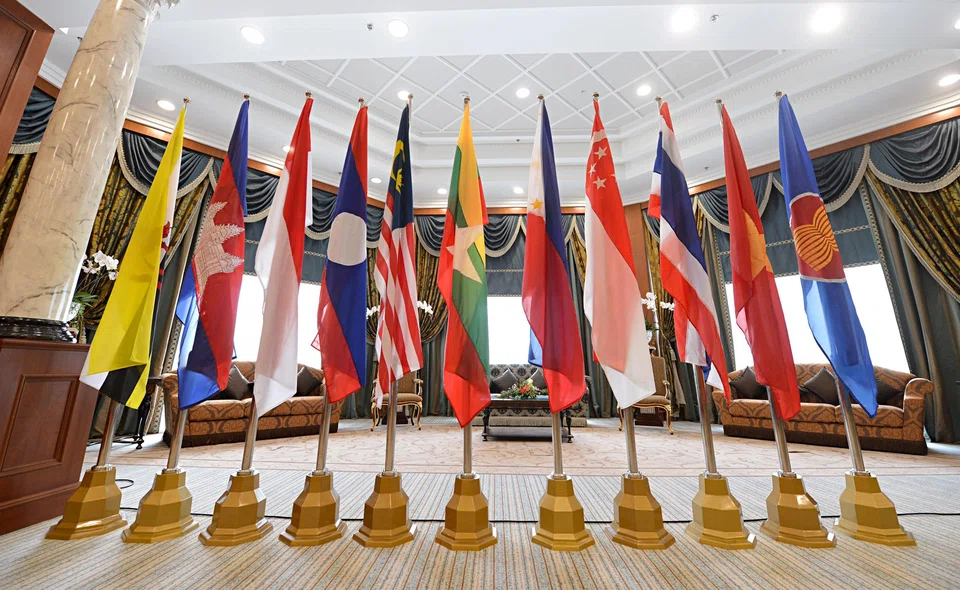
    • While Asean can benefit as investments shift away from China, this is not necessarily good for the global economy.
    • While Asean can benefit as investments shift away from China, this is not necessarily good for the global economy. PHOTO: BT FILE
    Published Thu, Apr 18, 2024 · 05:00 AM

    DECOUPLING, de-risking, reshoring, nearshoring, friendshoring – welcome to the new era of globalisation. National security is increasingly being considered in terms of economic stability, leading to the rise of economic security agendas.

    This has distorted trade and investment. In the past, investors allocated capital based on business considerations. Firms established footprints worldwide and linked up in global supply chains.

    Now, investment allocation and trade flows are becoming more concentrated among countries that are geopolitically aligned, and no longer purely based on competitive or comparative advantages.

    Can Asean benefit from the reconfiguration of global supply and value chains? The short answer is “yes”.

    In a survey by the European Union Chamber of Commerce in China, 11 per cent of respondents have shifted investments out of China; 8 per cent have shifted investments planned for China to other destinations; and 10 per cent have relocated or plan to relocate their Asia headquarters away from China.

    Asean has become the destination of choice for such shifts.

    In the survey, the top destination for companies moving their Asian headquarters out of China was Singapore – attracting 43 per cent of such companies – followed by Malaysia. Only 9 per cent shifted or planned to shift to Hong Kong. Asean’s advantage goes beyond being a lower-cost environment, extending to its large populations, developed industries and supply chains, and high growth potential. Asean is also generally friendly to China, the United States and Europe. Its multiple multilateral trade treaties offer further advantages.

    Asean’s win, the world’s loss

    Yet, while Asean can benefit from de-risking, this is not necessarily good for the global economy. The International Monetary Fund has calculated that extensive reshoring and friendshoring would drag down growth by reducing margins – for the economies involved as well as for the global economy. For example, companies would need to pay higher wages and operate under stricter regulation.

    The moves to de-risk from China will just lead to a more fragmented and decoupled world economy. It is hard to see how de-risking can be confined to just a few strategic areas without affecting broader economic interactions.

    Meanwhile, amid the re-nationalisation of investment and trade policies, international bodies are struggling to maintain their powers and relevance. The World Trade Organization (WTO) is already in trouble, as seen in the modest outcomes of its ministerial conference that concluded in February. The dispute settlement system remains in limbo. Anticipated outcomes related to fisheries subsidies and agricultural matters failed to materialise.

    The WTO risks missing a great opportunity to harness digitalisation for economic progress, just as it had harnessed globalisation during the post-war period.

    Strengthening Asean integration

    Asean has an important role to play in preventing a more fragmented and decoupled global economy. It must maintain open economic cooperation and pursue stronger economic integration among member states.

    Asean can prioritise developments in three areas.

    First, concluding the Asean Digital Economy Framework Agreement. This is a game changer that will unlock the region’s potential US$2 trillion digital economy.

    But concluding it will not be easy. Digital economy integration is difficult due to disparities in technology advancement and adoption across member states. Member states’ data regulation regimes have also diverged. Some countries’ absence of certain laws and regulations – such as personal data protection laws – could slow down the integration process. But it is important to press on and resolve these issues.

    Second, embarking on a green economy agreement to put more substance into the Asean Strategy for Carbon Neutrality, endorsed by economic ministers in August 2023. This should be a high-quality agreement with a harmonised green taxonomy to enable mutual recognition of products and services. It should facilitate the development of instruments for sustainable financing and innovative ESG (environmental, social, and governance) investments, and a robust and accessible carbon market.

    Three, Asean can be more active in advancing common interests on the multilateral stage.

    Most Asean member states depend on cross-border trade and investment. The region has one of the world’s fastest growth rates and has sizeable economic heft. Yet, Asean has not had as major a role in shaping global rules and norms as other blocs such as the G7 or OECD.

    Through its many agreements and dialogue partnerships, Asean should seek to influence global economic discourse and development, and show how freer trade and investment can improve livelihoods.

    The writer is the chief executive officer of the Singapore Business Federation