

Where have all the flowers gone?
The writer reflects on how the country that took him in as a teenage refugee from Augusto Pinochet’s Chile has changed
FORTY-EIGHT years ago, my mother, my sister, and I arrived in the United States as political refugees from General Augusto Pinochet’s dictatorship in Chile. Though we came from Latin America, no one accused us of being rapists or of eating cats and dogs. Immigration officials were kind. After we found a small apartment, the neighbours brought us pies, and the lady upstairs offered to teach me how to touch-type.
Good things kept coming our way. My father was hired to teach at the local university; I was awarded a scholarship to attend private school. We even received H-1 visas – the kind the Maga (Make America Great Again) crowd now wants to abolish.
In a few months I fell in love with the US. Schoolteachers kept pulling me aside to make sure I was fine. The librarian took an interest in me and fed me books (F Scott Fitzgerald’s The Great Gatsby and Ralph Ellison’s Invisible Man made an impression, as did Arthur Miller’s play The Crucible).
My family and I were treated with unfailing kindness and respect. Every laudatory cliché about well-meaning, hard-working, straight-shooting Americans seemed to be true.
Charming naivete
Even American naivete had its way of being charming. Do you have ice cream where you come from, asked one schoolmate. Another could not believe that I, too, could have grown up watching The Jetsons and The Flintstones cartoons.
It was not the best decade in US politics, of course. You could discern the scars of the Vietnam War in every other conversation. New York City was in fiscal crisis. Petrol lines, stagflation, and talk of American “malaise” were only a year or two away. Yet to a shell-shocked teenager from Chile, US politics seemed very civilised.
Indeed, Republicans and Democrats agreed on many things. In Congress, they made ponderous speeches but never threw chairs at each other. Jimmy Carter, the sitting president, was the anti-Donald Trump: fundamentally decent, human rights-obsessed, polite and soporifically deferential (my favourite press line from those days came from Jules Feiffer of The Village Voice: “when President Carter speaks of the energy crisis, he means his own.”).
Where is that America today? I look on the streets and online, but I cannot find the country I once knew. Of course, I understand that a government is not the same as a nation. And I have no doubt that if I went back to that West Los Angeles apartment building, a neighbour or two would step forward to help a refugee kid in need.
But still, like Pete Seeger did in the iconic 1960s song, I keep asking myself, Where have all the flowers gone?
I cannot believe my ears when I hear the president of the US claim that Ukraine, a country that has lost so much and has taught the world a lesson in valour, is somehow to blame for Russia’s invasion. The analogy is terrible, but all I can think of are rapists who claim that the victim “had it coming”.
What did Trump do next? He tried to ram a deal down Ukrainian throats to extract hundreds of billions of dollars in mineral wealth. Once upon a time, American leaders would have lent a hand to an ally in need. Today’s leaders ambush that ally in the White House and then try to pick his pockets.
Outlet for anger
I am aware that out-of-control migration can awaken something other than the better angels of our nature. In Chile, a country of 20 million people, the arrival of some 1.5 million migrants over the past three decades also upended politics and cast an army of Trump wannabes into the limelight. There are plenty of Americans who are frustrated, frightened, or just plain angry. Voting for Trump was an expression of that anger.
But basing one’s actions on anger alone is seldom a good idea. That is what Americans who applaud Trump’s actions are doing. It is the political equivalent of shooting yourself in the head to cure a headache.
Tariffs on Canada and Mexico would hurt the very same Midwestern autoworkers they are supposed to help. The erosion of democratic checks and balances will reduce even further the power of those frustrated middle-class voters who want to seize back control from arrogant coastal elites.
And the world that America made, and which served American interests well? It is being taken apart before our eyes.
For more than 30 years, at academic seminars, political meetings, and dinner parties, I have made the case to Latin Americans that our place in the world is beside the US. Who cared whether China offered cash. And if the White House and the State Department were imperious or condescending, we could live with that.
Shared values
What really mattered was shared values. The US and the liberal democracies it led stood for rights, dignity, and the rule of law. Latin American countries benefited from the rules-based international order that the Americans and the British created after World War II.
If I made that case today, Panamanians – now at risk of losing the canal they have controlled for nearly 50 years – would shake their heads in disbelief. So would Mexicans, who fear tariffs that the trade agreement Trump himself signed during his first administration – calling it America’s “fairest, most balanced, and beneficial trade agreement” – was supposed to prohibit.
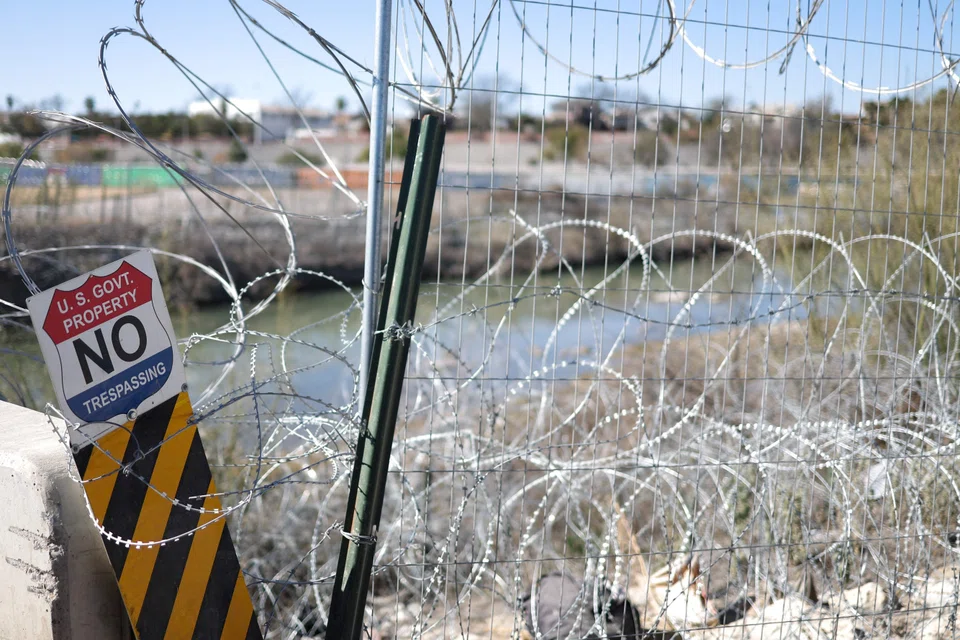
So would anyone whose sons and daughters, if forced to migrate, might end up in cages at the Texas border. In Latin America – or in Europe, Asia, and Africa, for that matter – it is not the best moment to parade as a pro-American liberal.
More than a few Americans may soon find themselves compelled to leave home. When they do, I am sure the world will treat them with as much kindness as my family received. There are still plenty of flowers outside the US.
The writer, a former finance minister of Chile, is dean of the School of Public Policy at the London School of Economics and Political Science
TRENDING NOW

Once staunchly pro-China, Malaysian Chinese businesses are now distancing themselves from Beijing

Stocks to watch: HPL, Aims Apac Reit, Zico, Advanced Systems Automation, ComfortDelGro
‘How many will survive?’: Bubble fears arise as China’s humanoid robotics face reality check

Smaller board lots can’t fix a market run by three banks

