

While bonus shares are largely a gimmick, DBS’ proposed issue is a boon

Leslie Yee
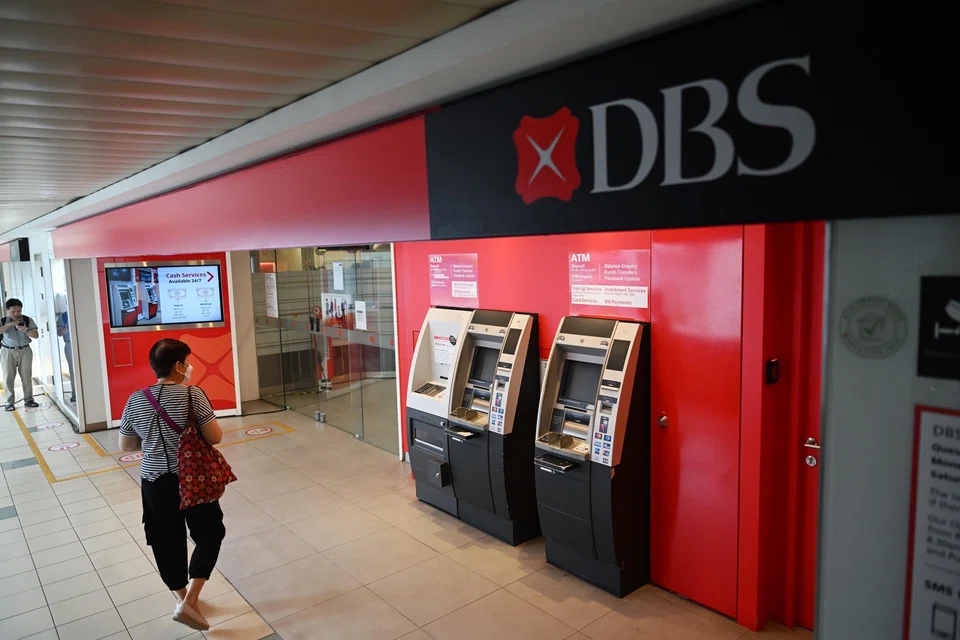
THE mention of a bonus sends the heartbeats of salaried workers racing. Maybe this word has the same effect with investors.
Banking giant DBS saw its share price jump – closing up 2.5 per cent up on Feb 7 – after it announced its full-year results and proposed a bonus issue. As at Feb 28, the counter has climbed 5.7 per cent since the announcement.
With DBS – Singapore’s largest company by market capitalisation – investors are probably right to be excited over the prospects of receiving free shares.
Generally, the issuance of bonus issues may do nothing to improve a company’s valuation.
All things being equal, a company’s earnings per share (EPS) declines when the number of shares outstanding grows due to a bonus issue.
Post a bonus issue, a shareholder holds more shares in a particular company. But, the share price could fall assuming investors apply an unchanged price-to-earnings multiple to the lower EPS.
The net result is that a shareholder may be no better off following the bonus issue.
While an investor’s shareholding rises due to a bonus issue, the said investor’s percentage shareholding in a particular entity is unchanged.
In contrast, a shareholder who holds on to his shares sees his percentage shareholding in a company rise when the said company does a share buyback.
Should shareholders vote against the general mandate to issue new shares including by way of bonus issue at DBS’ upcoming annual general meeting because issuing bonus shares is a waste of time? I think not.
DBS’ board of directors proposed issuing its shareholders one bonus share for every existing 10 ordinary shares held.
The bank’s board wants to issue more new shares and pay a higher dividend over an enlarged share base.
It proposed a dividend per share (DPS) of S$0.54 for Q4 2023, up from S$0.48 in the previous quarter. Paying quarterly DPS of S$0.54 amounts to an annual DPS of S$2.16.
DBS’ board said, barring unforeseen circumstances, that the annualised ordinary dividend going forward will be S$2.16 per share over the enlarged share base, post the issue of shares under the proposed bonus issue. This represents a 24 per cent rise from the annual DPS of S$1.92 for 2023.
The board added that the stepped-up capital returns reflect DBS’ strong capital position, and are in line with the policy of paying sustainable dividends that rise progressively with earnings.
An annual DPS of S$2.16 works out to a yield of 6.5 per cent, based on DBS’ share price of S$33.45 as at Wednesday (Feb 28). This compares well with the average annual return over 10 years of 2.88 per cent on the tranche of the Singapore Savings Bond, which is to be issued on Mar 1.
Add to that, a DBS shareholder stands to receive new shares by way of the proposed bonus issue and earn even more dividend due to his resultant enlarged shareholding.
Perhaps, DBS’ annual DPS can be higher than S$2.16 if the bank’s board did not propose issuing bonus shares.
However, there is merit to receiving bonus shares.
An owner of 10,000 DBS shares sees his holding rise to 11,000 shares assuming the proposed bonus shares are issued.
The resulting higher number of shares held in turn provides the said shareholder greater flexibility to divest some shares if a suitable opportunity arises or when he needs to raise some capital.
Delivering despite hiccups
DBS had its share of problems in 2023. It was hit by several digital disruptions, which massively inconvenienced customers. To account for these failures, variable pay of the group management committee was collectively cut by 21 per cent for 2023.
Chief executive officer Piyush Gupta took a 30 per cent variable pay cut, which amounted to S$4.14 million.
This means that his variable pay for 2023 was S$9.66 million – about 74 times the annualised median monthly income from work for resident employed households of S$10,869 in 2023.
Some people may take issue with the CEO’s huge pay, or have lingering concerns over the robustness of the bank’s digital platform.
Nonetheless, DBS’ financial performance for 2023 was strong. Its full year net profit rose 26 per cent year on year to a record S$10.3 billion.
The group generated 18 per cent in return on equity (ROE) for 2023, and management is guiding a range of 15 to 17 per cent for ROE in 2024. DBS’ ROE for 2023 and average ROE over the past five years tops those of peers OCBC and UOB .
Businesses face mounting challenges. Still, despite economic uncertainties, DBS’ board is committing to pay a higher dividend on an enlarged shareholding base. This shows confidence in the group’s capital position and business prospects.
With high interest rates, investors demand more from listed equities. Share prices will get punished unless profits and dividends grow.
Paying a good dividend and growing dividend as well as profit consistently can drive share price performance. Giving bonus shares along the way helps too.
If more listed groups raise their game and perform as well as reward shareholders like DBS, investor interest in the Singapore equities market will grow.
The writer owns shares in DBS
TRENDING NOW
Easy to rent out, hard to sell: Are buyers losing interest in Singapore’s one-bedroom condos?

GovTech retrenches another 38 staff in second round of layoffs

Stocks to watch: Seatrium, CapitaLand Investment, Keppel DC Reit, Suntec Reit, CLCT, TSH Resources

World’s largest offshore wind platform by Seatrium consortium on track to be completed by 2028

