SENSE & CENTS

While Reits are struggling, they can still be sound investments for retirees

Reits proffer diversification and liquidity benefits, and professional management can help unlock value for unitholders

Leslie Yee
Leslie Yee

Published Tue, Sep 12, 2023 · 07:04 PM
    • Compared to end-2021, the iEdge S-Reit index as at early September is down by around 20 per cent.
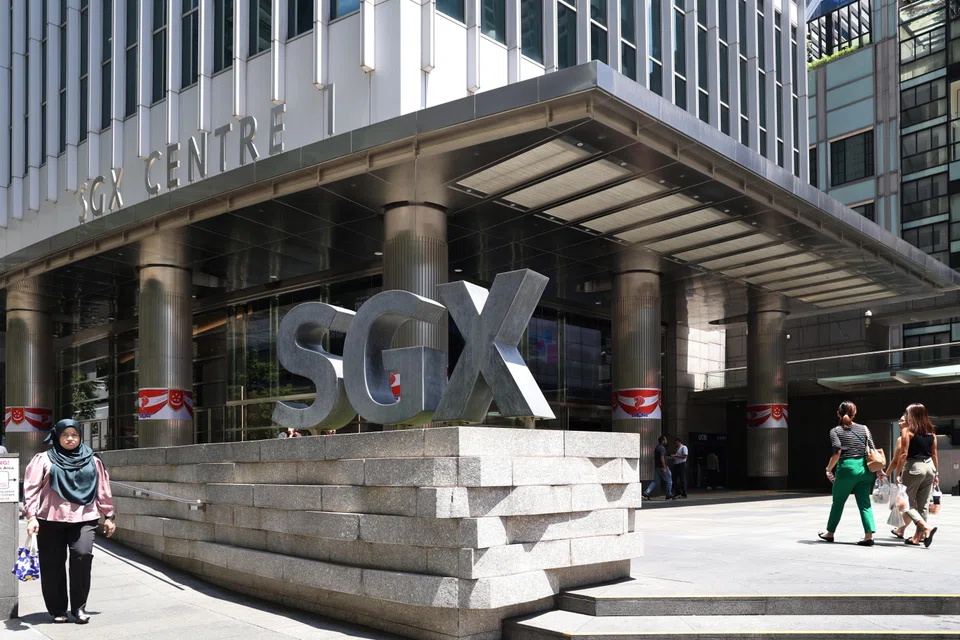
    • Compared to end-2021, the iEdge S-Reit index as at early September is down by around 20 per cent. PHOTO: BT FILE

    I FEEL silly. If I had bought a private home – using the name of an immediate family member who has yet to own property – some time back, my family would be in a happier position financially.

    Based on data from the Urban Redevelopment Authority, private home prices as at the second quarter of 2023 rose by 7.5 per cent, 18.9 per cent and 27.4 per cent over a one-year, two-year and three-year time frame respectively. Rental rates on homes have also risen strongly.

    In contrast, owning Singapore-listed real estate investment trusts (Reits) has been painful. Versus end-2021, the iEdge S-Reit index as at early September is down by around 20 per cent.

    I try to invest in quality, choosing Reits with good sponsors and high-quality assets. But good-quality Reits have also been hit by the sell-off in the sector amid rising interest rates. 

    Today, unit prices of market leaders CapitaLand Integrated Commercial Trust (CICT) and CapitaLand Ascendas Reit (Clar) are lower than two years ago. 

    I buy Reits as part of saving and investing for retirement. Many Reits pay a fairly stable distribution per unit (DPU) every quarter or half year. Hopefully, the DPU grows over time and thus provides a hedge against inflation. 

    As Reits largely own completed physical assets and are subject to gearing limits, they operate with some safety margin. Moreover, many locally listed Reits own substantial Singapore real estate. And various property types here have been resilient through the Covid-19 pandemic. Unitholders of Reits also benefit from having professionals manage their investment.

    For retirees, are Reits still a good alternative to buying physical properties?

    Buying homes here for investment can be tricky. A Singapore citizen pays Additional Buyer’s Stamp Duty (ABSD) of 20 per cent when buying a second home. 

    One does not pay ABSD when buying strata commercial spaces. However, strata-held buildings may not be competitive. Multiple owners might disagree on spending that is needed to rejuvenate a building. 

    Buying overseas properties comes with risks of managing an asset from a distance and exposure to foreign currency movements.

    Buying homes

    Possibly nothing trumps being a local residential landlord for a cash-rich retiree, who may live with his children and can then rent out his own home. 

    Many locals are familiar with residential property. And home prices here can be less volatile than unit prices of Reits. While there were occasional down cycles, home prices generally rose over time. Singapore’s stability, improving infrastructure and growth in resident household formation underpin home prices. 

    For cash buyers of homes, rising borrowing costs can be a non-issue. On the other hand, higher debt costs hurt Reits. DPU is reduced as financing costs rise.

    Also, unit prices of Reits fall as investors apply higher discount rates to value the trusts. Valuation of the trusts’ property portfolios declines because higher capitalisation rates are used to value the properties.       

    Keeping faith in Reits

    Still, Singapore Reits can be suitable for retirees.

    First, fluctuations in unit prices of Reits may matter little if one adopts a buy-and-hold strategy. 

    For instance, one may be happy to buy CICT to get an assumed DPU of 10.58 Singapore cents, which is what CICT paid out in 2022, or more. By buying CICT units today, one can get DPU yield of well over 5 per cent.

    If CICT pays annual DPU of at least 10.58 cents going forward and DPU possibly rises over time, a retiree can receive a steady and growing stream of recurring income. The retiree can treat the day-to-day movements in CICT’s unit price as mere noise.

    Second, there is the diversification and liquidity of holding Reits versus residential property matter.

    Should an emergency arise and there is a need to raise S$300,000, it is much easier for a retiree who owns a S$2 million portfolio of Reits to sell some Reit units to raise the cash versus an owner of a S$2 million home. It can be cumbersome and costly to sell the S$2 million home to raise S$300,000 and reinvest the balance in another home.

    Third, policy here tends to favour owners of commercial and industrial properties, such as Reits, over residential landlords. Such policy bias may perpetuate and possibly get accentuated over time.  

    The property tax rate for non-owner-occupied homes rose to 11 per cent to 27 per cent of annual value (AV) from Jan 1, 2023, and will reach 12 per cent to 36 per cent of AV from Jan 1, 2024, up from 10 per cent to 20 per cent previously. Non-residential properties are taxed at 10 per cent of the AV.  

    The AV of buildings is the estimated gross annual rent of the property if it were to be rented out, excluding furniture, furnishings and maintenance fees.

    Fourth, having professionals manage a Reit’s property portfolio can beat using one’s own efforts to manage a for-rent home. As one ages, dealing with tenant management and property upkeep issues can be a hassle. 

    While the home rental market is buoyant today, the market can have cycles. A retiree could find it difficult to ensure the rental home is competitive if the home leasing market enters a down cycle.

    On the flip side, Reits with strong management teams may see their properties consistently outperforming the market.

    Fifth, if markets underprice Reits, hopefully the boards and managers of the trusts will take steps to unlock value for investors.

    Reits hold investment properties based on market valuations provided by independent valuers. But the trusts can at times opportunistically sell properties above valuation.

    Strategic actions such as privatisations or divestment of entire portfolios can be pursued if Reits persistently trade well below book value.

    I was elated to become a chartered financial analyst over two decades ago. However, making good investment calls is difficult. I have made many wrong calls, whether in previous roles as a sell-side equities analyst or working for corporates, as well as with my personal investments. 

    Still, amid knocks and bruises accumulated along the way, I hope to continue to learn in my personal investment journey and choose to remain optimistic. 

    Hopefully, investors – whether in physical properties, Reits or other instruments – can generally come out ahead as human ingenuity continues to drive progress in a troubled world. 

    The writer holds units in CICT and Clar