Who buys the F-150s, and more Japan deal mysteries
Investors love the trade deal Tokyo struck with Trump. Now for the missing details
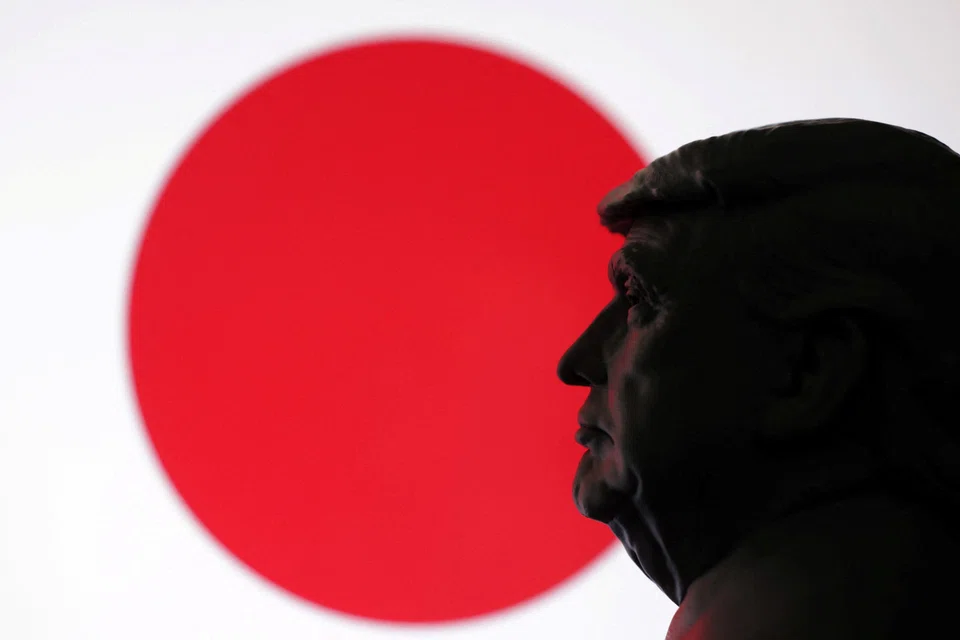
THE long-awaited trade deal between the US and Japan has investors celebrating after months of uncertainty. But as the song goes, nagging questions always remain.
Who is going to buy the “cars, SUVs (sport utility vehicles) and trucks” that President Donald Trump has promised to sell? Who is going to purchase the 100 Boeing jets? And what possible structure could the US$550 billion fund, allegedly financed by Tokyo with 90 per cent of profits going to the US, actually take?
Answers are sorely needed, not just because of an already growing comprehension gap between the countries over what was actually agreed, but to inform South Korea and other close US allies who are trying to wrap up similar deals before Aug 1.
Let us start with autos, long the main source of Trump’s dissatisfaction with Tokyo as well as the largest single cause of the trade deficit. The White House fact sheet (if indeed it can so be called) declared that “longstanding restrictions on US cars and trucks will be lifted, granting US automakers access to the Japanese consumer market”.
Of course, US carmakers have enjoyed unlimited access to the Japanese market for decades. As I noted in April, the problem is that US cars just are not good enough for the local consumer – and Detroit largely is not interested in trying to muscle its way into a hyper-competitive market dominated by domestic players.
Tokyo can try making it a little easier to import US vehicles, such as simplifying inspection procedures, but it cannot rebuild cities to fit the bloated models US automakers favour.
Around 84 per cent of streets in Japan are municipal roads with an average width of just 3.7 m. Even if Tokyo gave everyone a Ford F-150 pickup, its 2.4 m width would prevent two from passing on narrow streets. Hence, cute minivans and kei cars – Japan’s smallest expressway-legal “light vehicles” – dominate while, as my colleague Liam Denning said this week, “US automakers do not, in general, make an adorable little anything.”
In any case, Japan’s auto market has been shrinking for years, with new cars sold down about 20 per cent from a 1990s peak. Automakers constantly fret that young people are losing interest in learning to drive, while the growing numbers of elderly citizens are encouraged to return their licences.
But more significant is what form the US$550 billion investment fund will take. Treasury Secretary Scott Bessent said the “innovative financing mechanism” was key to Tokyo getting a deal at all. But neither side seems to agree on what it looks like.
The idea first surfaced in May when the Financial Times reported that SoftBank founder Masayoshi Son had suggested a joint sovereign wealth fund. The White House calls it an “investment vehicle” that will “rebuild and expand core American industries”.
Prime Minister Shigeru Ishiba, however, refers to a combination of equity, loans and guarantees that will be led by the Japan Bank for International Cooperation and guarantees by Nippon Export and Investment Insurance. That sounds more like overseas development aid than a wealth fund – though few could argue American infrastructure might actually benefit from that.
Trump now promises Japan will “give us 90 per cent of US$550 billion”. Tokyo is saying that applies to projects where 90 per cent of investment is from the US – in other words, profits are proportional. Does the figure include funding already pledged, such as SoftBank’s promised US$100 billion? Who knows?
Indeed, a leaked photo from the talks shows what looks like a proposal from Japan for a US$400 billion fund, crossed out with US$500 billion handwritten on top. That proposal also suggested a 50 per cent profit share. Is this just repackaged existing spending into a simple PowerPoint slide? After all, Japan already invested US$783 billion in the US in 2023, and Ishiba pledged in January to boost that to US$1 trillion in the future.
The problem is that at some stage, this needs to be worked into actual policies. And this is where Ishiba’s rush to agreement might come back to bite, especially if he is no longer in the job when the talks get down to details – something that, despite his denials, still seems all but certain after the drubbing his Liberal Democratic Party took in recent upper house elections.
There are plenty of parts of the deal that do make sense. The 100 Boeings can find a home at the country’s airlines, though Japan has admitted the number includes at least some already-planned purchases. With Japan as the world’s largest buyer of liquefied natural gas, Tokyo’s participation in the Alaska project always seemed logical.
Even if the two sides do not seem to agree on what they decided on defence, Japan needs to spend more and the US is the logical seller. Above all, it is encouraging to see the White House, after all these months of tense relations, again describe its ally as the “cornerstone of peace in the Indo-Pacific”.
But with all these questions – and Washington continuing to hold the threat over Japan’s head with a quarterly evaluation of its compliance with the deal – the market’s sigh of relief might still be premature. BLOOMBERG