

To whom it may concern: America and Europe need each other
The transatlantic alliance can continue as the tight-knit partnership we have known for the past 75 years, or unravel
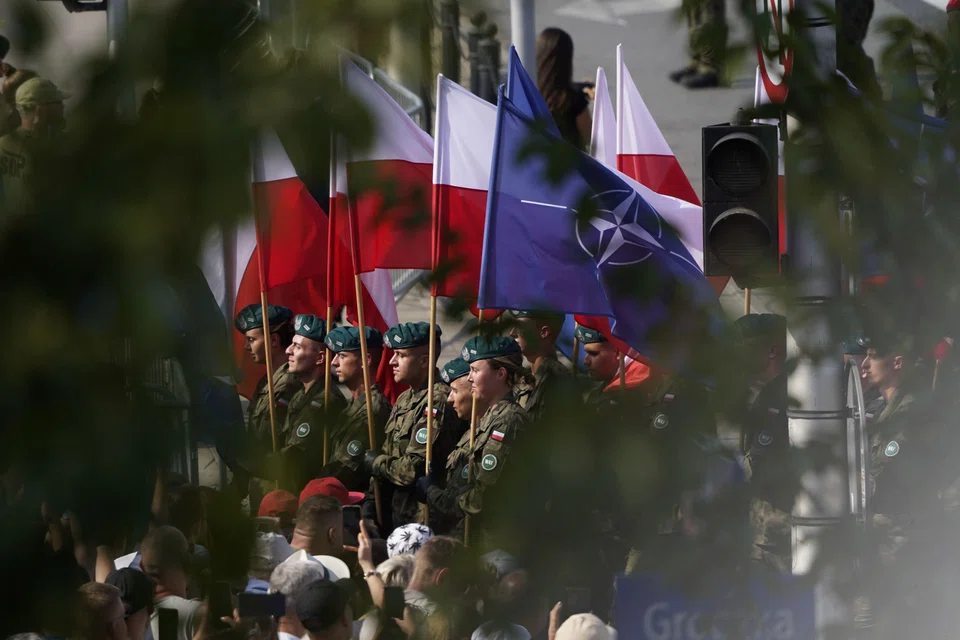
THE funny thing about being a European during American presidential elections is the belief that you, too, should be allowed to vote. And can you blame us? Who gets to occupy the Oval Office is correctly seen by many in Europe as a decision of existential significance for the well-being and security of the continent.
No surprise, then, that even with a war raging in Europe involving repeated nuclear threats by the Kremlin, the developments in the US campaigns have received even greater attention in the European press than usual. Given the war in Ukraine, the risks of a larger war in the Middle East and China’s accelerating challenge to American primacy, Europe needs the United States more than it has since the end of the Cold War. And America still has a unique and valuable asset that its growing list of rivals and adversaries don’t: reliable allies and partners in Europe.
Over the years, the Munich Security Conference, the international security forum that I led for 14 years, has tallied a long list of transatlantic to-dos. At its core are three strategic challenges that America and Europe will need to face, regardless of who wins the US election in November. How we deal with them will decide whether the transatlantic alliance will continue as the tight-knit partnership we have known for the past 75 years or unravel.
First: We need to talk about China. Unlike the European Union, which defines China as a partner, competitor and systemic rival, America appears to have concluded, in a rare show of bipartisan agreement, that China is now not only its key rival but also its main long-term adversary in terms of global political and military power and influence. Transatlantic discord about how best to deal with China is already visible, and it seems bound to get worse.
When it comes to handling Russia, Europe and the US have had an elaborate consultation and coordination mechanism for the past seven decades: Nato. With China, there is nothing comparable.
Why wasn’t Europe consulted when the US decided to deny certain semiconductor chips from being exported to China? Is there any agreed strategy on Taiwan? As seen from Europe, the increasingly popular idea in Washington that America should focus on China and leave Ukraine for the Europeans to deal with is outright dangerous. Many Europeans feel that China may very well interpret declining US support for Ukraine as a sign of weakness. (Remember Afghanistan?)
The creation of a fully staffed body focused on coordinating on China and the Asia-Pacific region should be high on our common agenda. An enlarged Group of Seven that includes Australia, South Korea and potentially other regional powers could be one option, though maybe not a sufficient one.
Next, we need to start talking like grown-ups about paying our defence bills. The biggest long-term irritant in Nato has all but disappeared: Europeans are no longer refusing to carry a fair share of the common defence burden. Defence budgets everywhere have grown; alliance members’ 2014 pledge to spend 2 per cent of national gross domestic product has been fulfilled by most.
So what’s the problem? In short, we in Europe spend our defence euros incredibly inefficiently because we cannot agree on where and how to produce our weapons or what to buy. As at 2016, the US used about 30 major military systems, from aircraft to frigates, compared with some 180 systems among the European allies.
Worse still, Europeans do more than two-thirds of their military procurement in the US, starving European companies of much-needed investment.
This is great news for the American defence industry, but it is politically unsustainable in Europe in the longer term. Senators in Washington are happy when lots of defence production employment happens in their state. European politicians are no different.
If America truly wants Europe to be more responsible for the security of its continent, Washington should encourage European partners to develop and buy more arms in Europe and do it in a coordinated manner. If we got our act together and did more pooling and sharing among EU and European Nato partners, we could save around 15 billion euros (S$22 billion) or more each year and spend it on more and better systems, as well as on more ammunition.
Finally, we need to talk about our common Western values. Isn’t the one major difference between us and authoritarian or dictatorial regimes our commitment to human rights, to the rule of law, to decency in this age of impunity, as David Miliband, the former British foreign secretary, once called the current global disorder? We can and we should be proud of this commitment. The problem is that the Western world – and in particular the US – is being accused of applying double standards in dealing with wars, conflicts, and human rights abuses.
This is, of course, not a new point of contention. (During the recent pandemic, many developing countries thought they had been promised vaccines as soon as vaccines became available. In reality, many had to wait until everybody in Brussels or Miami had been vaccinated.) But the simultaneous wars in Ukraine and Gaza have made the problem a lot worse – and practically unmanageable. Western nations expect the world to support our resolutions condemning Russian behaviour in Ukraine, but we find it difficult to reciprocate regarding the conduct of the war in Gaza.
As a result, our collective credibility has suffered a blow. It is not only a blow to our identity, but it also reduces our collective ability to counter the growing advances of authoritarianism and the open and growing disregard of international law. Is there an easy recipe for eliminating this credibility gap? No, but collectively and solemnly recommitting ourselves to the rule of law and to the United Nations Charter in our approach to international conflicts and crises could be a first step.
All of these challenges are complex and not easily solved. Europe should have no illusions: Neither one of the two US presidential candidates can be expected to produce miracles. Many Europeans nevertheless hope that a Kamala Harris presidency would, following in Joe Biden’s footsteps, be more inclined to listen to European worries about Russia and China, and about transatlantic security, than Donald Trump, whose transatlantic track record was not one of continued harmony. The doubts he expressed about Nato during and after his presidency are still very much on the minds of many European leaders. Still, the transatlantic discussion with a Harris White House might be just as tough as it would be with a second Trump administration when it comes to the economy, trade, investment and tech.
No matter who wins the White House in November, the new American president and European leaders should remind themselves of the very real benefits of this centrally important relationship – and keep the conversation going.
The writer is the president of the Foundation Council of the Munich Security Conference Foundation. He chaired the Munich Security Conference from 2008 to 2022. A German career diplomat, he was state secretary of the German foreign ministry and served as ambassador in Washington and London.
TRENDING NOW

Indonesia’s coal tycoon Low Tuck Kwong replaced as Bayan Resources president-director

Nvidia reinstates Jensen Huang as CEO; Trump says move poses no national security risk

Six workers file employment claims against Crystal Jade Food Manufacturing

AI agents and stablecoins a ‘perfect match’ for payments, says MetaComp’s Tin Pei Ling

