Why Asean matters more than ever to the UK and Singapore
The Republic’s role as a gateway to the bloc and Britain’s accession to the CPTPP expand mutual opportunity
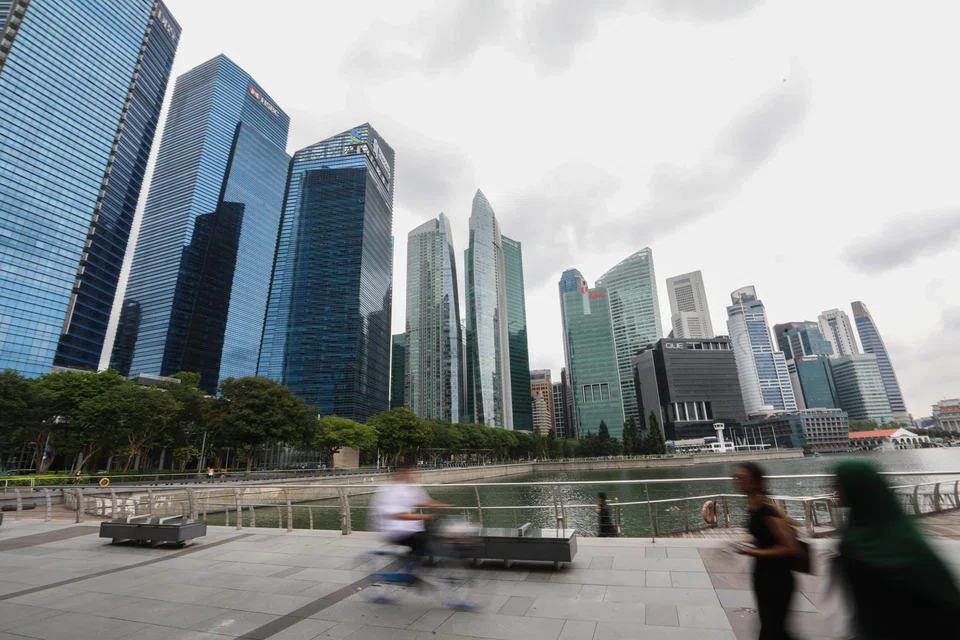
THIS is my second year in Singapore, and once again I have spent the last few weeks enjoying the run-up to National Day, as the nation decked itself out in its full red and white glory.
But Singapore’s 61st birthday is not the only special day we celebrated last weekend.
On Saturday (Aug 8), we marked Asean Day, and I have been reflecting not only on the bloc’s impact as a regional institution, but also on what our links with Asean mean for the UK’s relationship with Singapore.
Three years since we signed our UK-Singapore Strategic Partnership, and five years since the UK became an Asean Dialogue Partner, it is clear that these dynamic relationships have the potential to transform our shared futures.
Singapore has long been one of the UK’s closest partners in South-east Asia. Our people-to-people ties are deep and longstanding, renewed every year by talented and curious Singaporean students who choose to study in the UK.
Our thriving trade relationship is among the largest in the region, currently worth more than S$48 billion, and Singaporean investment in the UK is valued at almost S$590 billion, making Singapore the UK’s second-largest Asian investor.
What has changed is the depth of our cooperation, as we work together to address challenges we cannot tackle alone.
Open, resilient trade
The UK-Singapore Free Trade Agreement, our Digital Economy Agreement and our work towards a modern bilateral investment treaty all reflect a shared commitment to open and resilient trade, at a time when protectionism is on the rise elsewhere.
Singapore’s role as a gateway to Asean’s wider market of more than 680 million people, and the UK’s accession to the Comprehensive and Progressive Agreement for Trans-Pacific Partnership (CPTPP), mean that our economic ties now sit within a much larger architecture of mutual opportunity.

Increasingly, supply-chain resilience and economic security are as important to us all as raw growth figures.
That architecture is already delivering. UK-Asean trade has grown by more than 17 per cent in the past year alone, and the UK is now Asean’s fourth-largest source of foreign direct investment.
Singapore is central to this story, acting as the platform through which UK businesses reach the rest of Asean, and helping UK experts in paperless trade, digital identity and secure data-sharing access Asean’s Digital Economy Framework Agreement and growing digital economy.
Partnership for a changing world
Alongside the extraordinary opportunities, we also face challenges. Conflict, instability, disruption to critical trade routes and intensifying competition over technology have a global impact, from the Euro-Atlantic to the Indo-Pacific.
What happens in the Strait of Hormuz affects shipping through the Strait of Malacca. Events in the South China Sea, through which a third of global trade passes, affect households in Britain just as in Singapore.
This is why Asean matters to the UK, and why Singapore’s support for the UK’s partnership with the bloc has been so important. Asean is the world’s fifth-largest economy, home to almost 700 million people across eleven countries, and it plays a crucial stabilising and convening role.
As one of Asean’s founding members, Singapore has consistently championed the open, rules-based order and the principle of Asean centrality that underpin regional and global stability.
This July in Manila, with Singapore’s support, our Foreign Secretary Edward Miliband marked the fifth anniversary of our Asean Dialogue Partnership with a new Plan of Action for 2027 to 2031.
They celebrated the UK joining the Asean Regional Forum, which is the Indo-Pacific’s top multilateral security platform.
Keeping our nations safe
Our defence and security relationship with Singapore, anchored by the Five Power Defence Arrangements, is going from strength to strength. Exercises such as Bersama Lima demonstrate our enduring commitment to interoperability and collective security in the Indo-Pacific.
Beyond traditional defence cooperation, we have built a modern security partnership, including a first-of-its-kind collaboration between Singapore’s Digital and Intelligence Service and UK counterparts on cyber defence.
Singapore’s leading role in the S Rajaratnam School of International Studies’ Digital Defence Symposium reflects its role as a convening nation, using cooperation to keep all citizens, critical infrastructure and economies safe from transnational digital threats.
None of this happens in isolation.
Our partnership with Singapore and the security cooperation we are building with Asean reinforce each other as we tackle threats which go beyond this region, whether that is organised crime or cyber-enabled fraud.
Building climate resilience and energy security
South-east Asia sits at the heart of the world’s climate challenge, vulnerable to climate shocks and grappling with fast-growing energy demand even as it seeks to decarbonise.
Singapore, a green finance hub, is a natural partner for the UK as we pursue our ambition to be a clean energy superpower.
Our Green Economy Framework, agreed in 2023, has opened up practical collaboration in green transport, low-carbon energy technologies and carbon markets.
The UK’s strengths in offshore wind and grid infrastructure make us a natural collaborator for Singapore on regional initiatives such as the Asean Power Grid.
Our partnership with Singapore will be crucial to delivering the energy resilience that South-east Asia needs.
There is a funding gap in the region estimated at almost S$270 billion annually (until 2030) for climate resilient infrastructure, far more than public finance alone can meet.
To help close that gap, the UK has partnered with Singapore on the Financing Asia’s Transition Partnership, which aims to mobilise up to S$7 billion from public, private and philanthropic partners for transition opportunities across Asia.
Through British International Investment, the UK has committed S$115 million to two of its funds, and through our Asean-UK Green Transition Fund, we are mobilising over S$250 million more, helping turn regional ambitions, such as the Asean Power Grid, into bankable projects.
2027: what next?
As Singapore prepares to assume the Asean chairmanship in 2027, this is a moment of real opportunity, both for the bloc and for the UK-Singapore partnership.
Our message is simple: The UK is committed to Asean for the long term, and Singapore is central to that commitment.
This is not a relationship of grand gestures but of practical delivery – in economic growth and security, defence, climate action and in the ties that bind our two countries together.
Following our Asean Day celebrations, let us celebrate what we have achieved so far and remain ambitious for our future together.
The writer is Acting British High Commissioner to Singapore.
This essay is part of New Global Order, a series which explores how the changing world landscape is reshaping business, politics and beyond.
Decoding Asia newsletter: your guide to navigating Asia in a new global order. Sign up here to get Decoding Asia newsletter. Delivered to your inbox. Free.
Share with us your feedback on BT's products and services