Why Asia’s family offices are moving to multi-hub models

Even as market access broadens, Singapore remains the centre for governance and oversight
Summarise
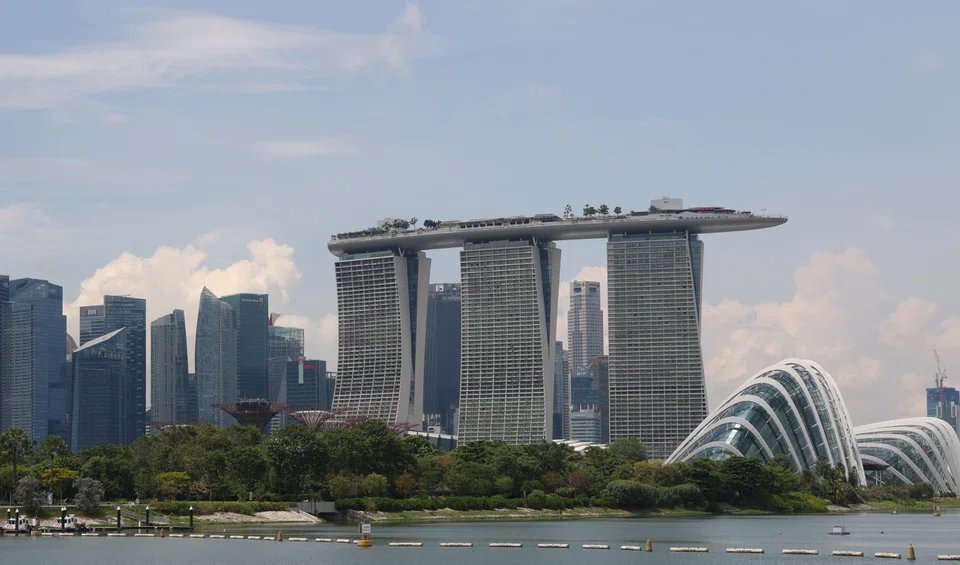
    • Singapore also offers depth through a mature wealth-management sector with trustees, banks and advisers experienced in private markets, cross-border structures and other operational demands.
    • Singapore also offers depth through a mature wealth-management sector with trustees, banks and advisers experienced in private markets, cross-border structures and other operational demands. PHOTO: TAY CHU YI, BT
    Published Sat, Feb 21, 2026 · 06:30 AM

    ASIA is now the fastest‑growing wealth region in the world, and family offices are increasingly shaping how capital is allocated across markets. Recent headlines, however, still frame this growth as a contest between financial centres, with Singapore supposedly losing ground as more wealthy Chinese families explore alternatives such as the United Arab Emirates and Hong Kong.

    That framing misses what many of us working with family offices see day to day. As organisations grow larger, with more complex structures and younger generations at the helm, many are moving away from single-hub operating models.

    What is emerging is a more distributed model, in which families increasingly operate across several jurisdictions at once, driven by the realities of alternative assets, governance and long-term stewardship.


    Why single-hub models are under strain

    IQ-EQ’s latest research helps explain this shift. Asia now accounts for around 30 per cent of the world’s single-family offices, with roughly 40 per cent established in the past 15 years.

    Simultaneously, both single and multi-family offices globally show a sustained shift towards alternative investments, including private equity, real estate, hedge funds and direct investments.

    These strategies bring greater control and return potential, but they can also change how family offices operate. As illiquidity increases, investment horizons lengthen and portfolios become more bespoke and global, oversight from a single location becomes harder.

    For many Asian family offices managing relatively new and rapidly scaling wealth, the traditional idea of doing everything from one hub is beginning to feel restrictive.

    The real pressure point: functional diversification

    What we are seeing is functional diversification, rather than wholesale relocation.

    In Asia and the Gulf, this distributed model is most evident between Singapore, Hong Kong and the UAE. Families consider the UAE for residency flexibility, access to Gulf countries and Africa capital and deal flow, and Hong Kong for exposure to North Asia and China-linked assets. Singapore, meanwhile, remains a base for South-east Asian and Asean activity.

    Rather than replacing one hub with another, families are layering jurisdictions in the same way they diversify portfolios: gradually, with an eye on risk.

    This matters because wealth structures move far more slowly than headlines suggest. A family office is a living institution holding operating companies, investment vehicles, trusts, governance frameworks and longstanding adviser relationships. Shifting that ecosystem is slow, costly and risky when hundreds of millions, or billions, are involved.

    As family offices deepen their exposure to private markets, direct deals and illiquid assets, flexibility decreases and the harder it becomes to pivot. Why? Illiquidity is not just a portfolio feature but becomes embedded in the entire operating setup.

    Families are also focused on more practical concerns. They want to know whether the tax, legal and regulatory frameworks can be trusted to hold steady over the next two decades. They look for ecosystems where managers, co-investors, banks and trustees understand alternatives, environmental, social and governance, and digital assets.

    Generational handovers bring governance into focus

    Adding to this, many Asian family offices were founded only in the past 10 to 15 years and are now facing their first generational handover. Founders often remain tied to core businesses and hard assets, while the next generation tends to lean towards technology, sustainability and global diversification. Portfolios have grown larger, more international and more illiquid.

    These factors place pressure on decision-making, risk oversight and accountability that relocation alone cannot fix. Governance, instead, becomes the real anchor.

    Singapore as the governance anchor for Asian family offices

    As family offices mature, the functions that are hardest to move are trust structures, regulatory clarity, professional depth, fiduciary oversight and reliable legal frameworks that support intergenerational transition.

    Families need jurisdictions where these frameworks are predictable and robust, where they get support for governance, risk and compliance, and where transparency across assets and jurisdictions reduces operational and legal risk.

    This is where Singapore continues to play a central role. Its regulatory and policy environment supports long-term wealth structures in ways that matter for governance.

    Regulatory oversight by the Monetary Authority of Singapore, together with family office tax incentive regimes that link benefits to substance and professional governance, also reinforces institutional discipline over short-term mobility.

    Singapore equally offers depth through a mature wealth-management sector with trustees, banks and advisers experienced in private markets, cross-border structures and other operational demands. This simplifies market entry and operations for family offices.

    A multi-hub outlook with a stable stronghold

    Taken together, these shifts indicate that family offices are operating in a more pragmatic way. New family offices will continue to choose different starting points, while existing ones rebalance their presence as strategies evolve.

    The future of family offices will likely be defined by multi-hub models where families operate across several jurisdictions while maintaining a stable centre. For many Asian family offices, Singapore remains that stronghold for anchoring complexity and structures built to last.

    The writer is managing director of sales, Asia and the Middle East, at IQ-EQ