Why Brics will not become the new fulcrum of world politics
The group of major emerging economies is neither representative enough nor sufficiently united to lead others
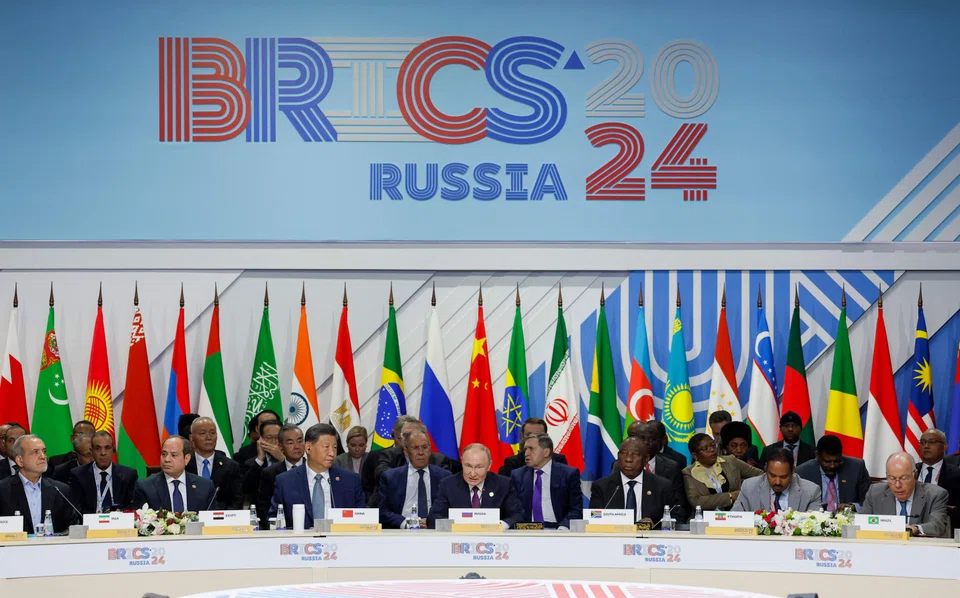

ONE question that 2025 may begin to answer is whether the Brics (the alliance among founding countries Brazil, Russia, India, China and South Africa) is becoming the new centre of power in world politics.
Now that the group has added new members (Egypt, Ethiopia, Iran and the United Arab Emirates) and come to represent 45 per cent of the world population, some believe that it is consolidating the (misleadingly named) “Global South” and posing a serious challenge to American and Western power. But I remain sceptical of such claims.
When Jim O’Neill (then the chief economist at Goldman Sachs) coined the “Bric” acronym in 2001, his aim was simply to identify the four emerging economies that were most likely to dominate global economic growth by 2050. But the label soon acquired a political valence.
It became an informal diplomatic grouping at the 2006 United Nations General Assembly, and then a formal organisation with the first Bric Summit in 2009. Hosted in Russia, the focus then – as it is now – was on advancing a multipolar world order. At the end of the following year, the group got its “S” when South Africa joined.
A Wall Street asset class evolved into an international organisation partly because it aligned with Russia’s and China’s own aspirations to lead the developing world.
The 16th Brics Summit in Russia in October 2024 was the first to include its new members (Saudi Arabia has not yet decided whether to accept the group’s invitation to join, and Argentina’s new government declined). Some 36 national leaders attended, as did representatives from many international organisations, including UN Secretary-General Antonio Guterres, and Turkey used the occasion to present its own application for membership.
The 2024 summit focused on fostering ties across the Global South and building a multipolar world, with Russia President Vladimir Putin using the occasion to demonstrate his global diplomatic relevance despite Russia’s invasion of Ukraine in 2022.
With more countries showing an interest in joining, it looks like the Brics could indeed present itself as a leader of the resistance to the US-dominated international order. Some even see it as the successor to the Cold War-era Non-Aligned Movement (NAM), whose members refused to choose between the US and the Soviet Union. But while NAM had a shared interest in resisting the US, it did not have Russia and China as founding members.
In any case, the Brics is unlikely to succeed in formally organising the Global South. Not only do its largest and most important members – China, India and Russia – all lie north of the equator, but the three are competing for leadership.
Russia and China do have a common interest in countering what they see as an American threat, and they have declared an “alliance without limits”. But such slogans mask major differences in their strategic perspectives.
While Russia took vast swathes of territory from China in the 19th century, when the Qing dynasty was weak, China’s economy is now 10 times the size of Russia’s. Both countries are vying for influence in Central Asia, and China is uneasy about Russia’s recruitment of its neighbour North Korea to fight in Ukraine.
An even more important limit on the Brics as an organisation is the rivalry between China and India, which is now the world’s most populous country. Although China is much wealthier than India, it is experiencing demographic decline (like Russia), while India’s population and workforce continue to grow.
Moreover, China and India share a disputed boundary in the Himalayas – where their forces have clashed repeatedly – and the situation is further complicated by China’s traditional friendship with Pakistan. In fact, an abiding concern about China is one reason why India participates in the Brics in the first place. While it avoids formal alliances, it has also stepped up its participation in “the Quad” (which includes the US, Japan and Australia) for the same reason.
Rather than making the Brics stronger, the admission of new members merely imports more rivalries.
Egypt and Ethiopia are locked in a dispute over a dam that Ethiopia is building on the Nile river, and Iran has longstanding disputes with the UAE and prospective member Saudi Arabia. Far from making the Brics more effective, these new intra-organisational rivalries will hamper its efforts. The Group of 77 developing countries has even more members, and it is chronically limited by internal divisions.
At their 2024 summit, Brics+ discussed matters such as economic and security cooperation, promotion of cultural exchanges, and joint development projects focused on infrastructure and sustainability. But such talk usually does not yield significant results. In 2014, the group established the New Development Bank, which is headquartered in Shanghai; but the institution has had only modest results to date.
Likewise, the group’s stated intention of avoiding the US dollar and clearing more of its members’ bilateral trade in their own currencies has made only limited headway. Any serious attempt to replace the US dollar as a global reserve currency would require China to back the renminbi with deep, flexible capital markets and the rule of law – and those conditions are nowhere close to being met.
So, what is the Brics good for? As a means of escaping diplomatic isolation, it is certainly useful to Russia. As a diplomatic device for projecting leadership of the developing world, it also has been useful to China. As a channel through which to counterbalance China, it has its uses for India. And as a modest stage for touting national development, it has sometimes been useful to Brazil and South Africa.
But do these functions make it a new fulcrum of world politics? I think not. PROJECT SYNDICATE
The writer, professor emeritus at Harvard University, is a former US assistant secretary of defence and author of the memoir A Life in the American Century (Polity Press, 2024)