

Why COP27 was one step forward, two steps back
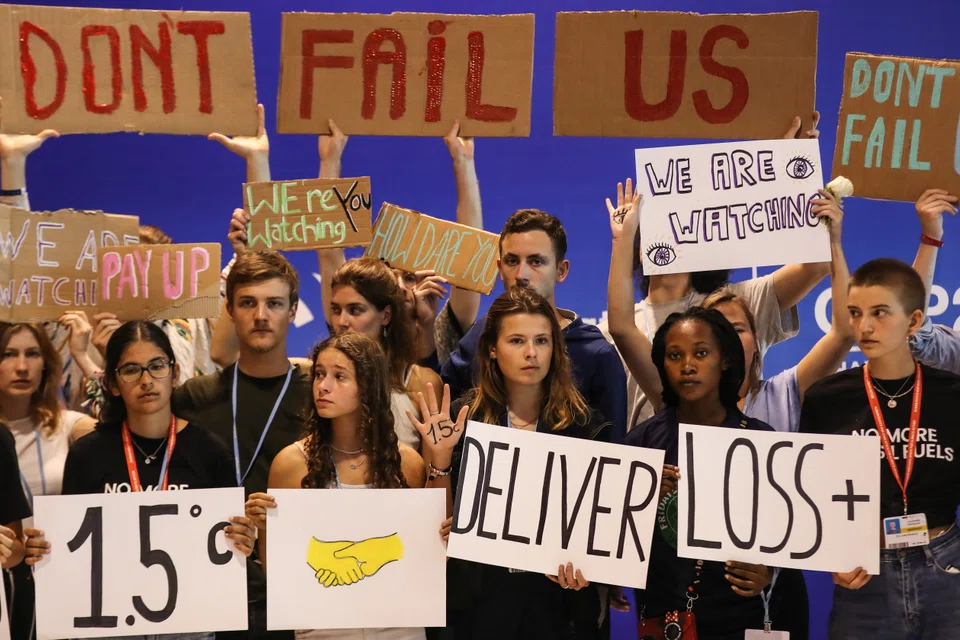
IN TYPICAL COP fashion, governments seized a last-minute agreement on Sunday (Nov 20) in summit “overtime”, including a breakthrough on the “loss and damage” agenda.
However, welcome as the new deal is, this was a summit which took a step forward, but two steps backwards on the overall goal to raise climate action ambition, with the 1.5 degrees Celsius goal agreed in Paris in 2015 now in increasing peril. With the need for much greater results, COP27 has therefore increased calls for fundamental reform of the United Nations-led climate framework process, which may no longer be fit for purpose.
Yet, disappointing as the overall results were of the Egypt event, the loss and damage outcome was a significant success. The Global South has generally welcomed since Sunday the move to support developing countries with the damaging impact of rising global temperatures, including extreme flooding, storms, drought and rising sea levels, despite having contributed little to the pollution that caused it.
However, the wider, overarching deal agreed on Sunday (Nov 20) after tense, overrunning negotiations, offered little progress on cutting greenhouse gases that actually drive loss and damage. As COP26 president Alok Sharma highlighted, a commitment to phase out all fossil fuels fell by the wayside – amid resistance from petrostates. Moreover, vague language on the 1.5 deg C warming target is far from enough, and may actually be a backward step from Glasgow’s COP26 in 2021.
The fact that these are widely shared conclusions is shown not just by Sharma’s intervention. UN Secretary-General Antonio Guterres said on Sunday: “Let’s be clear. Our planet is still in the emergency room. We need to drastically reduce emissions now, and this is a problem that this COP did not address. A loss and damage fund is essential, but it is not an answer if the climate crisis wipes a small island state off the map or turns an entire African country into a desert… the world still needs a quantum leap in climate ambition.”
The thrust of Guterres’ remarks is entirely right, and a key question now is how best to start advancing the agenda for COP28 in the United Arab Emirates. There are several answers to the question, including that negotiations should be started now, with all countries prepared to get a clear agreement in a year’s time. This must include pushing key countries now to increase their ambition and submit improved pledges, so there is a remaining chance of sticking to the 1.5 deg C limit with a focus on phasing out fossil fuels. And the negotiations must be run in a more open, transparent process so all countries understand what is being negotiated and residual distrust can be repaired.
However, there is a growing question mark over the future of the COPs themselves, and whether they are the most effective way to take forward the global climate agenda. More than 30,000 people attended COP27 in Egypt, and there are growing calls for a leaner, more focused forum to address key issues in hand in the remaining years of what US President Joe Biden has called the “decisive decade”.
So there is merit in the UN, and key governments from the Global North and South, now considering this issue. For the alternative is a type of “Groundhog Day” scenario reflecting the 1993 hit movie based around the lead character played by Bill Murray being caught in a time loop, repeatedly living the same day.
In much the same way, there is a danger that COPs continue to make only incremental process when what is needed is transformational change. Indeed, an increasing number of stakeholders believe that today, only a profound change of our economy and society can avoid worst-case scenarios.
With the world currently on course for disastrous warming of potentially more than 3 deg C, this pathway can potentially still be changed through proactive, concerted global action. This includes the world’s very best diplomats taking greater charge, and governments throwing their full weight behind delivering stronger outcomes.
It is no coincidence here that the most effective COP was in 2015 when France staged a most well-organised climate conference, reaching out to nations up to a year before the Paris event happened. This included then foreign minister Laurent Fabius, who was in the 1980s France’s youngest ever prime minister, showing the full range of his diplomatic skills to become the most effective ever COP president.
Even if all this happens, however, at least one other geopolitical requirement is needed. That is for the United States and China, as the two most influential players in world politics today, to double down on their climate cooperation which was thankfully restarted earlier this month at the G20 summit in Indonesia, following the bilateral between Biden and Chinese President Xi Jinping.
If Washington and Beijing become broadly aligned again on this agenda, amid all the many disagreements they have in other areas, this could become a game changer. The European Union would then provide a third player in a triumvirate which could push ahead with more ambitious global action. Collectively, the 27-nation European club, plus China and the US, account for around one half of global climate emissions, and the triumvirate is critical to more positive international climate diplomacy that could potentially bring into the fold other large, key emitters, including India.
While the US and China are now all-powerful on the climate agenda, their cooperation is essential if the pace of climate action ambition and delivery is to be realised. This is not inconceivable, given that tackling global warming is a key political priority for both Biden and Xi, and it is sometimes forgotten that a key precursor for the 2015 Paris deal was a bilateral agreement in this area brokered by then US president Barack Obama and Xi.
However, now is the time for all key countries, not just the US and China, to step up to the plate and urgently get around the negotiating table with the UAE hosts, so that momentum can build well ahead of COP28. Moreover, the UN and other key actors need to assess the medium-term viability of the COP process, and examine how a leaner, more focused forum could address the massive challenges of global climate action in the coming years.
Andrew Hammond is an associate at LSE IDEAS at the London School of Economics.
TRENDING NOW

Once staunchly pro-China, Malaysian Chinese businesses are now distancing themselves from Beijing

Looking beyond looming CEO succession, should UOB potentially pursue a transformative merger?

Could stablecoins be the future of money?

Grab CEO’s wife Chloe Tong on life with Anthony Tan and finding her purpose

