Why energy will power this bull market higher
Think globally, diversify your exposure by shopping overseas. Seek out the many big integrated firms in the US and Europe.
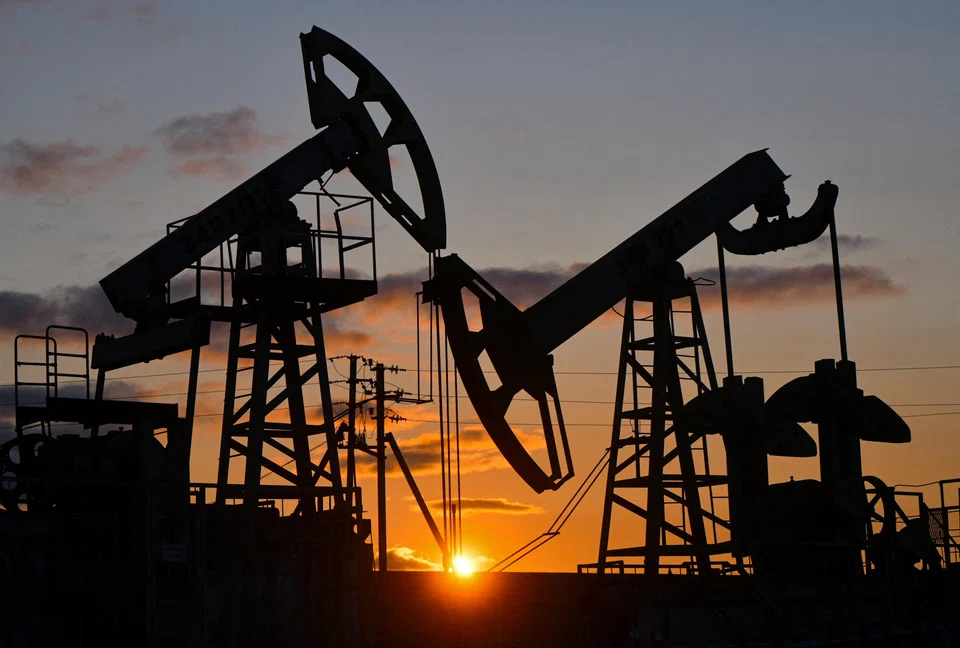
ARE energy stocks losing power?
DESPITE the sector’s early spring surge, bears deem energy stocks’ mojo as a now-fading head fake – fuelled only briefly by Opec+ cuts and Middle East war escalation fears.
Wrong! Deeper fundamentals underpin the sector’s strength and will keep it powered up through 2024. Here is why energy is poised to lead – and how investors can profit.
Few expected energy stocks to flounder as they did in 2023, after riding skyrocketing oil prices to 2022 outperformance.
Amid President Vladimir Putin’s Ukraine invasion, most analysts saw Russian aggression, Opec+ cutbacks, inflation and post-Covid Chinese economic re-acceleration stoking endless supply shortages to spike oil prices anew and energise energy stocks.
My 2023 forecast told you not to believe such hype; hopefully you listened. Last year was a humiliating one for energy bulls, with the sector climbing a paltry 0.8 per cent globally while world stocks soared 21.7 per cent.
Why? Oil prices plunged from 2022’s nosebleed highs. Huge natural gas price spikes that slammed your electricity bills also reversed. Global output obliterated shortage fears. Oil production seemed set to keep rising in Norway, Guyana and North America.
US President Joe Biden’s temporary ban on new federal land leases also didn’t bite, and America – now the world’s biggest producer – eclipsed output records.
Hence, oil prices ranged between US$70 and US$95 per barrel – stymieing energy profits, which parallel crude prices, not volume.
Now, energy bears repeat 2023’s error – just backwards, extrapolating lag through 2024. They dismiss energy’s early strength, claiming Opec+ cuts plus Ukraine and Middle East wars drove a fleeting uptick – with oil’s price decline after April’s Middle East war-driven jump supposedly proof.
No! Oil prices should rise through the year end, refuelling energy firm profits – and pumping oil and gas stocks up a big wall of worry.
Why? It isn’t from Opec+’s largely symbolic cuts or widely watched regional wars. Stocks and oil prices baked those in long ago. Nor Biden’s pausing new liquefied natural gas (LNG) export terminal permits, which faces huge legal challenges and doesn’t stop already permitted and under-construction terminals from amply supplying the world. North American LNG export capacity should double this decade.
No, rising prices now are about near-term incentives. Reacting to 2022’s lofty prices, energy firms boosted output to capitalise on it.
Now? After 2022’s price decline, producers are completing wells faster than they start new ones. US drilled-but-uncompleted wells are down 15.3 per cent year on year. So, less output can come online quickly.
Producers aren’t replacing it. Years of industry consolidation mean global mega-drillers dominate. With their judicious production targets reigning, US oil rig counts fell from 621 at 2022’s end to 497 now. US drilled wells are down 15.1 per cent.
With output lagging drilled wells by about six months, it will slow significantly soon.
Gas? Global production should decline in 2024 for the first time since 2020’s Covid lockdown-driven slide. America had 156 rigs drilling for gas at 2022’s year-end. Now it is 99.
Yet, demand remains sneakily strong. Pessimistic analysts keep underestimating it, dismissing economic resilience in the eurozone and China while hyping pockets of “weakness” such as Japan – even though one-off factors, for example, January’s earthquake, drove its Q1 GDP contraction. And, new AI and cloud computing capacity create huge energy demand.
US Q1 GDP was also better than headlines suggested. China keeps growing despite three years of disaster predictions. Singapore’s 2.7 per cent year-over-year Q1 GDP jump was its fastest clip since Q3 2022. It all signals stronger oil and gas demand than many expect.
Global oil demand should hit record highs this year. Natural gas demand should rise 2.5 per cent, up from just 0.5 per cent in 2023.
Hence, oil prices should eclipse 2023’s highs. Gas prices, too.
Neither will spike like 2022, mind you. But that, plus cost discipline, should charge up energy earnings.
Big integrated oil firms should benefit most. Their stronger balance sheets and low-cost production position them best to capitalise when oil prices rise but don’t skyrocket.
As you know, the Straits Times Index has no energy stocks. So diversify your exposure by shopping globally. You will find plenty of big integrated firms in the US and Europe.
But won’t pricey oil and gas reignite city inflation? Perhaps briefly, to some extent. But don’t expect the galloping natural gas prices that spiked your electricity bills in 2021 and 2022 and forced several power retailers out of Singapore.
Besides, global GDP and consumption have repeatedly shown that oil and gas prices aren’t a big economic swing factor today.
The global economy and stocks have done fine through stretches of far pricier oil and gas than 2024’s potential. Look no further than city GDP soaring 9.7 per cent and 3.8 per cent in 2021 and 2022, respectively, amid gas spikes.
So, think globally and get energised in this bull market. It has ample fuel left.
The writer is the founder, executive chairman and co-chief investment officer of Fisher Investments, an independent investment adviser serving both individual and institutional investors globally