Why European Parliament election matters to wider world
FOR much of the globe, the upcoming election cycle will be dominated by next year’s US presidential and congressional ballots. However, beneath the global radar screen is a hugely important ballot in Europe, for which campaigning has now kicked off, that will determine the direction of the 27-member European Union.
The European Parliament election in June 2024 is not just important for the future of the continent but also the rest of the world, as the EU remains an economic superpower with a collective gross domestic product paralleling that of the United States. It is also the world’s biggest exporter with scores of nations for which Europe is the leading trade partner, ranging from key emerging markets such as China and Brazil.
This will be the 10th European Parliament election since the first direct ballot in 1979. Symbolically too, it will be the first in which there will be no UK candidates in the wake of the United Kingdom formally leaving the EU.
Another reason why the elections may be the most consequential European Parliament ballots ever is the potential application of the so-called Spitzenkandidat (or “top candidate”) system to select the next European Commission president. In the run-up to the 2014 European Parliament elections, this new system was unveiled by legislators, which meant that the choice of candidate for president to succeed Jose Manuel-Barroso would be nominated by the voter bloc that secures the most seats.
In 2014, the candidate of the largest group – which was then the right-of-centre European People’s Party (EPP) – Jean-Claude Juncker, was eventually nominated and elected as Commission president. European party leaders aimed to reassert the system in 2019, with them selecting lead candidates and organising a debate between those candidates.
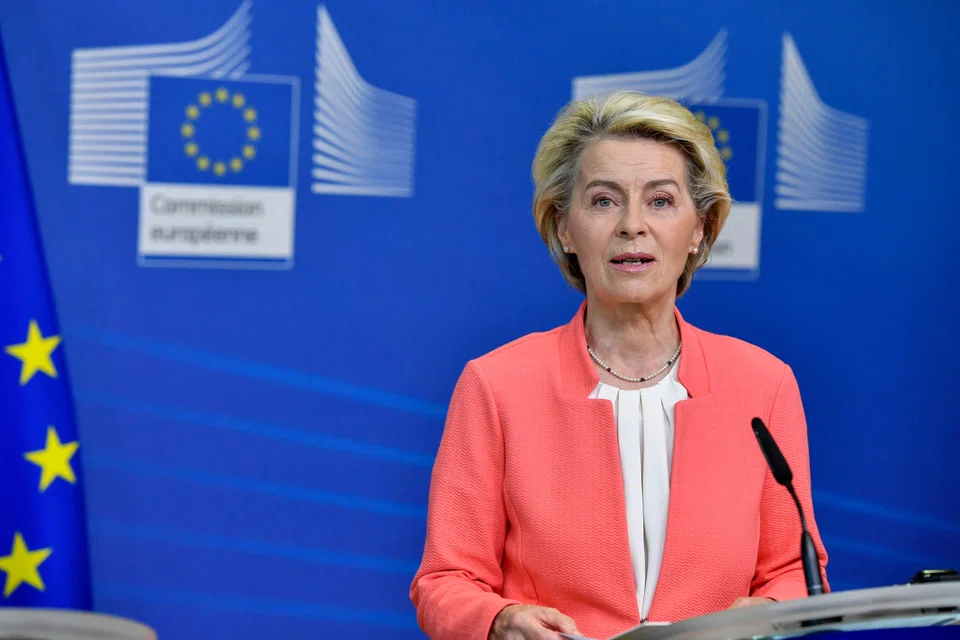
However, in the aftermath of the ballot, another German conservative – then-Defence Minister Ursula von der Leyen in then-Chancellor Angela Merkel’s last government – was chosen as Commission president, even though she had not been a declared candidate prior to the election. Meanwhile, Manfred Weber, the declared lead candidate for the EPP, which had again gained the most seats, was not nominated after objections from national leaders including French President Emmanuel Macron and Hungarian Prime Minister Victor Orban.
The 2019 experience showed that, ultimately, national governments have final power over the Commission president appointment. However, the legislature’s voice has become louder.
To this end, a wide number of EU stakeholders have called for the Spitzenkandidat system to be revived. So far, the EPP and other parties including the European Greens (EGP) and Party of the European Left (PEL) have announced intent to nominate such a main candidate in 2024.
The EPP is widely forecast to win the most seats again (albeit potentially a lower number than now) which, if borne out, may increase the prospects for a second von der Leyen Commission. However, the precise balance of power in the next Parliament is highly uncertain.
In part, this is because the election takes place in a context of voter discontent and apathy. This fuelled by the fact that the European Parliament, specifically, is generally not trusted by many in the continent for whom Brussels seems very remote to their lives.
Voter turnout at European Parliament elections has declined, slipping from 62 per cent in 1979 to a record low of 42 per cent in 2014. In some countries, turnout only just got into the double digits last time around.
This apathy comes despite the steadily growing powers enjoyed by the European Parliament. Originally created in the 1950s, it assumed enhanced political legitimacy in 1979 when it became a directly elected chamber, including assuming veto power over annual EU budgets, securing powers to amend or block a wide range of draft laws that are devised by the European Commission, plus veto power over many international treaties.
As polls stand today, the most likely media headline from the next elections, despite the expected EPP victory, is a potential surge in support for right-wing and Eurosceptic parties at the expense of centrist parties. Indeed, the rightist European Conservatives and Reformists (ECR) could well become the third-biggest group in Parliament.
That would be a big shift from the 2019 elections for the ECR whose support includes from Italian Prime Minister Giorgia Meloni’s far-right Brothers of Italy, plus also Poland’s ruling nationalist Law and Justice party. The far-right Identity and Democracy (ID) group, which includes the Alternative for Germany (AfD), is also on course to make sizeable gains.
This shift would replicate a trend in European national politics in recent elections. In nations from Greece and Italy in the south, to Finland and Sweden in the north, politics has moved in a conservative direction.
Yet, while the right is set for gains, a traditional grand coalition of the EPP, centre-left Socialists and Democrats (S&D) and centrist Renew will probably keep a clear majority over a potential new right-leaning alliance. The S&D looks set to retain its place as the second-largest group, while Renew is forecast to broadly match ECR in terms of seats won.
That said, this grand coalition has recently been shaken by the EPP’s willingness to partner with ECR to oppose the Commission’s Green Deal legislation. The growing controversy of this agenda is also reflected in the possibility that the election’s biggest losers in terms of seat numbers might be the EGP.
As much as the biggest winners could be the right, the election takes place in a different context to 2019. Then there were worries that the traditional centre ground of moderate European politics could lose the preponderance of power in the legislature and become a de facto referendum on the more than six-decade integration project of the Brussels-based club.
This built on the results of the 2014 elections which saw major gains for anti-integration parties which spanned the ideological spectrum from the extreme right to far left. The increased popularity of such groups reflects a wide range of factors, not just popular discontent with growing European integration.
Broader issues include deep disquiet with long-established national political parties and systems, including discontent over sub-par economic growth. This is shown, for instance, with national governments in more than half of the EU member states falling or being voted out of office in the two years from Spring 2010 to 2012 alone.
Taken together, this is why the election matters not just for Europe, but also the wider world. While a potential Joe Biden-Donald Trump US presidential race will steal the headlines, the European Parliament vote matters much too, including for its influence in the choice of the next Commission president.
Andrew Hammond is an associate at LSE IDEAS at the London School of Economics