Why the fragile US-Iran MOU won’t restart the rate-cut cycle
The interim agreement carries more risk than buoyant financial markets are generally pricing in
MARKETS last week generally reacted positively to the announcement of the fragile US-Iran memorandum of understanding (MOU). However, key economic downside risks remain, especially given the non-trivial possibility that the deal frays or even collapses in the coming weeks.
The 14-point MOU signed on Wednesday (Jun 17) has been criticised by politicians and some business stakeholders, especially within the shipping industry.
Given the lack of clarity it contains, some have even called it a “memorandum of misunderstanding”.
Already, the crisis has had significant economic ramifications, including the disruption of the interest rate cycle, which had been on a downward trajectory in much of the industrialised world before the war began in late February.
Now, however, an increasing number of central banks, from Australia to Norway and Japan to the eurozone’s European Central Bank (ECB), have raised rates in 2026. These may not be the last increases in these key economies.
Take the example of the ECB where, after this month’s rate increase – the first since 2023 – many investors still expect at least one more rise this year.
This expectation persists despite the fact that key bond yields have fallen since the MOU’s announcement, with many financial market participants now expecting the Iran crisis to have a weaker impact on Euro area inflation than first feared.
For instance, benchmark German 10-year yields fell to around 2.90 per cent, down from the decade-and-a-half highs in May of almost 3.2 per cent.
The ECB expectations for headline eurozone inflation have already been upgraded since February to average 3 per cent in 2026 in its baseline scenario. The central bank has acknowledged significant upside risks: In more adverse scenarios, inflation could peak much higher, necessitating a significantly tighter monetary policy.
Moreover, the pathway of expected rate cuts in other key economies in 2026, including the US and UK, may have stopped in its tracks.
In the US, a growing number of financial market participants, including UBS Global Wealth Management, assert that the US Federal Reserve – under the leadership of new chair Kevin Warsh – will keep rates on hold until 2027.
A similar scenario may unfold in the UK, with forecasters such as ING and the Item Club asserting that rates will probably be on hold for the rest of 2026.
Iran crisis risks remain
Despite the general buoyancy of financial markets since the MOU was announced, major risks remain over its delivery in the next few weeks as both sides seek to move towards a permanent deal.
This uncertainty could further impact the macroeconomic outlook, including further disruption of the interest rate cycle.
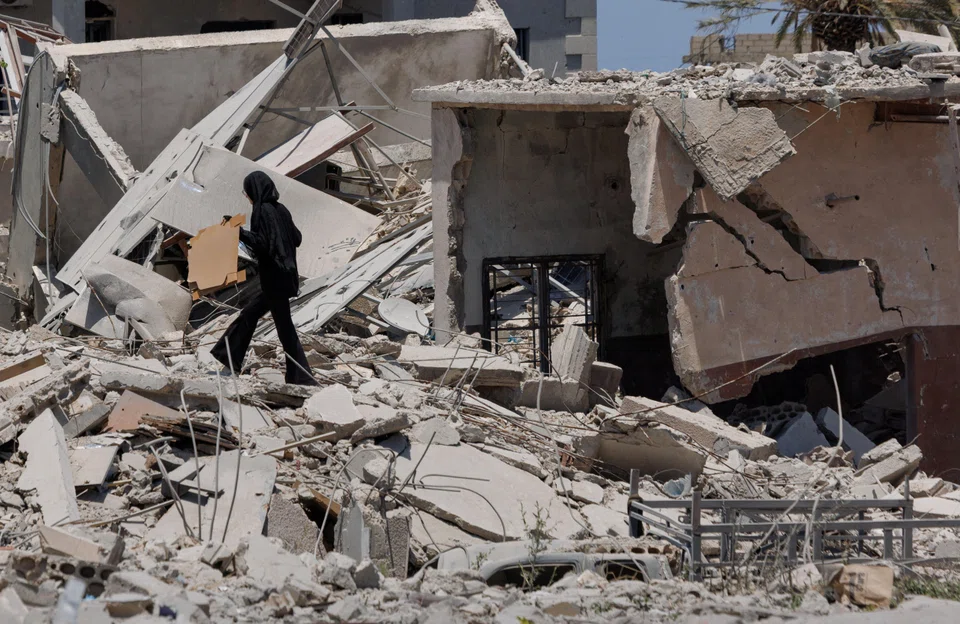
Key threats to the MOU include the non-trivial possibility that Israel may derail it, intentionally or not, through its interventions in the region, including Lebanon. Persistent Israeli fighting with Hizbollah may continue despite the recent ceasefire on Friday.
Iran also again threatened to shut the Strait of Hormuz on Saturday.
US President Donald Trump’s team is clearly concerned about this scenario.
Vice-President JD Vance, who met with Iranian officials in Switzerland on Sunday Jun 21, had earlier urged Tel Aviv to back the MOU, rather than oppose it. Vance had pointedly warned that Trump is “the only head of state in the entire world who is sympathetic to the nation of Israel”.
The MOU may have only kicked the can down the road in terms of resolving key outstanding issues between the US and Iran.
While a permanent deal in coming weeks cannot be dismissed, enormous political heavy lifting is now needed. Previous US administrations, including that of Barack Obama, took much longer than 60 days to negotiate core friction points, including Teheran’s nuclear programme.
Perhaps the most critical question for the future of the global economy, including inflation and the interest rate cycle, is the status of the Strait of Hormuz, where returning tanker traffic to prewar levels presents significant challenges.
If attacks from both the US and Iran end, naval mines must now be removed to make the waterway passable again – a process likely to take weeks.
The MOU asserts that Iran agrees to allow tanker traffic to pass unobstructed through the strait with no fee or toll, but only for the 60 days covered by the agreement.
Beyond this, Iran and Gulf neighbours have the agency to determine a new system that will comply with international law. Iran’s state-run Fars News Agency has already reported that Teheran plans to impose fees.
Some shipping firms have expressed concerns about this huge uncertainty.
Vincent Clerc, CEO of Maersk, the world’s second-largest shipping container company by capacity, has warned that the prospect of Iran charging fees for vessels passing through Hormuz would be a “dangerous precedent”.
According to The New York Times, Clerc said: “If any geographical point can be suddenly weaponised and leveraged for money, and then closed again at the whim of a certain government or authorities, of course, that’s for us… a concerning development. You have to wonder then what’s next.”
Policymakers around the world have also highlighted the importance of these issues.
For instance, European Commission President Ursula von der Leyen previously asserted that freedom of navigation in Hormuz is of “paramount importance”.
Highlighting the crisis’ early toll, she noted that in its first 45 days, the EU’s bill for fossil fuel rose more than 22 billion euros (S$32.6 billion) without receiving a “single molecule” of additional energy.
Singapore’s Ministry of Foreign Affairs has also urged “all parties to uphold their obligations under the United Nations Convention on the Law of the Sea and customary international law with respect to safe and unimpeded transit passage in the Strait of Hormuz”.
While markets have generally been on a tear after the MOU’s announcement, deep execution risks hanging over the deal could easily fracture this stability, leaving the broader macroeconomic picture in perilous balance.
The writer is an associate at LSE IDEAS at the London School of Economics