

Why Germany is the EU nation with most at stake in the US election
A range of irritants plagued relations between the two countries when Trump was president; these tensions will likely resurface if he wins again this November
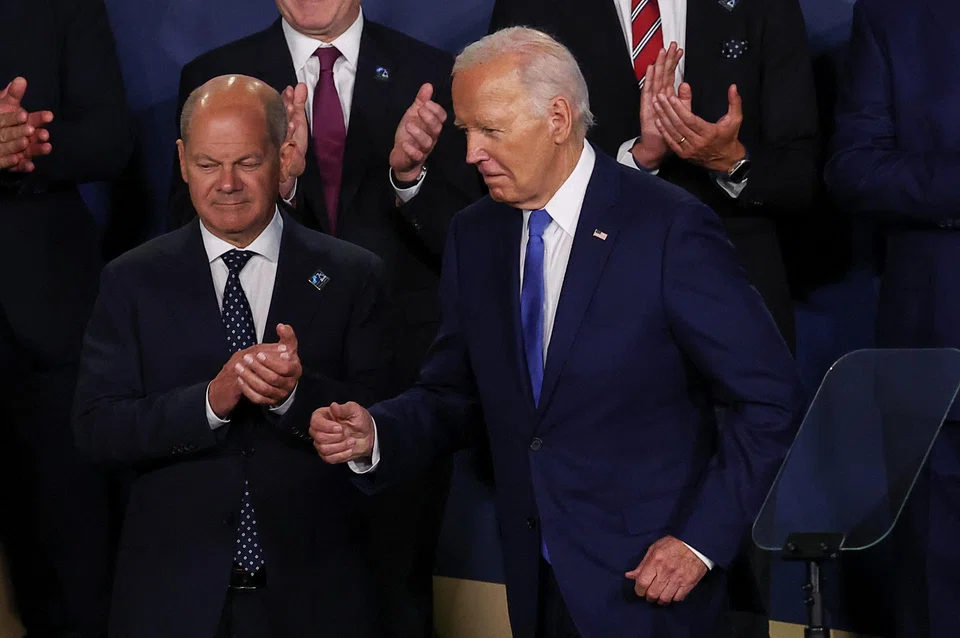
OF ALL the 27 European Union nations, it is Germany, the bloc’s most powerful state and largest economy, that may have most at stake in November’s US elections. This will be clear this week when US President Joe Biden makes what is likely to be his last official trip to the European continent, to Berlin, from Thursday (Oct 10) and into the weekend.
Biden’s relationship with German Chancellor Olaf Scholz has been far from disagreement-free over the last few years. One signal of this is that Scholz was not accorded the privilege of a state visit during the several times he visited Washington, DC, to see the US president.
Nonetheless, the relationship between the two men has been significantly more constructive than that beforehand between their two predecessors, Angela Merkel and Donald Trump, respectively. That the four-year period of overlap in office between Trump and Merkel, from early 2017 to early 2021, saw the biggest flux in bilateral ties in decades is unquestionable. There were not only major policy challenges, but also very poor personal relations between the two leaders.
To be sure, there have been previous significant disagreements between Germany and the United States from time to time in the post-war era. One instance was the 2003 Iraq War, which saw a significant schism in the transatlantic alliance when then chancellor Gerhard Schroeder opposed then US president George W Bush’s decision to topple Saddam Hussein’s regime.
However, Germany has generally had strong ties with the US since 1945. Indeed, for much of her long chancellorship from 2005 to 2021, Merkel was seen by numerous US presidents, especially Barack Obama from 2009 to 2017, as the “go-to” European leader in times of crisis.
Merkel and many other politicians in Berlin, including Scholz who served in her last government as finance minister, were therefore thankful to see the back of Trump in 2021. Biden, a longstanding Atlanticist US politician, was expected to bring back much of the stability of traditional post-war bilateral ties with Berlin, and this has largely been delivered on.
The fact that Scholz, and much of the German political elite, has welcomed Biden’s presidency will be shown this week as he makes the first state visit by a US leader in almost four decades, receiving full military honours to boot. It was Ronald Reagan in 1985 who was the last US president accorded the pomp of such a visit; so Biden becomes the first to get this privilege since German reunification in 1990.
A centrepiece of Biden’s restoration of relations with Germany has been over Ukraine where, by and large, there has been alignment with Scholz following Russia’s invasion in 2022. In his forthcoming trip to Berlin, the US president will play to this theme by hosting a meeting at Ramstein Air Base with the more than 50 countries supporting Kiev as part of the Ukraine Defense Contact Group.
This group is an alliance of various countries that have united to coordinate and accelerate military assistance to Ukraine in its fight. This series of international meetings of ministers – which will this week reportedly also see Ukrainian President Volodymyr Zelensky, French President Emmanuel Macron, and UK Prime Minister Keir Starmer in attendance – is named after the Ramstein base where the first meeting took place in April 2022.

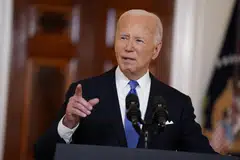
Beyond this key Ukraine issue, Biden and Scholz have found significant common ground on wider agendas in the post-Trump, post-Brexit era. This includes close cooperation on a range of challenges, including ending the pandemic, addressing the threat of climate change, and promoting economic prosperity.
The diplomatic mood music between Berlin and Washington has also improved since the end of a 17-year transatlantic aerospace trade war over alleged government support for Airbus and Boeing. Both sides announced then that they would suspend retaliatory tariffs on billions of dollars in non-aviation goods and ensure that future research and development funding would not favour each other’s aviation industries.
Moreover, Biden has also dialled down US rhetoric, in public, on several longstanding irritants in the bilateral relationship, especially trade and defence spending, that Trump had emphasised. On trade, for instance, Trump repeatedly called Germany “very bad” because of its significant trade surplus, and he castigated Germany’s failure to spend 2 per cent of its gross domestic product on defence spending, a key Nato goal.
These remain important for Biden too. Yet, they are ultimately subservient to his broader strategic goal of reconsolidating the Western alliance in the face of growing security challenges, including from Russia.
So Biden has done all he can to stabilise the bilateral relationship with Berlin. For in the post-Brexit era, the US president sees Germany as an increasingly important anchor point in the transatlantic relationship in a time of increasing geopolitical flux.
Yet, for all that Biden’s trip this week will lift spirits in Germany, there is much concern about the pending US election. Scholz and most other mainstream politicians in Germany would strongly favour a win for Biden’s vice-president, Kamala Harris. This is not because of wild enthusiasm for Harris, but much more out of concern about the consequences for Berlin of a second Trump administration from 2025 to 2029.
Between 2017 and 2021, bilateral relations sometimes appeared to go into free fall, including the possibility of a trade war. A range of bilateral irritants plagued relations, from foreign policy issues such as the Iran nuclear deal to Trump’s trade sanctions on steel and aluminium imports.
The personal factor was also important, with Merkel’s style and values colliding with those of Trump, who relishes his role as disruptor of the established Western order that she embodied, whereas she had a very strong relationship with President Obama. This came through even back in March 2017, when Merkel first met Trump, and he appeared to refuse shaking her hand at a press conference.
Under any second Trump presidency, these tensions will likely resurface, possibly in an intensified form in some cases. This includes over China policy, probably a key focal point for any second Trump administration, which would be critical of the continuing strong business ties between Beijing and Berlin.
So for all the warm words this week between Biden and Scholz, November’s election is keeping Berlin on edge. While few EU states would welcome a second Trump presidency, it may be Germany that has the most to lose of them all.
The writer is an associate at LSE IDEAS at the London School of Economics
Decoding Asia newsletter: your guide to navigating Asia in a new global order. Sign up here to get Decoding Asia newsletter. Delivered to your inbox. Free.
Share with us your feedback on BT's products and services
TRENDING NOW

He built the Vingroup empire. Now South-east Asia’s richest man is handing some key roles to his sons

Grab CEO’s wife Chloe Tong on life with Anthony Tan and finding her purpose

Deal between tycoon friends sparks scrutiny of Philippine power sector

Singapore’s S$80 million vertical farm must pass the 50-cent test to succeed

