

Why Indonesia must seize the Tropical Forests Forever Facility
A new fund will debut at COP30 – Brazil is already all in and Indonesia must stop stalling
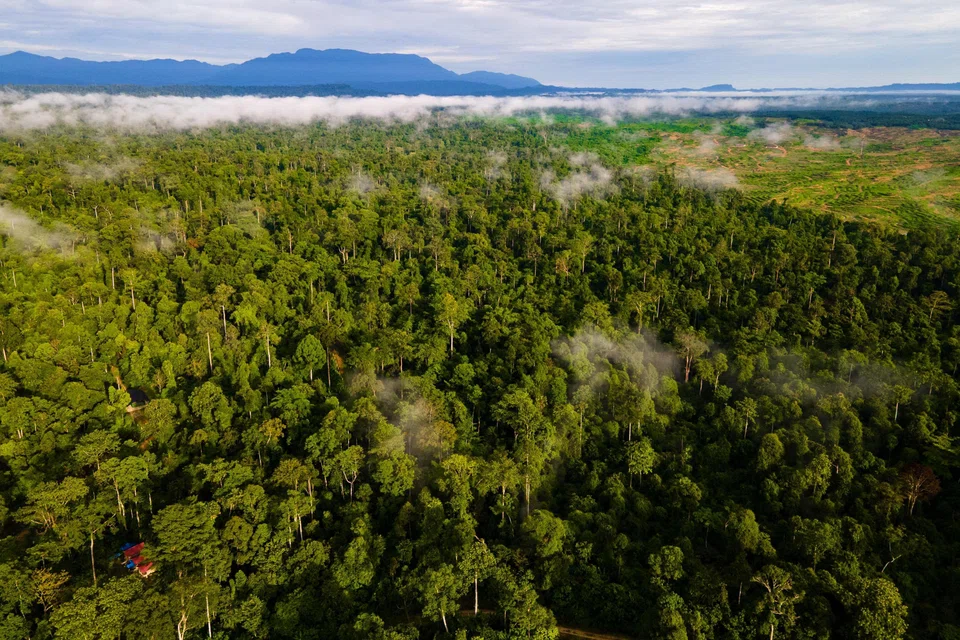
WHEN world leaders gather in Belem this November for COP30, the spotlight will not just be on emissions targets or carbon markets. A new actor is garnering attention: the Tropical Forests Forever Facility (TFFF). Brazil’s audacious push to create a US$125 billion endowment-style fund to reward tropical forest nations for preserving their standing forests demands serious attention – not least from Indonesia, a country whose forests are among the world’s most precious, yet most imperilled.
For decades, Indonesia has relied on carbon markets, bilateral aid, REDD+ (Reducing Emissions from Deforestation and Forest Degradation) schemes, and grants to fund forest conservation. These models have value, but they also come with limits: volatility, uncertainty, bureaucracy and delayed compensation. TFFF promises something different – steady, predictable finance tied directly to forest conservation performance, with built-in benefit sharing for indigenous peoples and local communities. It reframes forest protection as a long-term investment, not charity.
Brazil has already stepped up. President Luiz Inacio Lula da Silva has committed US$1 billion to the fund, making his country the first to convert rhetoric into hard capital. The architecture of TFFF is being co-shaped by Indonesia and other tropical forest countries, alongside donor governments and philanthropies.
Roughly US$25 billion is expected from governments initially, intended to leverage another US$100 billion from private investors. More than 70 developing countries with tropical forests will be eligible to receive funds from this multilateral fund.
The Green Climate Fund (GCF) has also signalled readiness to participate. Its involvement lends credibility and can unlock additional philanthropic capital and private investment. Through its Readiness Programme, the GCF can help countries meet eligibility criteria: defining forests transparently, building reliable monitoring systems, establishing benefit-sharing mechanisms, and aligning national policies with safeguards.
For countries not yet ready, this GCF backing signals to foundations, impact investors and civil society that a country’s systems are robust and worth backing. This creates a bridge to TFFF access and multiplies leverage.
Yet despite being among the founding tropical forest countries in the TFFF design process, Indonesia remains relatively passive. Unlike Brazil’s bold financial commitments, Indonesia has not yet laid out a public plan for how it will use TFFF or moved decisively to align national policy to capture the benefits. The risk is clear: Indonesia may end up with only peripheral gains while forfeiting what could be transformative, long-term financing.
What’s at stake – for Indonesia and the world
More than national assets, Indonesia’s forests are a global climate stabiliser. They store nearly 80 billion tonnes of carbon and host one-tenth of the world’s remaining tropical rainforest biodiversity. The fate of these ecosystems will heavily influence whether the world keeps the 1.5 degree Celsius Paris goal alive. If Indonesia leads on TFFF implementation, it could prove that protecting standing forests at scale is financially viable – setting a template for all tropical nations.
Beyond a conservation fund, TFFF is a powerful tool for reducing global carbon emissions and fulfilling the Paris Agreement commitments, where developed countries assist developing ones through climate finance.
It offers a restorative economic alternative – with at least 20 per cent of funding proceeds managed directly by indigenous peoples and local communities, so forest conservation can generate sustainable livelihoods and channel economic benefits where they are most needed.
Conversely, if Indonesia hesitates, the consequences reach far beyond its borders. Global forest finance could lose momentum, investor confidence could falter, and one of the world’s largest carbon sinks could slip closer to a tipping point. TFFF’s credibility itself may hinge on Indonesia’s participation: Without one of the biggest tropical forest nations actively engaged, the initiative risks appearing incomplete.
Seizing the moment
So, what must Indonesia do – now?
First, Jakarta should publicly commit to joining TFFF under clear terms: mapping eligibility, monitoring, reporting and benefit-sharing. It should solicit GCF readiness support to strengthen systems where needed. Delay costs more than dollars; it risks further emissions, biodiversity loss and local community disillusionment.
Second, national policy must adapt. The conservation sector needs regulatory certainty – on land tenure, indigenous rights and safeguards against deforestation and perverse subsidies. Without these, performance-based payments risk leakage and loss of trust.
Third, Indonesia should view TFFF not as a competitor to carbon markets but as complementary – and in some respects, superior. While carbon markets reward avoided emissions or removals, TFFF rewards standing forests in perpetuity. This is especially powerful for Indonesia, given the ecological value of its rainforests and peatlands. Jakarta should model potential revenue from both TFFF and carbon credit flows, integrate them into its budgeting, and make strategic choices.
Finally, civil society, business and local communities must be at the centre. Ensuring that at least 20 per cent of payments go to indigenous peoples and local communities is not just a moral obligation; it enhances legitimacy and strengthens on-the-ground conservation.
COP30 offers Indonesia a rare chance to shape the next generation of forest finance. But this moment matters for the entire planet. If Indonesia steps up, it can help anchor a durable, performance-based global system that rewards conservation as a public good. If it stands back, the world loses not only a model, but perhaps the momentum to keep our forests, and our climate, forever.
Both writers are from the Center of Economic and Law Studies in Jakarta. Bhima Yudhistira Adhinegara is executive director and Muhammad Zulfikar Rakhmat is director of the China-Indonesia desk.
TRENDING NOW
Two Singapore-listed palm oil firms named in Greenpeace report on Indonesian plantation fires

Singapore Airlines flight returns to San Francisco after ‘unruly’ passenger incident

Singapore looking into which companies responsible for haze-causing fires: PM Wong
Deluge IPO 3.86 times subscribed ahead of SGX debut

