

Why Japan’s economy remains a warning to others
Low real rates, low growth and high debts are not going away
FOR most of this century, it has looked as if the world’s economy was turning Japanese, with low growth, below-target inflation and rock-bottom interest rates. Today, the question is how much Japan will come to look like the rest of the world.
On Tuesday (Mar 19), the Bank of Japan (BOJ) raised interest rates for the first time since 2007, after inflation seemed at last to have become entrenched. Interest on balances held at the bank, previously set at minus 0.1 per cent, will now be 0.1 per cent.
The central bank, under its relatively new governor, Ueda Kazuo, also scrapped its policy of yield-curve control, which capped long-term bond yields at 1 per cent. Having kept monetary policy ultra-loose for years, Japan has now begun to follow the course set by other economies since widespread inflation took hold.
It is a remarkable moment. Before 2022 annual inflation had been above 2 per cent for only 12 of the previous 120 months; today it has been above that level for 22 consecutive months. Japan’s biggest firms recently agreed to increase wages by 5.3 per cent, a level that would have been unthinkable before the global inflation breakout.
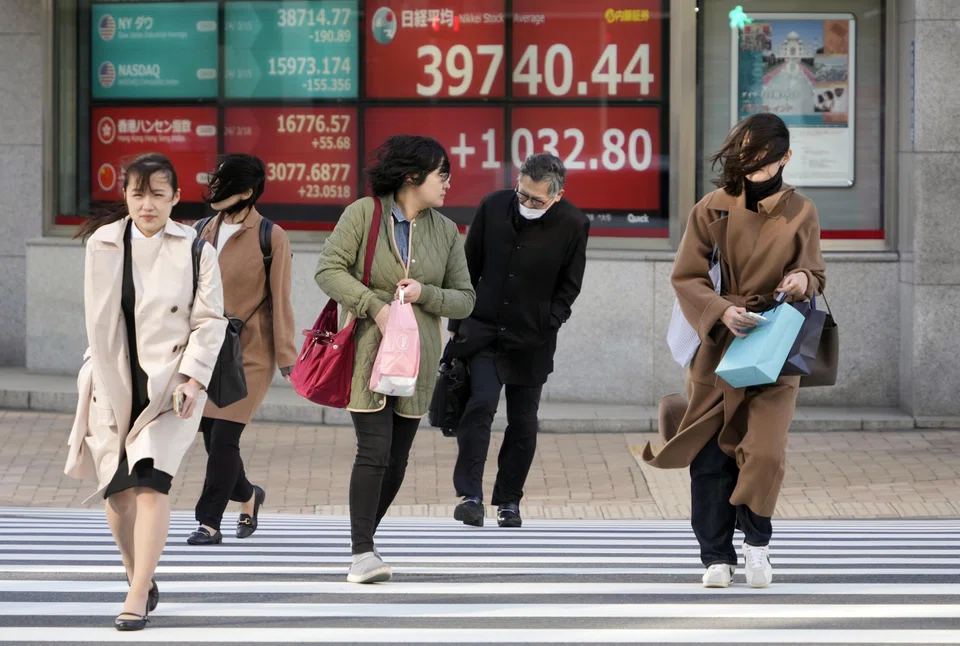
There is a sense that change is here to stay. Stocks have been booming – the Nikkei 225 recently passed its December 1989 record – and investors are optimistic about the economy.
Yet it would be wrong to conclude that Japan is de-Japanifying. More important than an economy’s nominal attributes such as inflation, headline interest rates and stock market growth are its real, structural features.
If you look at the fundamentals, even the rise in interest rates is not quite what it seems.
The 2 per cent inflation target which the BOJ believes is now in sight is 1.4 percentage points higher than the average inflation rate over the 10 years to the end of 2021.
This 1.4 percentage point rise in expected inflation towers over the 0.2 percentage point rise in interest rates, which in real terms have therefore fallen, not risen.
Moreover, the bank made clear in its statement on Tuesday that it expected to maintain “accommodative” financial conditions and would keep buying some bonds.
Rock-bottom real rates reflect the fact that Japan’s elderly population – 30 per cent are over 65 – has abundant savings. Companies struggle to put these to productive use, because an economy with a shrinking population has a lower appetite for capital investment.
Japan’s demography and its unwillingness to allow much immigration also constrain its growth.
The International Monetary Fund expects average annual GDP growth of just 0.5 per cent over the next four years, compared with 2 per cent in America. That is a respectable pace given the lack of workers – growth in output per worker has long been healthy. But it is hardly a resurgence.
A final factor is Japan’s enduring public indebtedness. The debt-to-GDP ratio is 255 per cent in gross terms, or 159 per cent after netting off the government’s financial assets; both measures are the highest in the rich world.
Even with low interest rates, nearly 9 per cent of the government budget is spent on debt interest. Japan could not withstand a monetary tightening anything like as severe as the one in America, where rates have reached 5.25 to 5.5 per cent.
Long before they got to such levels in Japan, the government would have to reduce its deficit, which was 5.6 per cent of GDP in 2023. The economy would cool from fiscal belt-tightening, not higher rates.
With monetary policy, as with growth, there remains only one path by which Japan will cease to be exceptional: if the rest of the world comes to resemble it.
©2024 The Economist Newspaper Limited. All rights reserved
TRENDING NOW

Two Singapore-listed palm oil firms named in Greenpeace report on Indonesian plantation fires

Singapore Airlines flight returns to San Francisco after ‘unruly’ passenger incident

Singapore looking into which companies responsible for haze-causing fires: PM Wong

Deluge IPO 3.86 times subscribed ahead of SGX debut

