

Why JFK’s legacy still matters globally 60 years on
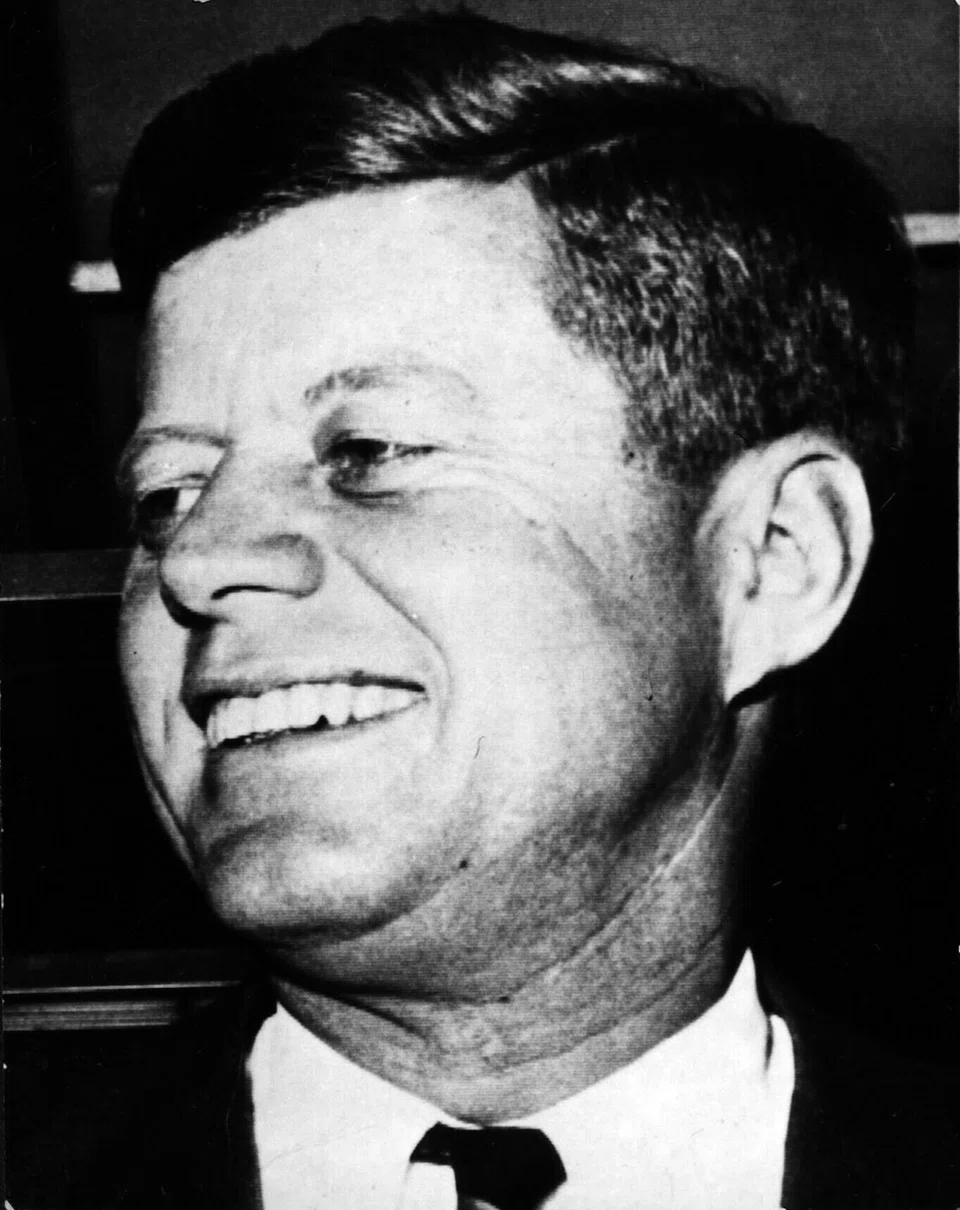
DESPITE holding office for fewer than three years, former president John F Kennedy has long been perceived by the US public as one of the best occupants of the White House. Yet JFK’s presidency is inspiring not just to American citizens, but also to many internationally too.
Sadly, Nov 22 marks the 60th anniversary of Kennedy’s assassination, one of the days that stands out in history for the wrong reasons. Yet his presidency still offers enduring implications for international relations today.
This is not least given the acute lack of statesmanship in recent years. Indeed, the anti-intellectual mood that brought populists to power like Donald Trump disparages the very notion of statesmanship.
Through JFK’s skilful rebalancing of hard and soft powers, he powerfully renewed US global leadership in the early 1960s, thus helping to thaw the permafrost of the Cold War. At a time when the United States-Soviet rivalry was becoming heavily militarised, part of JFK’s political genius was to appreciate that the superpower contest was as much a battle for ideas as strength of force.
Here his projection of hope and optimism, and stirring rhetoric appealed to US and international audiences alike, including those behind the Iron Curtain in the Soviet Union. Landmark speeches included the one in June 1963 in Berlin in which he offered US solidarity with what was then West Germany, and the September 1962 Rice University “man to the moon” address.
And his desire to reset US-Soviet relations was expressed eloquently too, including a compelling speech at the American University in June 1963 – soon after the Cuban crisis. This was described even by then Soviet Premier Nikita Khrushchev as the “the greatest speech by any US president since (Franklin) Roosevelt”.
Renewal of US international policy was not, however, just rhetorical as initiatives like the Peace Corps and the South America-focused Alliance for Progress underline. And, through landmark achievements such as the international Nuclear Test Ban Treaty, JFK gave substance to his ambition of moving towards international peace. For some, his presidency was thus a pivotal moment that helped bring about detente and major arms control treaties later in the 1970s.
To be sure, an objective appraisal of JFK’s tenure in the White House must highlight the lows as well as the highs. Major successes include his management of the Cuban missile crisis (perhaps the single most dangerous moment of the Cold War), and paving the way for landmark US civil rights legislation which was ultimately enacted during his successor Lyndon Johnson’s presidency.
However, there was also the Bay of Pigs invasion debacle. And in domestic policy, he had a much more limited record of legislative success than Johnson. Professional historians therefore tend to rate JFK’s presidency as “good”, rather than “great”, with some reason.
Nonetheless, had he not been assassinated, he would likely have been re-elected in 1964 and it is intriguing to consider what record of success he would have further accrued in a second term. This includes whether he would have limited US engagement in Vietnam, thus avoiding Johnson’s grave policy failure in that Asian nation.
Of course, the circumstances of today are transformed from those of the early 1960s. As well as the end of the Cold War, the US has experienced relative decline: for instance, its economy now accounts for less than a quarter of the global gross domestic product compared with around a third then.
Yet, the relevance of JFK’s key insights about international cooperation and peace endures. As does the wisdom of much of the way in which he harnessed US leadership and power to try to achieve these ends.
Indeed, given the ongoing information revolution, the importance of achieving a better balance between – often very expensive – hard power assets and soft power resources is perhaps even more salient today for US policymakers. And this is true right across the world from Latin America to the Asia-Pacific and the Middle East.
On China policy, for instance, an increasing number of US and wider Western politicians advocate an unqualified, much tougher stance towards Beijing. However, as JFK would have recognised, there are some agendas where there is much to gain from cooperation with Beijing too, and it would be a mistake to view the relationship solely through a lens of threat and suspicion.
To be sure, there remains a hugely legitimate need for maintaining significant US military power in Asia, not least to reassure key allies.
However, on issues such as climate change, where China now accounts for over a quarter of global carbon dioxide emissions, Beijing has a key role to play in concert with the US.
The importance of this was shown in the lead-up to the conclusion of the 2015 Paris climate treaty. In November 2014, the US and China agreed on a key bilateral deal on global warming that became a precursor for the Paris deal.
So here the role of soft power is key as Washington seeks to try to better integrate Beijing into a network of regional and global institutions and alliances. In so doing, this may possibly help incentivise China even more strongly towards a path of constructive partnership, despite all the many bilateral challenges of recent years, before and after the pandemic.
In the Middle East meanwhile, US standing in numerous countries has unfortunately been at a very low ebb for some decades, as surveys such as Pew Global’s have shown. This includes key nations like Pakistan, Jordan, Egypt and Turkey.
Despite some US overtures, such as those by former US presidents including Barack Obama, the challenge remains monumental. This is such a critical issue given the wide range of US priorities in the Middle East and other Muslim-majority countries.
As JFK would have surely recognised, there is a compelling need to redouble efforts to win the battle for moderate “hearts and minds” across the Middle East. This can be best achieved through a vigorous reassertion of US soft power, combined with prudent use of hard power.
Such an agenda would include much greater resourcing for activities such as public diplomacy, broadcasting, development assistance and exchange programmes. US public diplomacy is in particularly strong need of revitalisation, and a clearer long-term strategy is essential.
Taken together, JFK’s key insights about international cooperation and peace therefore retain much relevance and appeal in the 2020s. For this reason alone, his presidency will continue to hold enduring value, and also inspiration, right across the world for years more to come.
The writer is an associate at LSE IDEAS at the London School of Economics
TRENDING NOW

First Resources blames El Nino, outside fires for Kalimantan hotspots amid haze scrutiny
High Court rules against Julius Baer’s Singapore trust arm in US$50 million family trust dispute
Singapore key exports jump by higher-than-expected 68.4% in September, led by non-electronics

MSCI proposes downgrading Indonesia to standalone market status

