

Why my bearishness has been wrong so far
Economic resilience in the US will probably support corporate earnings, but unresolved inflationary pressures make navigating the market more complicated

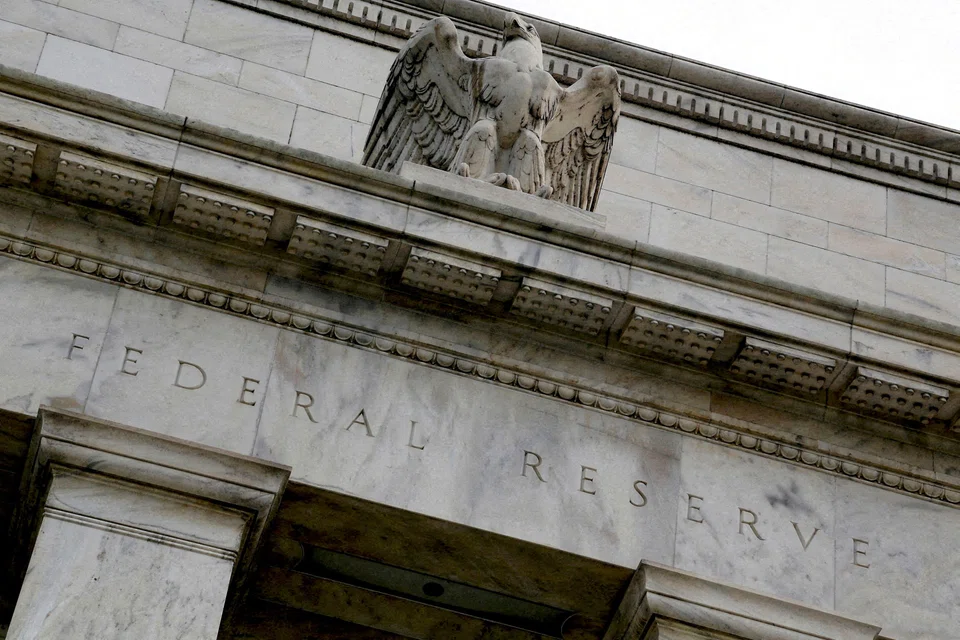
WITH the US Federal Reserve pausing its aggressive rate hiking cycle this past week, it seems appropriate to take stock of the bearish view this column has been expressing over the last several months.
On the face of it, I have not done well at all. The S&P 500 index closed on Friday (Jun 16) at 4,409.59. This was 14.8 per cent higher than where the benchmark US stock index ended last year, and 11.1 per cent above where it was just before the Fed began pushing rates up in March 2022.
In fact, the S&P 500 is now up 23.3 per cent from the closing low it set on Oct 12 last year – more than the 20 per cent rise that some market watchers say defines a bull market.
One key driver of this robust performance was a sharp rebound in US technology stocks, fuelled by expectations of peaking inflation and interest rates as well as excitement about the rise of artificial intelligence (AI).
Nvidia Corp – a maker of chips needed to power emerging AI products – is up 271.2 per cent since Oct 12 last year. It was, by far, the best performing component of the S&P 500 during the period.
Advanced Micro Devices (AMD), another chipmaker that could cash in on the AI boom, is up 107.6 per cent.
Meta Platforms (formerly Facebook) was the second best performing component of the S&P 500 during the period. It chalked up a gain of 120.4 per cent, as its advertising revenue improved and its refocus on profitability paid off.
But the S&P 500’s resilience over the past year was not just due to a narrow group of technology stocks. Companies riding the post-pandemic recovery in travel and leisure activities were also well-represented among the benchmark index’s top performers.
Cruise companies Carnival and Royal Caribbean, for instance, are up 116.1 per cent and 110.1 per cent, respectively, since Oct 12. Wynn Resorts is up 76.7 per cent, while Las Vegas Sands is up 60.1 per cent. Booking Holdings, which owns travel fare aggregation platforms, is up 57.6 per cent.
One could argue the surprising resilience of the S&P 500 over the past year in the face of rising interest rates was partly due to the unexpected strength of the US economy following the pandemic.
Some analysts explain it this way: pent-up demand fuelled by savings accumulated during the pandemic is blunting the impact of higher inflation and interest rates on some economic sectors – such as travel and leisure activities.
US economic resilience
One possible outcome of this so-called “rolling recession” – where downsizing and layoffs affect only some sectors at a time – could be the sort of soft landing for the US economy that Fed chairman Jerome Powell has been envisioning.
“I continue to think – and this really hasn’t changed – that there is a path to getting inflation back down to 2 per cent without having to see the kind of sharp downturn and large losses of employment that we’ve seen in so many past instances,” he reiterated during a press conference following the Federal Open Market Committee (FOMC) meeting last week.
Powell’s colleagues seem to agree that the US economy is proving to be more resilient than expected. The median projection by FOMC meeting participants last week of US gross domestic product growth in 2023 was 1 per cent – up from their median projection in March of 0.4 per cent.
Their latest median projection of US unemployment in 2023 is 4.1 per cent, lower than their median projection in March of 4.5 per cent.
But this economic resilience could mean US monetary policy will have to be tighter for longer in order to quell inflation.
The latest median projection by FOMC meeting participants of core US inflation in 2023 is 3.9 per cent, up from 3.6 per cent in March.
Their median projection for the midpoint of the federal funds rate by the end of this year is now 5.6 per cent, versus 5.1 per cent in March. This suggests the FOMC meeting participants now expect two further 25-basis-point rate hikes this year.
While stronger economic growth and lower unemployment would be supportive of corporate earnings, unresolved inflationary pressures could make navigating the market in the months ahead more complicated.
When exactly will the Fed hike rates again? Will two further rate hikes be sufficient to curtail US inflation? Or, would rates have to be pushed much higher to achieve this?
What if the further tightening in monetary policy weighs on growth but not inflation? What would structurally higher inflation and interest rates mean for the market?
Tread cautiously
This global macroeconomic uncertainty is bound to colour the outlook for markets in this region in the months ahead.
Indeed, it is hard to miss the parallels between the Singapore market and the US market in recent months. Much like the S&P 500, the Straits Times Index hit a low in October – specifically, on Oct 21 – as expectations of inflation and interest rates began to shift.
Since then, the STI has rebounded 9.8 per cent. Among the best performers is Singapore’s own pre-eminent post-pandemic recovery play, Singapore Airlines – which has soared 54.2 per cent.
Only two other components of the STI performed better during the period – Sembcorp Industries and Keppel Corp, which are up 103.2 per cent and 64.7 per cent, respectively, in the wake of big value-unlocking initiatives.
Meanwhile, a number of once-high-flying industrial real estate investment trusts (Reits) have made a strong comeback. Keppel DC Reit is up 28.1 per cent. Frasers Logistics & Commercial Trust is up 20.6 per cent. Mapletree Logistics Trust is up 20.3 per cent.
On the other hand, the three local banks have trailed the STI’s advance since its October low. OCBC and UOB are up 9.7 per cent and 7.6 per cent, respectively. DBS is down 3.7 per cent – making it the worst performing STI component during the period.
Will the prospect of further rises in interest rates revive sentiment in the banks? Or, will concerns about a recession weigh on them?
Should investors stay with post-pandemic recovery plays such as SIA? Is the rebound in Reits sustainable? Is the Singapore market still a good place to hunt for income?
Next month – on Jul 15 – I will try to answer these and other questions at the Mark To Market “Live” event with the help of three experts: OCBC Bank’s head of wealth advisory Aaron Chwee, RHB Bank’s real estate and Reit analyst Vijay Natarajan, and Azure Capital’s chief executive Terence Wong.
Full details of the event and a registration link can be found below.
For now, my own instincts tell me this is not the time to take big risks. The way I see it, the full effect of the rapid rise in interest rates is not yet evident. As the Fed continues pushing rates higher, it could be just a matter of time before the economy slows and the market rolls back.
But perhaps the gentlemen joining my discussion panel on Jul 15 will change my mind.
Mark to Market “Live” takes place on Jul 15 (10 am to 1 pm) at The Capitol Kempinski Hotel. Sign up now at bt.sg/m2mlive23. Registration closes on Jul 2 or when capacity is full.






