Why natural capital is key to Earth Day success
NEXT week’s Earth Day (Apr 22) has an intriguing economic theme this year: “Investing in our planet”.
The goal of the organisers is engaging more businesses and wider organisations, plus the more than one billion citizens who participate annually in Earth Day, to do their part so everyone is accounted for, and everyone is accountable. What this underlines is that governments cannot do it all by themselves given the monumental scale of the challenge, and other players from the public, private and third sectors must now enter the arena to ensure the level of ambition is delivered in a more ambitious, inclusive and, ultimately, more effective fashion.
To this end, one of the key activities promoted by organisers this year is improving our shared environment by getting more people and organisations to plant trees across the globe. Since 2010, Earth Day has helped oversee the planting of tens of millions of trees with The Canopy Project, working worldwide to strengthen communities. This is helping reforest areas in dire need of rehabilitation, including areas with some of the world’s communities most at risk from climate change and environmental degradation.
However, the motto of investing in our planet is interesting too in a wider sense, given a growing body of opinion that putting a valuation on so-called natural capital is key to protecting the planet. The fact that greenhouse gas emissions are rising, deforestation is accelerating, and biodiversity is being lost at an alarming rate acknowledges that our collective international response to sustainability issues has so far been limited – and this must change.
One enabler of this could be natural capital accounting, which is the process of calculating the total stocks and flows of natural resources and services in a given ecosystem or region. Accounting for such goods may occur in physical or monetary terms. This process can subsequently inform organisational and consumer decision-making as each relates to the use or consumption of natural resources and land, and sustainable behaviours to preserve them.
The importance of this approach can be illustrated using the forestry example. Previous research has underlined that greater value resides in elements such as soil stabilisation that stops the neighbouring farmer’s soil getting washed away; watershed protection that purifies the nearby town’s water supply; flood prevention that protects the local village; and provisioning and pharmaceutical services that feed and medicate indigenous people, let alone carbon sequestration to mitigate global warming.
Collectively, these are estimated by some researchers to provide more than half of the value of a tropical forest. Yet many economists regard them as “externalities” (wider socio-economic benefits) which, although immensely valuable, do not accrue to any individual property owner, as the benefits are experienced by communities at large.
For instance, it has been estimated that the cumulative loss of ecosystem services from 2000 to 2050 – at current rates of decline – is roughly equivalent to losing 7 per cent of global gross domestic product (GDP).
In seeking to better quantify and value natural capital in this way, a growing body of people are therefore seeking to put a price on these “free goods” as a way of trying to protect them. This would move beyond measures such as GDP which are widely accepted measures of economic activity, but not necessarily of broader wealth in natural ecosystems.
The need for such an approach is illustrated by the alarming results of studies showing increased decline of tropical forests. It is clear from satellite data that there are significant areas being deforested as a result of illegal logging, agriculture and mining.
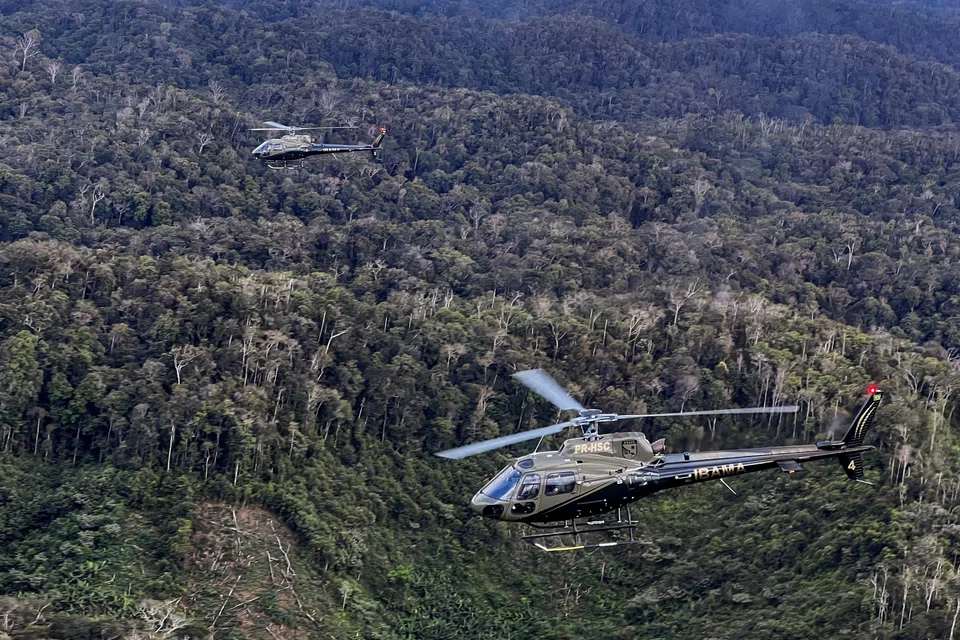
Take the example of deforestation in Brazil’s Amazon rainforest, which increased 14 per cent in March 2023 compared to the previous year, according to preliminary official statistics. This is despite the fact that President Luiz Inacio Lula da Silva entered office on Jan 1 promising to put a stop to deforestation after his predecessor, Jair Bolsonaro, reduced environmental protection operations in the Amazon.
In the first quarter of 2023, Amazon deforestation was the second-highest on record with 844 square kilometres (sq km) destroyed in the period. Only the first quarter of 2022 was higher with 941 sq km of deforestation.
US climate envoy John Kerry has said that the world cannot meet its climate goals unless it protects the Amazon rainforest. So Washington announced in January that it intends to contribute to Brazil’s Amazon Fund, which supports conservation projects. Norway has also pledged its support for Brazil’s efforts to attract additional donor countries for the Amazon Fund.
The European Union (EU) has also recently launched a new Deforestation-Free Regulation (or EU-DR) to try to address the issue. This rule requires companies importing certain goods to certify that such products are not linked to deforestation, after Dec 31, 2020.
Those targeted products are either in direct competition with the EU’s products such as beef, soya, palm oil, and timber products, or not farmed in the EU – such as coffee, cocoa, and rubber. Controversially, the EU-DR excludes the EU’s own degraded millions of hectares of peatlands that emit massive pollution.
Yet despite these imperfect international mechanisms and monies to reduce deforestation and forest degradation, global developments are very concerning. Reducing emissions is vital, with deforestation representing up to a fifth of global carbon dioxide emissions – more than that of the entire transport sector. Brazil and Indonesia alone account for more than half of the world’s emissions from forest loss.
In the Amazon, for example, around a fifth of forests have been lost in the last six decades. It is critical to recognise that more than 1.5 billion people rely directly on externality benefits that forests offer, including food, fresh water, clothing, traditional medicine and shelter. Not to mention the role that such forestry plays in stemming global warming.
As the US, Norway and EU developments underline, there are growing moves for developed economies with emission reduction obligations to launch initiatives such as paying developing countries, where most of the world’s major intact forests are found, for the services they provide in absorbing carbon dioxide from the atmosphere and locking it up. However, it is clear that national and global processes to put the world onto a more sustainable pathway need a serious injection of post-pandemic, political urgency.
This underlines that the time is ripe for new energy and ideas to create the foundation for genuine sustainable development, and secure post-pandemic prosperity for billions across the world.
The writer is an associate at LSE IDEAS at the London School of Economics.