Why people still matter in the AI era
As population decline accelerates, the big risk is labour shortages, not mass unemployment
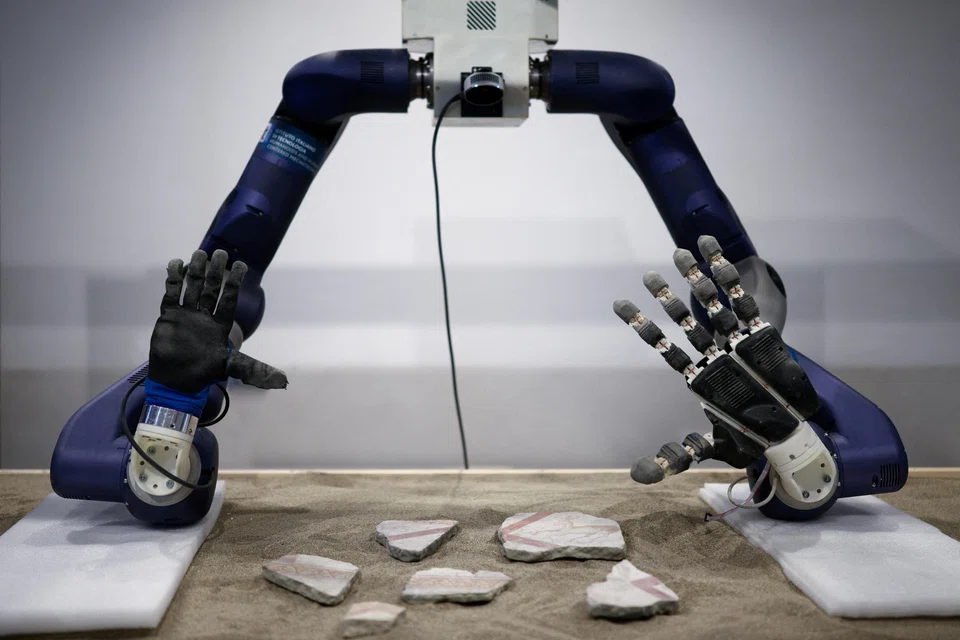
EVERY tech revolution has inspired fears that innovation will destroy jobs. While those fears have never played out, artificial intelligence (AI) is cast as much more disruptive, because it has the potential to perform so many tasks the way people do – or better.
Is the threat to human labour that different and dire this time?
What the current obsession with AI overlooks is that another (counter) force is also advancing rapidly.
In the past four decades, the number of countries in which the working age population is shrinking has risen from zero to 55, including most of the major economies. This collapse is accelerating now because families are having even fewer children than expected.
Last year, the number of babies born in China fell to the lowest level since the birth of the People’s Republic in 1949, and in Japan to the lowest level since 1899.
Compared to forecasts 10 years ago, the global fertility rate is on track to fall below the level required to stabilise the population 25 years earlier than expected, in 2050. As a result, the world’s working-age population is predicted to peak 30 years earlier, in 2070.
There are signs that AI is already raising output per worker, which could lower overall demand for human labour. But against a backdrop of rapid population decline, the marvels of AI are more likely to ease the coming labour shortages than trigger mass unemployment.
Tech revolutions of the past killed industries, not jobs.
The 19th-century rise of machines drove workers from farms into factories, and from factories into services. In the 1910s, as the car displaced the horse, carriage drivers gave way to truckers and cabbies.
In the 1970s, automated teller machines allowed banks to cut costs, open more branches and hire more human tellers. Starting in the 1990s, by one estimate, the Internet displaced about 3.5 million US jobs but created 19 million.
AI could well be far more disruptive. One forecast puts the maximum “addressable” labour market for AI and its offspring, humanoid robots, at four billion jobs worldwide.
So far, though, AI is hardly displacing humans at a jarring pace. The unemployment rate is near multi-decade lows both worldwide and in the US, the AI leader. In Japan, unemployment has been falling and labour-force participation has been rising for years, despite the rapid increase in the country’s robot population.
It’s always easier to see which jobs are at risk now than to imagine the jobs of the future. About a third of new US jobs are of types that did not exist 25 years earlier.
Today, the shift favours workers who know how to build infrastructure for AI, or use it as a tool. Already, new job titles are multiplying for AI content creators, product managers, engineers and system designers, and appear to be more than compensating for losses in traditional job categories.
True, it’s early days. More upheaval may be coming. But if AI triggers mass unemployment, will humans just sit by? During the 2000s, the “China Shock” displaced some six million US factory workers in old industrial regions, and that was enough to fuel populist revolt.
Techno-optimists say AI will be very different because it will replace jobs with leisure. It will free people to live idly off the profits of AI labour, redistributed to them by increasingly parental governments.
So long as work remains a pillar of human dignity, this vision is dystopian fantasy. The more jobs are threatened by AI, the more likely voters will demand that governments slow its advance.
Demographics have long been the most important driver of economic development. No economy has been able to grow rapidly without the tailwind of a growing labour force.
Now, many nations are trying to get ahead of the adverse implications of population decline. Led by the most rapidly ageing societies, they are offering families cash to have more kids, but “baby bonuses” have a record of failure. States can’t intervene effectively in a choice as personal as whether to have a child.
Immigration is one obvious way to expand a nation’s workforce, but of late net immigration has plummeted in most Western societies. Others include nudging more seniors to stay on the job by raising the retirement age, or encouraging more women to take jobs, especially since women are less likely to participate in the global labour force now than they were 30 years ago.
AI can arrive soon enough to help save the world from labour shortages, but it is not likely to unleash widespread joblessness. Not without a fight. People will still matter, as workers and as a political force, in the AI era. FINANCIAL TIMES
The writer is chair of Rockefeller International. His latest book is What Went Wrong with Capitalism.