

Why Singapore depository receipts are quite different from Clob
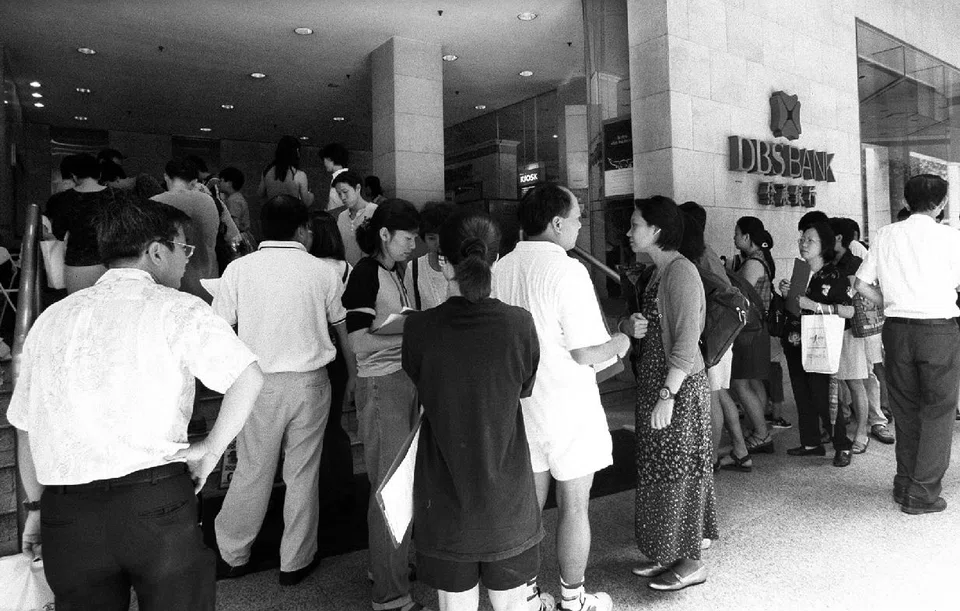
ALMOST 25 years after Malaysian shares abruptly ceased trading on Singapore’s over-the-counter (OTC) Clob International market, the local stock exchange is launching a new initiative that will give Singapore investors exposure to another South-east Asian market: Thailand.
Starting May 30, Singapore depository receipts (SDRs) will be available for three Thai companies: airport operator Airports of Thailand, food retailer CP All, and energy play PTT Exploration & Production.
As with Clob, the intention of the SDRs is to broaden the scope of investments available in the Singapore market to include overseas-listed companies. But that is where the similarity ends.
Clob, short for central limit order book, was not recognised by the Malaysian authorities as an official market for Malaysian shares. It was an OTC market that was launched hurriedly in 1990 after the split of the Stock Exchange of Malaysia and Singapore. (An OTC market is a decentralised market in which participants trade directly with each other, rather than through an exchange.)
In 1998, as the Asian Financial Crisis waged on, the Malaysian government declared Clob an illegal market and ordered the migration of all shares back to what was then called the Kuala Lumpur Stock Exchange.
In contrast, Singapore Exchange (SGX) is launching its first SDRs with the blessing of the Securities and Exchange Commission of Thailand under the Thailand-Singapore DR Linkage established between SGX and the Stock Exchange of Thailand (SET) in 2021.
Both SET and SGX stand ready to help resolve any problems investors may face.
More links can be expected with other Asean exchanges, all with the approval of the respective regulators.
Also, stocks traded on Clob were mostly speculative second-liners. The three companies selected for the initial SDR launch, however, are constituents of the benchmark SET50 Index.
There is every reason to believe future SDRs will be issued on similarly large and high-quality companies whose shares are actively traded on SET.
Some technicalities
Investors should note that an SDR is an unsponsored DR that gives its holders only beneficial economic interest in the underlying security.
In the case of Thai SDRs, each represents beneficial interest in an underlying Non-Voting Depository Receipt (NVDR).
An NVDR is an instrument issued by Thai NVDR Co, a subsidiary of SET, to facilitate trading by reducing barriers to foreign ownership limits. NVDRs are listed and traded on SET.
Although SDR holders are entitled to the same economic benefits afforded to those who hold the actual underlying shares, such as receipt of dividends declared, they are not eligible to directly exercise voting rights.
Nevertheless, an SDR is fungible with the underlying shares through an issuance and cancellation process. An investor may request conversion of SDRs into underlying securities, through a broker, and vice versa. The time frame for conversion is estimated at three common business days during which SGX and SET are open.
The treatment of SDRs will be the same as with any other shares traded on SGX: The custodian will be the Central Depository; clearing and settlement will be according to SGX’s current practices; and broking fees will be the same as for other stocks. In addition, market makers will ensure adequate liquidity.
Will the initiative succeed?
An estimate by the Monetary Authority of Singapore disclosed in November 2021 showed Thailand was one of the top three overseas markets chosen by individual investors in Singapore. This was based on revenue that local retail brokers derived from various securities markets.
SGX intends to publish research about the selected SDR companies on its website, working in partnership with brokers.
Since the closure of Clob, there have been significant developments in global capital markets. Unsponsored depository receipts are common in many international markets, including the United States and Europe, and are widely accepted as a valid means of making stocks available to a wider international audience.
The SDRs have been classified as Excluded Investment Products, which means investors do not have to leap over any special hurdles to buy them. The assumption is that they should be easily understood by retail investors.
Even so, this does not mean they are low risk. Investors should still do their homework and understand the companies before investing. They should read the annual reports of the companies, which will be available in English.
Given the time and effort taken by authorities from both countries to formulate this initiative and the quality of companies chosen, there is every reason to expect the SDR initiative to succeed. This is clearly not another Clob.
The writer is founder, president and CEO of Securities Investors Association (Singapore)
TRENDING NOW

ComfortDelGro appoints two new independent directors

Once staunchly pro-China, Malaysian Chinese businesses are now distancing themselves from Beijing

NoonTalk needs continued financial support from CEO Dasmond Koh, auditors warn

DP Architects sets the benchmark for sustainability disclosure and design

