
THE BROAD VIEW

Why Singapore needs a transition lane – not a handout – for mid-career reinvention

 Here’s how a structured, recoverable support system would work
Summarise
    • Many step away from work not because they must, but because they need to: so that they can care for others, recover from burnout, or realign their careers with evolving values.
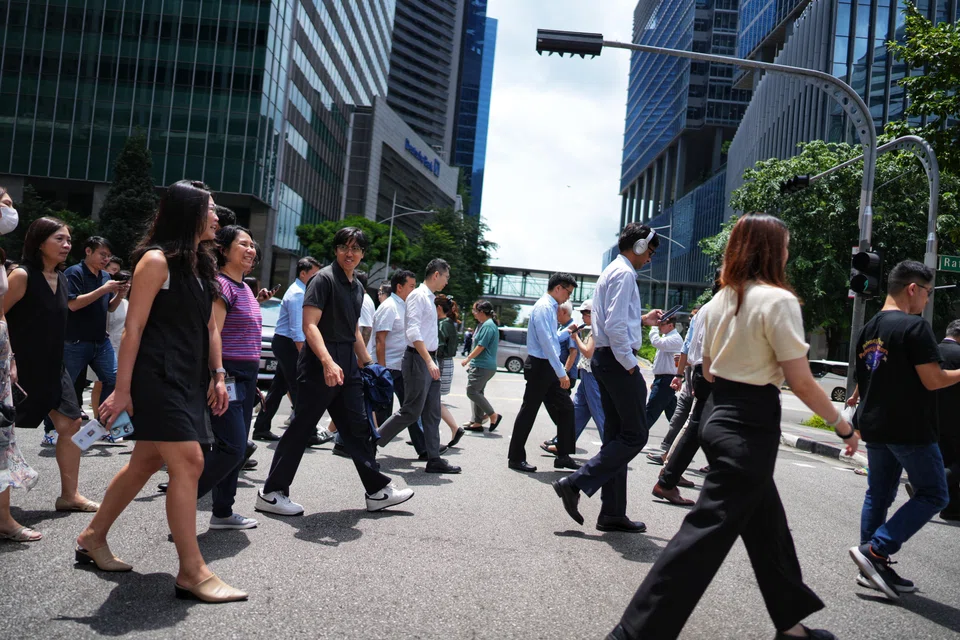
    • Many step away from work not because they must, but because they need to: so that they can care for others, recover from burnout, or realign their careers with evolving values. PHOTO: BT FILE
    Published Sat, Nov 1, 2025 · 07:00 AM

    SINGAPORE’S workforce is being retooled for fresh graduates and those displaced by artificial intelligence (AI) or restructuring. But what about those who leave work voluntarily – with purpose and a plan?

    Today’s policies still treat that group as indulgent or invisible. Many step away not because they must, but because they need to: so that they can care for others, recover from burnout, or realign their careers with evolving values. These transitions are increasingly common, yet our policy frameworks offer little recognition or support.

    Unlike individuals retrenched or dismissed, those who step away on their own terms fall into a grey zone. They are not unproductive, but they are unsupported. These transitions are often seen as personal indulgences – even when they serve broader societal goals, such as sustaining caregiving, preventing long-term burnout, or building capabilities for future industries.


    In my work coaching mid-career professionals, I’ve seen these silent shifts up close. Clients who leave six-figure roles to care for an ageing parent. Executives who step back to recover before re-entering with purpose. Former civil servants founding social enterprises after sabbaticals. None are asking for a free ride. They’re asking for a system that recognises their transitions as legitimate.

    What Singapore needs is a structured transition lane – not a welfare payout, but a time-bound framework to support intentional career reinvention.

    This idea may be uncomfortable. It challenges a core belief in our ethos: if you’re able to work, you should. Voluntarily stepping away – even to care for family, address mental health, or retrain – is often viewed as a lifestyle choice, not something society should support. And that view shapes policy.

    Current schemes differentiate clearly between voluntary and involuntary unemployment. Retrenched individuals may access job-matching and wage support – if they show proof, such as a termination letter. Those who resign voluntarily face far fewer options. ComCare and Workfare are available for low-income households, but applicants must prove financial hardship and active job-seeking. Mid-career Singaporeans who step away temporarily for caregiving or reskilling fall through the cracks. They’re too “able” for help, too “idle” for recognition.

    A National Transition Scheme could close that gap, but it must be time-bound, conditional, and co-responsible.

    Applicants would need to demonstrate a clear transition goal: caregiving, accredited retraining, or medical documentation of burnout recovery. A basic re-entry plan, possibly supported by a professional reference, would confirm intent to return to the workforce.

    Support could take the form of modest, time-limited allowances – six months, below median income, with check-ins. Not income replacement, but risk reduction.

    To ensure fairness, the scheme could function as a recoverable subsidy. Once individuals rejoin the workforce, they would repay part of the support – via fixed contributions or clawbacks tied to income. It’s a shared investment, not a blank cheque.

    Employers could be invited to co-fund. For some, especially those focused on retention or DEI (diversity, equity, inclusion), this could be attractive - particularly if linked to tax incentives or recognition under national human capital schemes. A co-pay model could combine state support, SkillsFuture balances, and employer contributions—without overburdening taxpayers.

    Naturally, guardrails would be needed. Eligibility must be tightly defined, repeat access capped, and abuse prevented through documentation and oversight. Freelancers and self-employed individuals should also be included, with past income records as reference. This is not about cushioning lifestyle decisions or shielding middle-class preferences. Nor is it about weakening our productivity mindset. In fact, by reducing burnout and premature exits, it strengthens workforce resilience – helping people return better, not drop out indefinitely.

    Taking a long-term view of one’s career also means rethinking the life arc. As more Singaporeans live – and work – into their 80s and 90s, the traditional model of education, work, then retirement no longer fits. In a 100-year life, people will move fluidly between paid work, caregiving, learning, and periods of intentional pause and recovery. Supporting transitions isn’t a perk; it’s infrastructure for a longer, more adaptive working life.

    Singapore’s workforce policies have long been demand-led. We identify what the economy needs, then shape labour supply through training, sector roadmaps, and job design. But what if we reversed the question? What if we asked what the supply – our people – actually want from work? Flexibility, purpose, time to pause and reset. Would that be indulgent, or simply future-ready?

    The writer is the chief executive officer and co-founder of The Doing Well Centre and The Quiet Counsel


