

Why Singapore’s push for greener aviation must begin at check-in
The country’s new levy on air travel is not a penalty, but an invitation to help kick-start the sustainable aviation fuel ecosystem
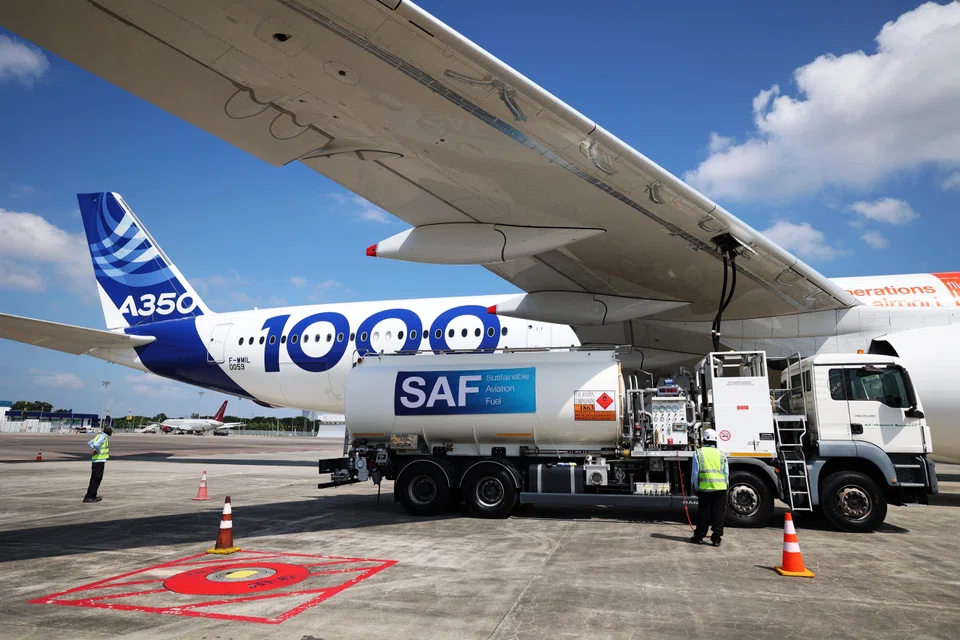
SINGAPORE’S recent move towards greener aviation has met some resistance, as a new levy on air travel – aimed directly at supporting the use of sustainable aviation fuel – will result in higher costs for travellers.
From April 2026, passengers buying tickets for flights departing from Singapore after October 2026 will see a modest surcharge in fares, ranging from as low as S$1 for nearby destinations in economy class to as much as S$41.60 for long-haul premium cabins. Now, every traveller plays a direct role in supporting cleaner air travel.
This approach, unique in its direct passenger levy and centralised purchasing model for sustainable aviation fuel, is Singapore’s most credible path to balancing its competitive role as an air hub with its net-zero climate goals.
Unlike conventional kerosene, sustainable aviation fuel is produced from biomass, particularly during the initial scale-up phase.
The feedstocks for sustainable aviation fuel vary widely, depending on the production pathway, and can include vegetable oils, agricultural residues, and a range of waste oils. Currently, particular emphasis is placed on used cooking oil and tallow, which are among the most sought-after waste-based feedstocks.
Sustainable aviation fuel produced from these materials can reduce lifecycle greenhouse gas emissions by up to 80 per cent compared with conventional jet fuel, without requiring any changes to existing aircraft or airport infrastructure.
However, the greener fuel remains costly, with prices in Singapore exceeding US$2,900 per tonne in early November – roughly three to four times the price of conventional jet fuel – and still represents only a small portion of global supply.
In 2024, a little over one million tonnes of sustainable aviation fuel were produced. Output is expected to double by the end of this year, with Asia projected to provide about 40 per cent of the global total. At present, this fuel accounts for less than 0.05 per cent of global jet fuel consumption, underscoring the significant distance the aviation sector must cover to align climate ambitions with current realities.
While the prospect of paying even a small new fee may irk some, there are concrete reasons for Singapore’s stance.
Staying competitive while aiming for net zero
Aviation is among the world’s most emissions-intensive sectors, responsible for roughly 2.5 per cent of global carbon dioxide output, possibly rising to 4 per cent once all warming effects are counted. Singapore must find a way to stay competitive as an aviation hub while simultaneously setting a credible course towards net zero.
The Republic is therefore pioneering the world’s first mandatory sustainable aviation fuel levy, collected from all passengers except those in transit, cargo operators and business aviation flights. The proceeds go into a government-managed sustainable aviation fuel fund. Sustainable Aviation Fuel Company, a new non-profit, is tasked with aggregating demand and centrally procuring the greener fuel to get the best deal for Singapore and to guarantee transparency.
All these efforts support a broader goal of ensuring that at least 1 per cent of all jet fuel used at Changi and Seletar airports in 2026 is sustainable aviation fuel, with an ambition to reach 3 to 5 per cent by 2030 as supply expands and costs adjust.
This approach stands apart from the European Union’s sweeping ReFuelEU Aviation blending mandates. Instead of forcing each airline or supplier to individually source and certify sustainable aviation fuel, Singapore pools demand across the system, supporting early scale-up while giving airlines and passengers an upfront, predictable cost.
This “fixed cost envelope” approach provides stability. If sustainable aviation fuel prices spike, the levy will not rise unexpectedly; instead, sustainable aviation fuel volumes will be adjusted according to what the fund can afford that year.
But all of this will not be easy. The greener fuel continues to carry a substantial premium due to limited feedstock, higher production costs and early-stage supply chains. Yet momentum is growing across Asia as more airlines, including Singapore’s flag carrier, commit to purchasing and operating flights on sustainable aviation fuel, and as major regional producers such as Petronas, Cosmo Oil, Pertamina, S-Oil and SK Energy step up their investments.
Indonesia, Malaysia, South Korea and Japan are also introducing national-level targets.
Japan aims for 10 per cent sustainable aviation fuel by 2030, while South Korea targets 3 to 5 per cent by the same year and will impose penalties on fuel suppliers for non-compliance.
Singapore, in contrast, has a unique approach with a direct passenger fee and a centralised purchasing model. This distinction is crucial, as policies like this send powerful market signals, providing the predictable demand curve essential for unlocking private capital and catalysing industry investment.
For travellers, the city-state’s new levy is not a penalty, but a nudge – an invitation to participate, however modestly, in helping to kick-start the sustainable aviation fuel ecosystem. The alternatives would be either heavier government subsidies (ultimately funded by all taxpayers, whether travelling or not) or delayed action, which would leave Singapore trailing as other air hubs raise their climate standards.
Ultimately, this is about shared responsibility. If Singapore wants to remain a global aviation leader, the country must lead by smart, credible action. A transparent fee at the start of the journey makes climate action scalable, sending a market signal that supports innovation and investment across the value chain – from fuel producers to airlines to passengers.
The writer is a biofuels research analyst at Rystad Energy
TRENDING NOW

NEA identifies 7 firms responsible for haze fires, notices issued urging action: Grace Fu
DBS remains analysts’ pick ahead of Q3 earnings after Singapore banks’ share slump

High Court rules against Julius Baer’s Singapore trust arm in US$50 million family trust dispute

Could stablecoins be the future of money?

