

Why Sunak looks a ‘tail-end’ PM for the Conservatives
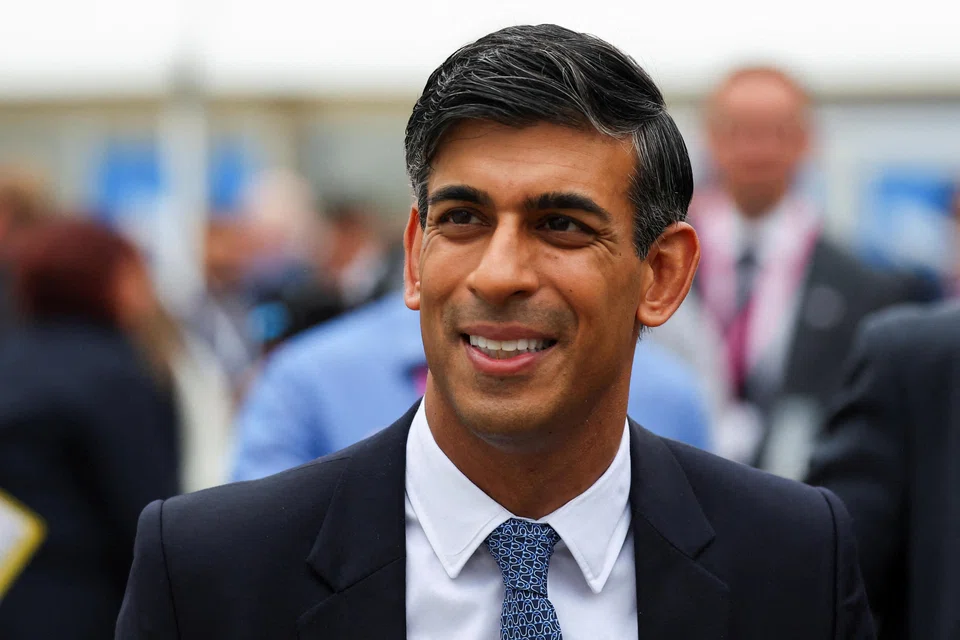
FORMER European Commission president, and UK cabinet minister, Roy Jenkins, famously coined the phrase “tail-end Charlies” to describe beleaguered prime ministers who come into office at the end of a long period of rule by their parties.
This tail-ender prime ministerial club is one which quite often forms a bookend with a new political era. Membership includes Alec Douglas-Home (the Conservative premier from 1963-64 who ushered in the Labour prime ministership of Harold Wilson); Jim Callaghan (the Labour prime minister from 1976-79 who was followed into office by Conservative Margaret Thatcher); and John Major (the Conservative premier from 1990-97 who Labour’s Tony Blair followed into 10 Downing Street).
Douglas-Home’s defeat in 1964 was the end of 13 years of Conservative rule after a series of scandals; the Tories had 18 years in power before 1997 with the last half-decade in office marred by internal political infighting after the Black Wednesday economic debacle in 1992. Meanwhile, Labour had been in power for much of the decade and a half before Callaghan lost power in 1979 after major economic challenges.
These circumstances are too close to comfort for many modern Conservatives given the party first won power in 2010 under David Cameron. That now appears a political eternity ago – to many – after a further four prime ministers in Theresa May, Boris Johnson, Liz Truss and Sunak too.
Despite the huge diversity of tail-end premiers in backgrounds, beliefs and styles, a common pattern is that – despite their various talents – they ultimately prove unable to stop the flow of the political tide against them. After multiple years in office, there is growing momentum for the opposition party that eventually proves insurmountable.
This political dynamic appears to be playing out again in the United Kingdom, with this week’s Conservative conference (Oct 1 to 4) only the latest sign of this. The event in Manchester is widely seen to have been a significant setback for the party in general, and Sunak in particular, with the vexed issue of the future of the extremely costly High Speed 2 (HS2) rail line dominating the debate in recent days.
The HS2 scheme was given a budget of £55.7 billion (S$92.8 million) in 2015 but costs have ballooned, with an estimate of up to £98 billion – in 2019 prices – in 2020. Since then, soaring inflation pushed costs even higher, ultimately leading to its curtailment, which is widely seen to undermine the Conservative’s flagship “levelling up” agenda to enhance the socio-economic fortunes of the North of England.
Sunak’s week was also troubled in other respects, including with former prime minister Truss advocating her pro-tax cut message in Manchester, with arch-Brexiteer Nigel Farage also in attendance too at her rally, stirring up controversy to boot. Some 60 Conservative MPs have joined her Growth Group, a caucus in the House of Commons, which potentially imperils the government’s majority in the chamber if she tries to lead rebellions against him, possibly even over elements of November’s Autumn Statement on the economy.
With the government therefore currently under siege, it appears the prime minister may well kick out the general election for as long as possible. On Tuesday (Oct 3), he said that a national ballot is “not what the country wants” at the moment, indicating that the election may potentially not be until the second half of next year, or possibly even early 2025. The election must be held before Jan 28, 2025.
With this huge political decision pending, Sunak will be getting potentially conflicting advice from people saying that his interests will be best served by waiting till the last possible moment for the ballot. Meanwhile others will push for an earlier election with the prognosis that the economic and political context might be worse, not better, in late 2024 than earlier.
In general, tail-end prime ministers tend to put off elections as long as possible in the hope that something will eventually turn up. Douglas-Home and Major called the ballot very close to the last possible legal date in 1964 and 1997 respectively. Equally, Callaghan delayed until he lost a vote of confidence in the Commons. This pattern indicates Sunak may well hold on till at least the second half of next year too, even though most UK general elections tend to be in spring.
Of course, there is no iron law in UK politics that the Conservatives will definitely lose the next election, and Sunak has not completely given up on the possibility of a major shock. He hopes he can yet win the general election, repeating the feat of Major in 1992 who is the only tail-end premier in the 20th or 21st centuries to win an election, despite later going on in 1997 to preside over a landslide defeat to Blair.
Yet, while nothing is yet set in stone, there are striking parallels between the Sunak administration and others in the past that have paved the way for opposition parties to seize power. As this week’s conference in Manchester has shown, the Conservatives are hugely divided, intellectually exhausted after so long in power without renewal, and beset by scandals.
So, while nothing can be taken for granted by the Labour Party, it will be a huge ask for Sunak to persuade UK voters to give Conservatives an unprecedented fifth straight term in 2024 or 2025, ruling then potentially for a two-decade stretch. This is especially in the current context of a cost of living crisis consisting of high inflation, elevated interest rates, while tax as a proportion of gross domestic product is at around its highest levels since the mid-20th century.
In this context, it is little wonder that this week’s conference sometimes felt like a “warm-up act” for a future post-election, Conservative leadership contest. For instance, Home Secretary Suella Braverman made a controversial speech on immigration on Tuesday in which she “warned of a hurricane of migrants” that was aimed squarely at right-wing party activists, rather than the nation as a whole, with a view to her trying to win the next Conservative leadership race.
Taken together, Sunak therefore appears destined to join the tail-ender prime ministerial club with the goal of an unprecedented fifth straight term too hard to reach for him and his party. After almost a decade and a half of Conservative rule, and five prime ministers from this same party to boot, this would see his premiership as a bookend to a new political era on the horizon from 2024 or 2025.
Andrew Hammond is an associate at LSE IDEAS at the London School of Economics
TRENDING NOW

Two Singapore-listed palm oil firms named in Greenpeace report on Indonesian plantation fires
Singapore Airlines flight returns to San Francisco after ‘unruly’ passenger incident

Singapore looking into which companies responsible for haze-causing fires: PM Wong
Deluge IPO 3.86 times subscribed ahead of SGX debut

