Why trust is key to healing a fragmented world

    • Innovative firms such as Novo Nordisk are helping lead the charge from the private sector to tackle obesity.
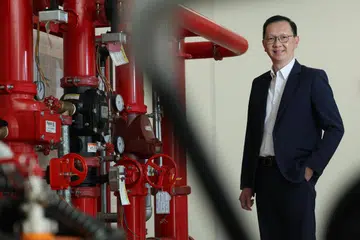
    • Innovative firms such as Novo Nordisk are helping lead the charge from the private sector to tackle obesity. PHOTO: KELVIN CHNG, ST
    Published Tue, Jan 9, 2024 · 05:00 AM

    THE World Economic Forum (WEF) has long been perceived by critics as an exclusive club for the global elite. It will therefore be ironic, for some, that the theme of next week’s conference is boosting trust and cooperation in a fragmented, polarised world.

    This year’s meeting, which starts next Monday (Jan 15), welcomes over 100 national governments, key major international organisations, key civil society leaders, and more than 1,000 companies. This includes innovative firms, such as Novo Nordisk, at the forefront of tackling some of the key challenges facing the globe, from obesity to climate change.

    The Danish-headquartered pharmaceutical company is currently one of Europe’s most valuable by stock market capitalisation, and operates through a so-called “triple bottom line” model. This balances not just financial benchmarks, but also social and environmental considerations to try to deliver sustainable success for business and society.

    Critics who see the WEF as a cosy club for the rich nonetheless point to the fact that, according to the organisation’s recent Global Risks Reports, the world’s top risks are asserted to include income disparity, in the aftermath of the global financial crisis.

    It is noteworthy then, that with Davos hosting one of the largest concentrations of billionaires in the world, that recent studies by one non-governmental organisation, Oxfam, underlines that almost two-thirds of all new wealth created between December 2019 and December 2021 went to the top 1 per cent.

    In the words of the Oxfam report: “Although billionaire fortunes have fallen slightly since their peak in 2021, they remain trillions of dollars higher than before the pandemic… This crisis-driven bonanza for the super-rich has come on top of many years of dramatically growing fortunes at the top, and growing wealth inequality.”

    In the face of these stark facts, there is a clear need for the Davos elite to do much more to shape solutions to the world’s most pressing challenges, to bolster trust and cooperation in a fragmented world. For all the scepticism held by some about WEF, these elites can play a key role in delivering on this ambition, and promoting a sustainable recovery in the post-pandemic world.

    In part, this is because of the low trust in governments held by many populations. Yet, while trust in many politicians continues to weaken, some surveys simultaneously point to a rebound in perceptions of business, on measures including competence and ethics.

    This potential trend is interesting as the opposite phenomenon – declining confidence in corporations, especially among the young – was one of the key legacies of the international financial crisis which started almost two decades ago now.

    That prior trend of growing distrust in business was shown not just in numerous opinion polls, but also by the significant protests since then. These include the Occupy movement, which came to international prominence in Wall Street in 2011 in its campaign against social and economic inequality. The Occupy demonstrations, often driven by younger people, subsequently spread to some 1,000 cities and over 80 countries.

    One manifestation of this rising tide of distrust had been that stakeholder belief in what many private institutions said and did was undermined. This poses new hurdles for firms looking for new ways to reconnect with publics and communities, especially in a world where there had already been a longstanding backlash to the private sector.

    Many businesses have sought to rebuild trust in the period since then through longstanding, tried and tested techniques such as creating good new jobs, while paying workers fair wages and benefits. Yet, beyond this, a growing number of firms have used new ideas to restore credibility, and some of this may now be paying off.

    One example is founded on the apparent paradox that while there had previously been growing distrust in business, many people nonetheless expect the private sector to play a greater role in society. This includes helping tackle the range of problems facing the world.

    Of course, firms have long had sustainability, social responsibility, and/or philanthropic programmes to address such issues. However, the challenge – and potentially opportunity – is greater now, giving rise to what has been highlighted as a new way for firms to secure competitive advantage by creating “shared value” for society and shareholders.

    Take the example of obesity, one of the world’s biggest public health problems, which firms such as Novo Nordisk are seeking to tackle.

    In 1995, there were an estimated 200 million obese adults globally, and another 18 million children under the age of five classified as overweight, according to the World Health Organization (WHO).

    That figure, however, is sadly skyrocketing. As at 2016, more than 650 million adults were obese, with 1.9 billion adults – those aged 18 years and older – overweight. Moreover, 39 million children under the age of five were overweight or obese in 2020, the WHO reports.

    While some see obesity as an exclusively Western disease in predominantly advanced, industrialised nations, that is not the case.

    The WHO estimates that over 115 million people suffer from obesity-related problems in developing nations. Indeed, there are more people who are obese than underweight across the world, except in parts of Asia and sub-Saharan Africa.

    This global, ticking time bomb of obesity is such a key health risk as it can lead to wider challenges, including diabetes, cardiovascular disease, hypertension and stroke, and certain forms of cancer. Consequences therefore range from increased risk of premature death to serious chronic conditions that reduce quality of life.

    Translating this challenge to numbers, the World Obesity Federation asserted in 2018 that obesity accounted for some US$850 billion of global direct healthcare costs. This massive figure is forecast to grow further to US$1.2 trillion by 2025.

    Innovative firms such as Novo Nordisk are helping lead the charge from the private sector to tackle obesity.

    One manifestation of the firm’s “triple bottom line” approach to try to deliver sustainable success for business and society is its development of the world’s largest charitable foundation. One of the future key goals of this foundation is to invest more in early stage research on obesity, in part to develop less expensive medicines.

    Taken together, the innovation that businesses are showing in reconnecting business with society may contain wider insights for the WEF mission of promoting cooperation in a fragmented world. This is not just an academic exercise on the challenges facing the world; post-pandemic, it will best be addressed with greater cohesion and trust right across the private, public and third sectors in a massive, integrated recovery effort.

    The writer is an associate at LSE IDEAS at the London School of Economics