Why US parks Venezuelan oil money in a Qatar bank account
The move ensures that Venezuela doesn’t wriggle out of the US dollar zone
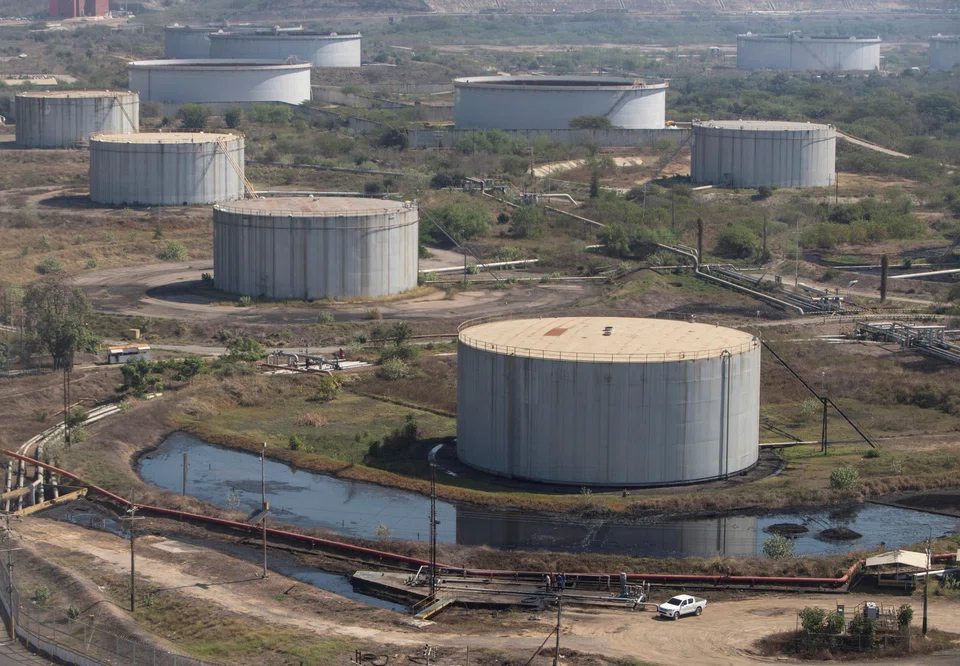

JUST when it seemed that the Venezuelan saga could not get more convoluted, there were revelations earlier this month that some of the revenue from the sale of that oil had found its way to an account in Qatar.
US officials were quoted as saying that the US had sold US$500 million of the South American country’s crude oil. The Trump administration then proceeded to deposit a chunk of the money in the Gulf state.
This decision was justified on the grounds that Qatar was a neutral location from which the funds could be freely and safely moved without risk of seizure.
It was pointed out Caracas owed an estimated US$170 billion to international bondholders, oil companies and other lenders. Presumably, these creditors will not be able to legally garnish the funds in Qatari accounts.
There is a precedent for this sort of arrangement. Following the US invasion and occupation of Iraq in 2003, Baghdad was forced to deposit all oil and gas revenues into a US Federal Reserve account in New York under a Security Council-sanctioned scheme.
Some 5 per cent of the money was deducted as reparations to Kuwait for ex-president Saddam Hussein’s 1990 invasion of his Arab neighbour. It was supposed to be a temporary measure. Payments were duly made to Kuwait until 2021, when the final US$44 million reparation cheque was cleared.
Then, this arrangement somehow outlived the UN mandate and became permanent. To this day, the Fed administers between US$80 billion and US$85 billion of Iraq’s US dollar reserves, under recurrent US presidential executive orders.
US dollar as a reserve currency
These funds pay for imports and settle foreign obligations under American oversight.
Political figures such as US Democrat Senator Elizabeth Warren called the arrangement alarming, arguing there is no legal basis for a US president to set up an offshore account to control seized assets.
But then, President Donald Trump’s modus operandi has never been about legal niceties.
So far, the media has reported that all Venezuelan oil money is being deposited in US government-controlled bank accounts, including the one in Qatar.
Will there be an end to this sort of revenue sequestration? The Iraq situation offers a clue. American officials claim that their control of Baghdad’s financial system helps, inter alia, monitor US dollar flows.
Recall that Venezuela’s ex-leader Nicolas Maduro, like Saddam Hussein before him, sold oil in currencies other than the US dollar. Washington knows that since Saudi Arabia let a 50-year exclusive oil-for-dollars pact lapse in 2024, the US dollar’s position as the world’s reserve currency has become vulnerable. Note Trump’s repeated warnings to the BRICS grouping against creating a trade zone that excludes the use of US dollars.
These are classic neo-colonial schemes. The vassal state has the outward trappings of sovereignty. But its economic system is directed from outside. In this instance, Washington wants to ensure Venezuela, like Iraq, doesn’t wriggle out of the US dollar zone.