Why Wall Street can keep rising even as the Fed turns hawkish
Market expectations, optimism over AI-driven productivity are some explanations
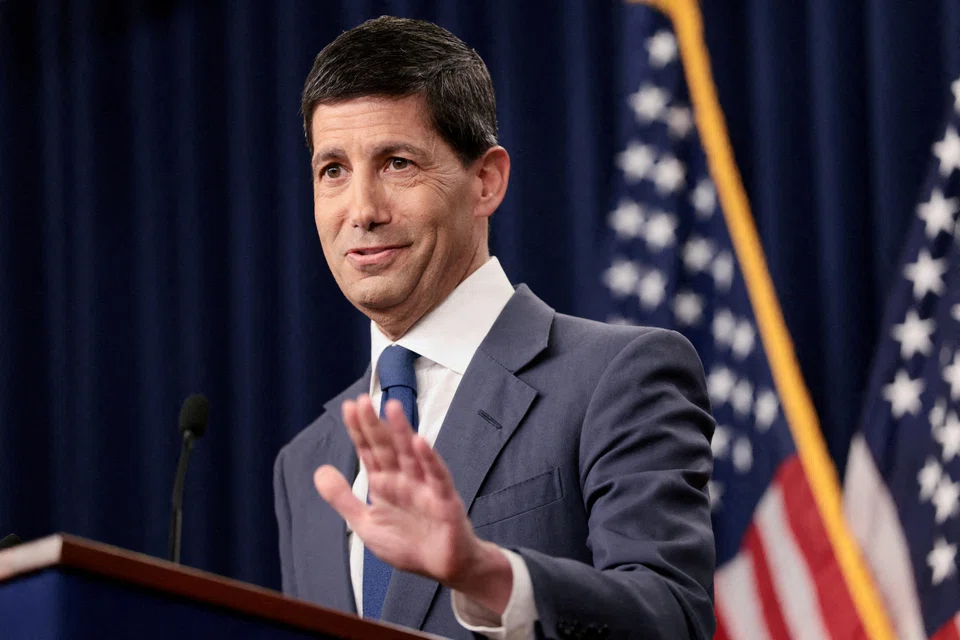
[NEW YORK CITY] US Federal Reserve chair Kevin Warsh’s first Jackson Hole address on Aug 28 contained a message that, under normal circumstances, might have seriously unsettled Wall Street.
He stressed that inflation remains too high and reaffirmed the Fed’s commitment to its 2 per cent target.
Most significantly, he said that unless the central bank was confident underlying inflation was moving towards that objective “clearly and at sufficient speed”, the Fed had “work to do”.
Many interpreted this as opening the door to another rate increase. The reaction in interest rate markets was immediate.
In the federal funds futures market, the probability of a quarter-point September hike jumped from roughly 35 per cent before the speech to 62 per cent in early September.
US Treasuries were also sold off. The 10-year yield rose to 4.8 per cent on Sep 1 – the highest since January 2025 – while the two-year yield rose from 4.22 per cent before the speech to around 4.36 per cent afterwards.
Despite these moves, US equities remain close to record territory. How can these apparently contradictory developments be reconciled?
The first explanation is that investors are distinguishing between a Fed raising rates because the economy is overheating, and one raising rates because something has gone seriously wrong.
Currently, the former interpretation appears to dominate. Warsh himself described a resilient economy with low unemployment.


Investors may conclude that a quarter-point increase is manageable if economic growth and corporate profits can withstand slightly higher rates.
In other words, the market may be saying: An economy strong enough to require a higher rate may also be strong enough to absorb it. That is very different from a tightening cycle accompanied by rapidly deteriorating growth.
Secondly, equities ultimately derive their value from corporate earnings, not simply the federal funds rate.
Corporate America continues to produce strong profits, particularly among the largest technology and artificial intelligence-related companies. This has helped offset concerns about monetary policy.
Indeed, the continuing AI investment cycle remains an important force behind investor optimism.
If analysts continue upgrading earnings forecasts, the negative valuation impact of somewhat higher interest rates can be overwhelmed by expectations of faster profit growth.
This is particularly true when investors expect substantial productivity gains from AI, something Warsh himself acknowledged.
The “Fed put”
The third and most powerful reason is the existence of the “Fed put’’, which is the entrenched belief stretching back more than 30 years that the central bank will backstop any major collapse – economic or financial – by printing unlimited quantities of rescue money.
Furthermore, one quarter-point hike is considerably different from the beginning of a prolonged tightening cycle. Markets appear to be pricing only limited additional tightening for the rest of 2026.
They seemingly believe, for now, that the Fed put, combined with strong earnings, AI-driven productivity, economic resilience and abundant investor appetite, can coexist with maybe only one additional rate increase.
Still, the possible return of a rate-hiking cycle cannot be ruled out.
If inflation remains stubbornly high and September is followed by further tightening, bond yields could rise sufficiently to challenge today’s elevated equity valuations.
For the moment, Wall Street is effectively betting that Warsh will administer a small dose of monetary medicine without killing the patient.
The danger is that the dosage will ultimately prove larger than markets currently expect.
Decoding Asia newsletter: your guide to navigating Asia in a new global order. Sign up here to get Decoding Asia newsletter. Delivered to your inbox. Free.
Share with us your feedback on BT's products and services