Why the West has high hopes for India
ONE of the standout features of the Hiroshima G7 was the serenading by Western nations of Indian Prime Minister Narendra Modi, despite his refusal to condemn Russia’s invasion of Ukraine.
India has become a staple at G7 events, having first attended in 2003 when France held the chair. However, it is since the pandemic began that New Delhi has become especially feted by Western powers, coinciding with the chill in relations with Beijing. So much so, in fact, there has even been some recent speculation of a “G8”, including India.
The reasons why the G7 are so interested in engaging India is not only geopolitics, given that New Delhi is potentially a key counterweight to Beijing. On the political front too, India’s status as a key member of the “Global South” provides legitimacy for what is otherwise a club of only Western industrialised nations.
Beyond geopolitics, however, is India’s economic potential, and it is no coincidence that Western powers, including the United Kingdom, the European Union, and the United States are seeking bilateral free trade deals. The emerging market giant is now larger than several G7 members, and the World Bank asserts that India’s growth is now the highest among the largest emerging-market economies.
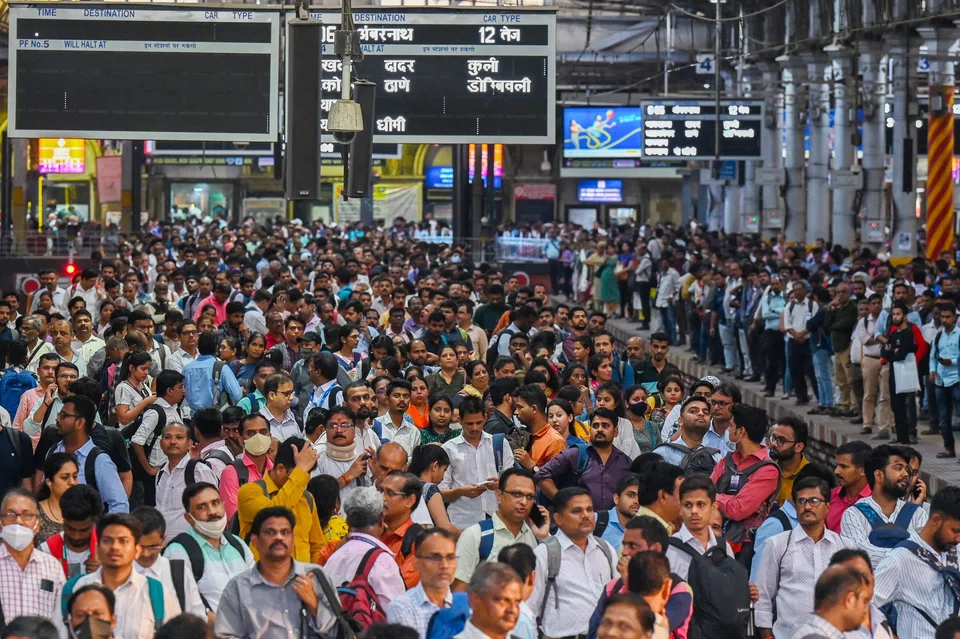
Key Western powers believe India’s longer-term economic future has the potential to be bright too. One reason for this optimism is that India is forecast to emerge in 2023 as the world’s most populous nation.
Whereas China’s birth rate has plunged recently, with its population shrinking last year for the first time since 1961, India’s higher fertility rate means its population is forecast to continue growing for decades, and could peak at around 1.7 billion. Moreover, India’s more than 250 million people aged 15 and 24 is the world’s largest of that age group, and more than two-thirds of all Indians are between 15 and 59, so the ratio of non-working-age adults (children and retirees) to working-age adults is relatively low.
A key question for New Delhi, now, is how policymakers will seek to leverage this, with talk of an “Indian century”. The demographic milestone comes, after all, at a time when Modi is trying to promote the nation as a rising international player as host of this year’s G20.
Amidst much uncertainty, one thing that is sure is that demography is not necessarily destiny, and it is not assured that the nation will become the next global superpower. Sure, India’s economy is growing, but it has not yet delivered the huge export-driven manufacturing growth that turned China into a global economic dynamo.
Specifically, India’s success in delivering a dividend from its population growth will depend, in significant part, on whether it can overcome the challenges that have constrained growth in recent decades. This includes scarcity of infrastructure; sub-optimal political governance; insufficient social spending including on education; and sub-par regulatory regimes in areas including the labour market.
So while many in the G7, and indeed India itself, may welcome the nation’s emergence as the world’s most populous nation, this will bring many challenges and opportunities. To deliver a significant dividend from this demographic development, New Delhi needs to enhance political governance; raise social spending, including on health; boost infrastructure; and enhance regulatory regimes. For Modi, it is therefore high time to “walk the walk”, as well as “talk the talk” on these critical agendas.