Will Germany find a new economic equilibrium with China?
The Asian country’s domestic slowdown amid a volatile global outlook offers a strategic opening for Berlin to rebalance relations with Beijing
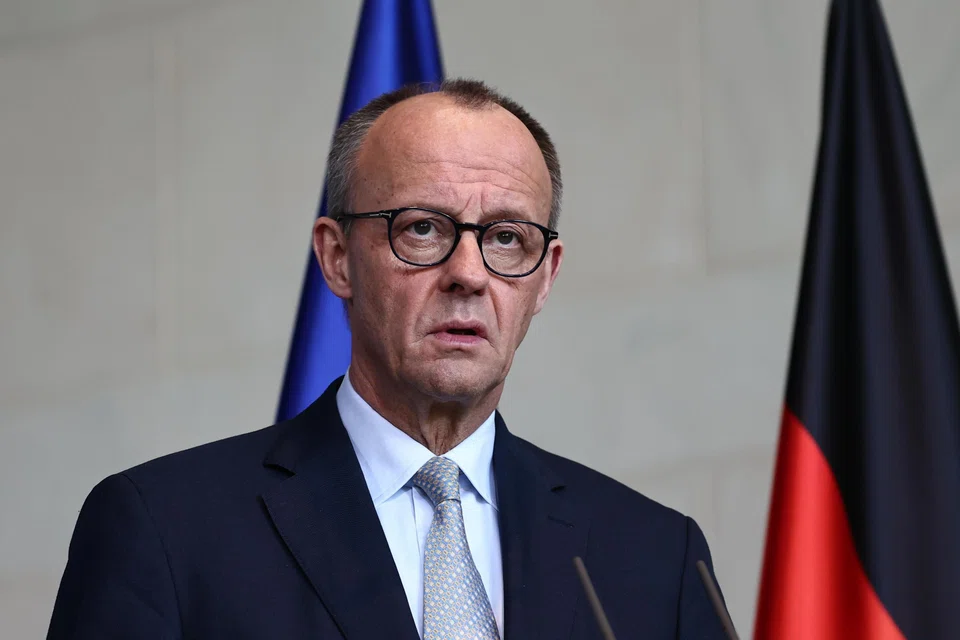
GERMAN Chancellor Friedrich Merz entered office in 2025 with a blunt warning: bilateral ties with China are on an unsustainable path. His trip last week to Beijing and Hangzhou, China’s tech hub, sought a cautious correction.
While much attention focuses on US-China relations ahead of US President Donald Trump’s planned Beijing trip this April, Berlin-Beijing ties are systemically important, too. Germany reclaimed its status as China’s largest trading partner in 2025.
During the 2025 election campaign, Merz built a reputation as a China hawk. Before becoming chancellor, he cautioned German firms against making bigger investments in the world’s second-largest economy. He warned if they “endanger the entire company group”, they should expect no economic help from the state.
Fast forward to now, Merz has sought to make clear to Chinese President Xi Jinping and his team that Germany and the European Union, at large, have no fundamental conflict of interest, but instead share extensive common economic and political interests. He avoided the “systemic rival” label used by his predecessor, Olaf Scholz, which had annoyed key Chinese leaders.
This reflects the German de-risking strategy – paralleling the approach of European Commission President Ursula von der Leyen. Merz is well aware of the dangers of a potential two-front trade war with both Beijing and the second Trump administration.
German business risk and opportunity in China
In China last week, Merz raised “very specific concerns regarding (German-Sino) cooperation, which we want to improve and make fair”.
At the top of his agenda was Germany’s 2025 trade deficit with China of over 89 billion euros (S$132 billion), widened from nearly 67 billion euros in 2024. Imports from China were more than double the value of German exports in 2025.
This deficit has quadrupled in just five years – an “unhealthy” trajectory, in Merz’s words. Some Germans dub this the “China shock”, given the tangible economic impact. For instance, this has been cited as a driver behind the loss of some 10,000 manufacturing jobs per month across Germany.
Yet, as big an economic and political problem as this is becoming, there may be the seeds of an opportunity, too. China’s falling domestic demand and its growing reliance on the European market creates a window of leverage for Germany.
Merz’s proposed remedy rests on a more “balanced, reliable, regulated and fair partnership”. This includes fairer competition and the need to “be able to rely upon agreed rules” in areas such as Beijing’s state subsidies, restricted market access and complex regulations. He has also railed against what he sees as the undervalued renminbi.
Given that China’s trade surplus with the EU also hit a record recently, Merz discussed wider measures which Brussels has set in motion against Beijing. One of these is levying tariffs of up to 35 per cent on Chinese electric vehicles, on the basis of unfair subsidies. Beijing has retaliated with inquiries into the European pork, dairy and brandy sectors.
Merz has also issued a warning regarding rare earths, as Beijing – which controls over 90 per cent of global processing – threatens new export licensing requirements for EU-based firms.
Despite this friction, Chinese Premier Li Qiang told Merz that Beijing wants to cooperate more in key areas such as artificial intelligence (AI), biomedicine, vehicles and chemicals. Moreover, China announced it will purchase some 120 aircraft from European aviation giant Airbus.
The business summitry, attended by some 30 German executives from firms including Siemens, Volkswagen, BMW and Mercedes, saw the signing of five memorandums of understanding in climate cooperation, animal disease prevention, the resumption of certain agricultural exports, and exchange programmes in sports and media.
Beyond business, Merz raised a host of challenging geopolitical questions to Chinese leaders, including on Ukraine and Taiwan. The German chancellor urged Beijing to exert greater pressure on Russia to end the war in Ukraine, noting that China’s official neutrality provides diplomatic support for Moscow. On Taiwan, Merz stressed that dialogue, not conflict, must decide its future.
China’s wider relations with the West
Overall, Merz declared that he was satisfied with his China visit, but that Germany and the EU need to find a new equilibrium in relations with Beijing.
The notion of closer trade relations with China has become less popular within Germany, after the perceived failure of Angela Merkel’s “Wandel durch Handel” (change through trade) approach. The former chancellor had asserted closer economic ties would have a moderating effect on Beijing’s politics.
To be sure, before the pandemic, there had been hopes in much of Europe that this vision might be borne out, and China had generally enjoyed growing influence across much of the region. In the last half decade, however, Sino relations with Europe and the wider West have chilled.
While Europe still values its relationship with China, the direction of travel for policy towards Beijing has clearly been in a more challenging direction.
Even on issues where breakthroughs have been made in the last half decade, such as the EU-China Comprehensive Agreement on Investment concluded in December 2020, ratification in the European parliament has stalled for years on this key economic deal.
Merz knows a battle is underway for influence not just within Germany, but also the EU over future policy. There are clear differences in outlook within Europe; to the east, the Czech Republic, Poland and Lithuania assume a more hawkish stance, while western counterparts such as France and Spain wish to continue extensive economic engagement with China.
In this mix, Brussels – led by Dr von der Leyen – has sought to bring the bloc together around a more centralised policy towards China.
German-Sino ties are at a pivotal point amid a challenging global outlook with flashpoints in the Middle East. Relations may remain chilly for the foreseeable future, but could yet go into a deep freeze if key issues such as the trade deficit continue along the current trajectory.
The writer is an associate at LSE Ideas at the London School of Economics