Will Lagarde exit the ECB early amid rate hikes and French elections?
Leadership change at the European Central Bank must be well-planned to minimise market risk
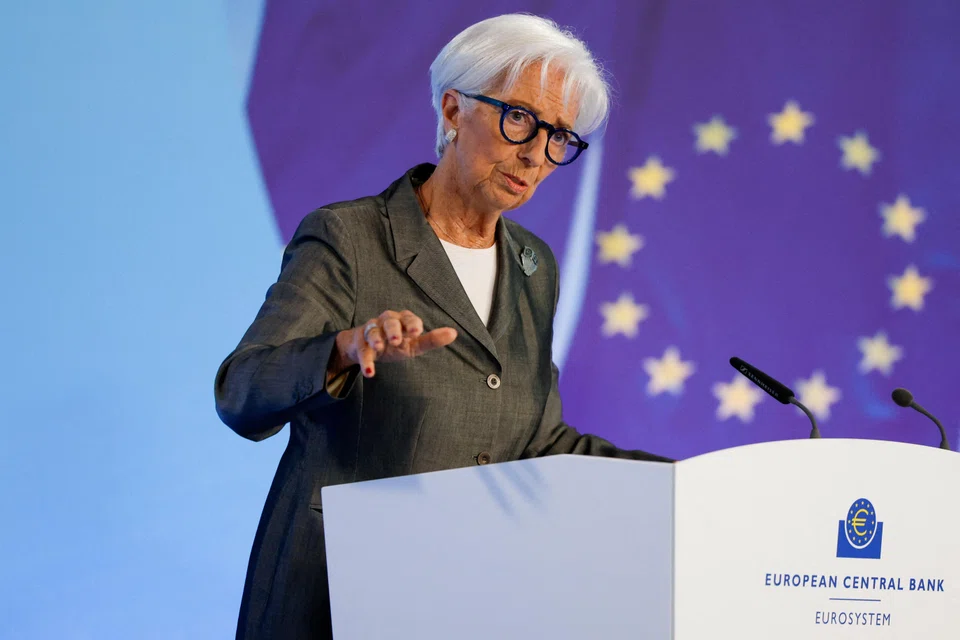
SPECULATION over European Central Bank (ECB) president Christine Lagarde’s future is mounting just as a less benign economic landscape raises the premium on leadership stability.
Following June’s rate increase – the ECB’s first since 2023, driven by Middle East energy shocks – investors are now betting on two or three more rate hikes this year.
The ECB joins a growing number of central banks to tighten monetary policy in 2026.
As Lagarde noted in July 2026: “The full effects of the energy shock have yet to play out.” Yet, despite these headwinds, signals point to a possible early exit – before her term officially ends in October 2027.
In May 2025, the World Economic Forum’s (WEF) founder Klaus Schwab asserted that he had seriously discussed with Lagarde the prospect of her becoming the CEO of that organisation in early 2027. The speculation about Lagarde’s next move received a fresh rush of oxygen, when she spoke at a WEF platform on (Wednesday) Aug 19.
While Lagarde insisted in July 2026 that people will not see “the back of (her) before 2027”, that wording does not preclude the possibility of an early departure in the new year. She had left her last role at the International Monetary Fund halfway through her second term. Notably, she has not categorically ruled out a return to French politics.
The French political calculus
The speculation over Lagarde’s future may not have had such strong legs if it were also not for another political part of this puzzle.
French President Emmanuel Macron is reportedly keen to influence the choice of Lagarde’s successor, before he leaves office in May 2027.
With right-wing, populist National Rally leader Marine Le Pen leading polls despite the legal battles over her embezzlement of EU funds, Macron wants to secure a centrist ECB head before a potential populist takeover in Paris.
In the past, Le Pen and her party have been highly sceptical of the euro single currency. Like US President Donald Trump, she may not respect longstanding norms of central bank independence if she is elected. Le Pen, who was endorsed by Trump at the last French presidential election, finished second in 2022 and 2017.
Le Pen’s rise to potential presidential power has parallels with Trump. In 2025, a French court found Le Pen guilty of embezzling EU funds and barred her from standing for public office for five years.
However, in July 2026, the Paris appeal court shortened her sentence and office ban, allowing Le Pen to run in the April 2027 French presidential election.
European governments are preparing
One signal that the speculation about Lagarde’s early departure may be accurate is that European governments are already beginning to line up preferred replacements.
The Spanish government will reportedly push for Pablo Hernandez de Cos, general manager of the Bank for International Settlements and former Bank of Spain governor.
Other potential contenders include Germany’s Joachim Nagel, president of the Deutsche Bundesbank; the Netherlands’ Klaas Knot, former Dutch central bank chief; and Italy’s Fabio Panetta, governor of the Bank of Italy and a former member of the ECB executive board.
With the ECB facing a more volatile global economic landscape following the Iran crisis, any early leadership handover must be well choreographed and carefully communicated to markets.
The US-Iran memorandum of understanding – increasingly being called a memorandum of misunderstanding – may have only postponed resolving key outstanding issues between the sides, including the sustained reopening of the Strait of Hormuz.
Despite the general buoyancy of financial markets, major risks remain and the ECB warned again on Monday of the growing likelihood of a correction.
The stakes are growing for the ECB as it contemplates further rate tightening as soon as next month.
A mismanaged transition amid economic uncertainty could destabilise markets at a time when monetary policy requires strong credibility.
The writer is an associate at LSE Ideas at the London School of Economics