THE BOTTOM LINE

Will the US and China succeed in halting the downward spiral in bilateral ties?
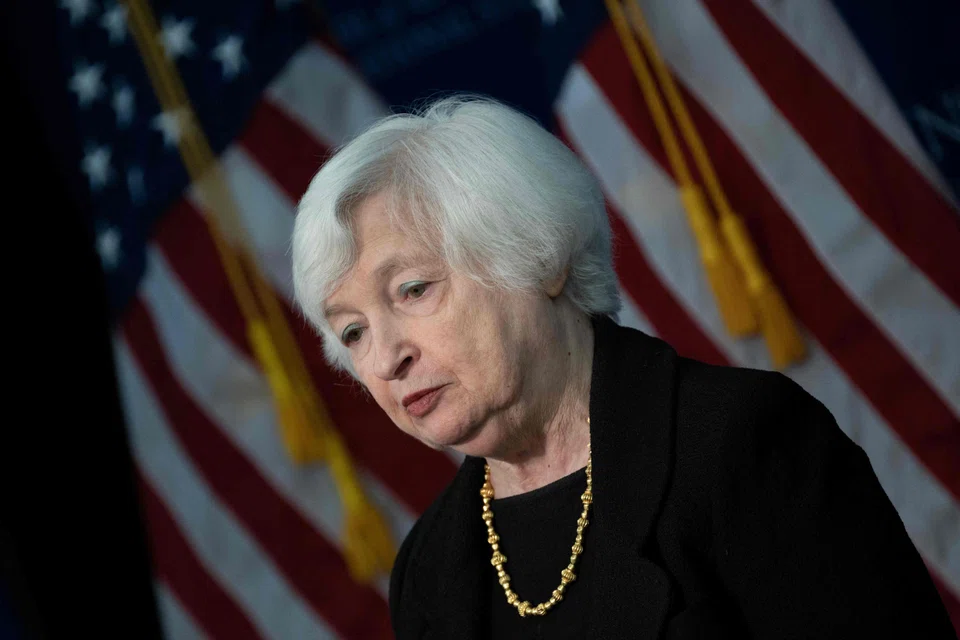
    • US Treasury Secretary Janet Yellen is visiting China this week to re-establish contact with new Chinese leaders and officials. Her trip marks the second by a US Cabinet official to China since ties deteriorated earlier this year.
    • US Treasury Secretary Janet Yellen is visiting China this week to re-establish contact with new Chinese leaders and officials. Her trip marks the second by a US Cabinet official to China since ties deteriorated earlier this year. PHOTO: AFP
    Published Tue, Jul 4, 2023 · 09:00 PM

    TWO weeks after US Secretary of State Antony Blinken travelled to Beijing for intensive talks to stop the dangerous downward spiral of the US-China relationship, the first fruits of the accord to re-establish channels of communication came with the announcement that Treasury Secretary Janet Yellen would make a four-day visit to China starting Jul 6.

    In a possibly coordinated move, China’s communist party last Saturday (Jul 1) announced the appointment of Pan Gongsheng, who has been deputy governor of the People’s Bank of China for over a decade, as the bank’s party secretary, a move The Wall Street Journal called a prelude to his becoming governor.

    “My hope in traveling to China is to re-establish contact,” Yellen said in an interview last week, before the formal announcement of her trip. “There are a new group of leaders, we need to get to know one another.”

    She said the two countries “need to discuss our disagreements with one another so that we don’t have misunderstandings, (and) don’t misunderstand one another’s intentions”.

    If her trip goes well, other American officials are likely to follow suit, and senior Chinese officials are expected to visit the United States.

    During Blinken’s Jun 18 to Jun 19 visit to Beijing, China agreed to establish – or reopen – channels of communication, except for military ones.

    As Blinken himself acknowledged at the end of his trip, progress is “not the product of one visit, one trip, one conversation”. The accord put a floor under the relationship, one that is challenged daily in the highly charged atmosphere in Washington, where dozens of China-related bills await action and Democrats, including President Joe Biden, do not want to be seen as being “soft on China”.

    This became evident the day after Blinken’s departure from Beijing when Biden, who had dispatched him to stabilise relations with Beijing, thought nothing of calling China’s president, Xi Jinping, a dictator during a fundraising event. It seemed strange that the president was willing to jeopardise the fragile accord just reached..

    Despite Biden’s “dictator” remarks, which the Chinese government called a “political provocation”, China made it clear that the accord still held. The People’s Daily – the mouthpiece of the Communist Party – published a commentary on Jun 22 headlined China, US should work together in same direction to stabilise, improve bilateral relations. It asserted that China was “committed to building a stable, predictable and constructive relationship with the United States”.

    Biden has spoken about establishing guardrails and designing principles for the US’ relationship with China. Regardless of what else may be agreed, one principle should be that each side will refrain from personal attacks on the leader of the other side. After all, in a crisis, they are the ones who will be expected to work together to try to resolve it.

    Some analysts have pointed out that not only is Biden focused more on his re-election than on putting a floor under relations with China, but that his foreign policy team is also unusually sensitive to partisan politics.

    “It’s hard to overemphasise how much Biden and his foreign policy team are focused on domestic politics,” Dennis Wilder, who served President George W Bush as senior director for Asia at the National Security Council from 2005 to 2009, said in an e-mail. “This team is unusual in that the key players like Blinken and (Jake) Sullivan are political pros as much as they are national security experts.”

    Wilder contrasted this situation with that in the Bush administration, where the foreign policy experts, such as Colin Powell and Condoleeza Rice, both of whom served as secretary of state, and Stephen Hadley, who was the national security adviser, “did not see it as their role” to be involved in political campaigns.

    Domestic politics may have long-term effects on foreign relations. The New York Times reported on Jun 27 that “Americans’ views of China are starting to resemble their views of the Soviet Union decades ago”, and “that could make it harder to mend ties”. In other words, even if Biden wants to improve relations with Beijing, the American public may not let him.

    “The message Americans are getting from their leaders about China is profoundly negative,” the report said, and “souring public opinion, in turn, may worsen US-China relations”.

    If a national attitude settled in the United States whereby China is assumed to be the enemy, there may well be a replay of the Cold War, in which the governments and peoples of the two countries view each other with implacable hostility. There will be no winners, only losers. Responsible leaders in both countries, but especially in the United States, must act now to ensure that that does not happen.