Without Jane Goodall, chimps need new champions – us
The late primatologist and conservationist has helped the world to see chimpanzees as deeply intelligent, sentient beings to be protected
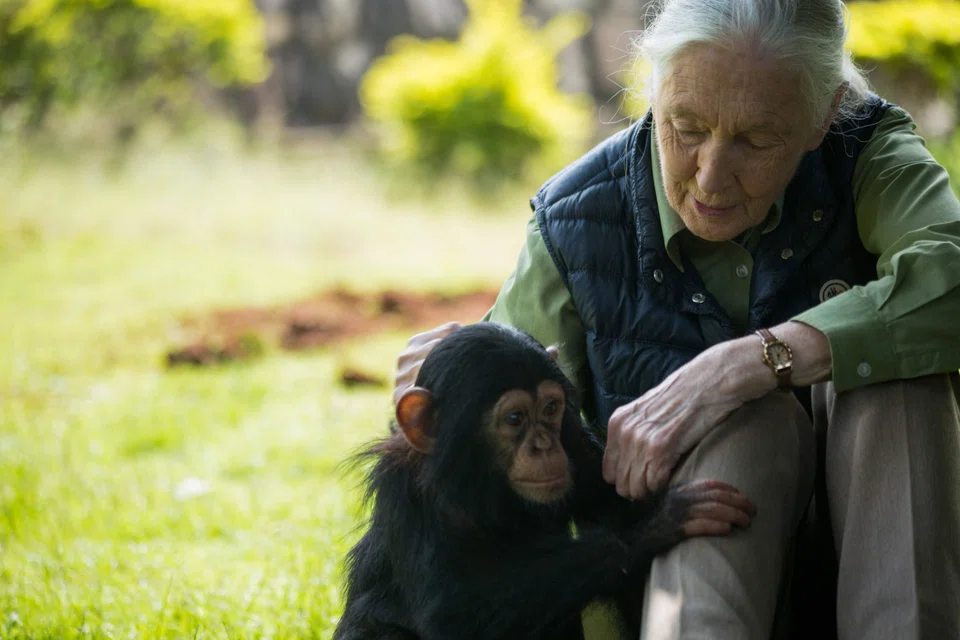
THERE is probably no single person who has done as much for chimpanzees as the late Jane Goodall. One of the great British exponents of conservation – the other being the esteemed 99-year-old David Attenborough – she revolutionised the way we see both great apes and ourselves. We cannot let her legacy fade away.
Goodall’s early breakthroughs came from her observations in the Gombe Stream Game Reserve in Tanzania where she discovered, with the help of an older chimp she named David Greybeard, that the primates hunt for meat and, groundbreakingly, that they make and use tools – a skill previously used to elevate humans above the rest of the animal kingdom. Now we know that we are far from unique, sharing this talent with apes, monkeys, elephants and crows.
Later in her career, after witnessing devastating deforestation in the areas surrounding her field work, Goodall resolved to become the voice for those who cannot speak for themselves – her beloved chimpanzees. She fought to end the use of the apes in medical research, and set up refuges for those orphaned by the bushmeat trade. The Jane Goodall Institute, the global non-profit conservation organisation she set up in 1977, now supports community-led projects around the world.
Despite these efforts, the great apes are still in dire straits. All four sub-species of chimpanzee are classified as at least endangered, and they have disappeared completely from four countries in their range.
One of the biggest threats endangering primates is the illegal bushmeat trade. Rural communities rely on it for protein, but the flesh of chimps and gorillas are also considered delicacies in some parts of the world, and their body parts are used in traditional medicine. The infants, traumatised from being violently orphaned, are either left for dead or sold as exotic pets.
Demand from wealthy urbanites has pushed prices up and turned great ape poaching into a lucrative business. Interpol warns that the illegal wildlife trade is one of the most profitable areas for organised crime, with the underground market worth an estimated US$20 billion per year.
Because such trades occur in the shadows, it is hard to get a picture of how many chimpanzees are affected. But researchers have tried to build a picture by using the number of orphaned chimps taken in by sanctuaries.
A 2010 study estimated that for every baby chimp in an orphanage, up to 25 adults were killed. With more than 1,000 in care across the African continent, that means thousands more have been slaughtered. Given that female chimpanzees do not give birth to their first infant until they are about 15 years old on average – and then only every three to six years – the rate of poaching means that the population does not have a chance to recover.
There is also the threat of disease. Habitat loss from deforestation, mining and agriculture has put humans and primates in close quarters, allowing zoonotic pathogens – transmitted from animal to human – to proliferate. It is thought that murdering and butchering infected apes is what led to the outbreaks of HIV and the Ebola virus. What more reason do we need to stop eating them and give them more space to exist peacefully?
But viruses can also be passed the other way, with tragic consequences. For example, the common human cold virus, rhinovirus C, caused a lethal respiratory outbreak among wild chimpanzees in Uganda in 2013. Between 1999 and 2006, five disease outbreaks in Cote d’Ivoire that killed many endangered primates were linked to humans.
Because chimpanzees are our closest relatives – sharing 98.8 per cent of our DNA – they make excellent hosts for our ailments. But because they do not have the historic immunity we have, a mild illness in us can be fatal for them.
Sadly, ecotourism, a key source of revenue for conservation projects, is one of the factors leading to apes getting sick. And it is not the only one. Researchers in Uganda’s Kibale National Park found that respiratory viruses circulating in local children were causing outbreaks, often lethal, among chimp populations.
I have written about how a decline in bat populations led to a rise in infant mortality rates, the lesson being that healthy bats mean healthy humans. The primate equation is equally true: healthier kids mean healthier chimpanzees.
Over the years, fans of Goodall have become familiar with the distinct names and personalities of the chimps she has been studying: the thoughtful and trusting David Greybeard, the aggressive Frodo, Flint the “spoilt brat”.
That familiarity, rather than the academic method of assigning numbers to them, was roundly criticised by the scientific community of the 1960s. But it helped the world see these primates as deeply intelligent, sentient beings with emotions and unique personalities.
The challenges for chimpanzees are numerous and tackling them – through better enforcement of hunting bans, community engagement, habitat protection, and vaccines – will not be easy. But it is worth it to protect not just nature but our own species. Goodall understood that. BLOOMBERG