Wooing foreign investors? Heat resilience may be a new key factor for cities
Failing to adapt to higher temperatures could mean lower agricultural yields and labour productivity, as well as poor energy security


THE heat resilience of a city is set to be an increasingly crucial factor for foreign investors – in a sign of how climate adaptation is a growing economic priority for policymakers.
“When multinational companies make decisions about the location of new investments, the host country’s exposure to heatwaves and its energy reliability are going to be increasingly a key consideration factor,” said economists from HSBC Global Research in an Aug 30 report.
The authors highlighted three key economic impacts of heatwaves: lower agricultural output, diminished labour productivity, and greater occurrences of power outages, which can cause major disruptions to industries and hit a country’s energy security.
These impacts have been especially pronounced over the past year due to the El Nino climate pattern – which brings warmer conditions to the Pacific Ocean – as well as the effects of climate change.
The resulting heatwaves have had serious effects on Asian agriculture. In Japan, the 2023 heatwave caused quality issues with rice, leading to a shortage. In Vietnam, the heatwave earlier this year affected Robusta coffee production, causing bean prices to hit new highs.
Food price inflation may have a spillover effect on core inflation by influencing expectations of consumers and businesses, the HSBC report noted.
Diminished labour productivity is another major economic impact of heatwaves. By 2030, more than 2 per cent of total working hours worldwide could be lost every year amid higher temperatures, according to a report by the International Labour Organization.
In South Asia alone, under the scenario that global temperatures rise 1.5 deg C by the end of the century, heat stress would lead to a loss of 5.3 per cent of working hours in 2030, said the HSBC report. This corresponds to 43 million full-time jobs.
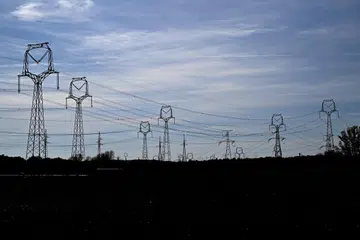
Energy security is yet another key issue, with countries facing grid overloads and power outages amid extreme heat. In Vietnam, major industrial parks in the north housing multinationals suffered power cuts in mid-2023.
Given Asia’s central role in global supply chains, disruptions to local manufacturing, shipping and logistics may drive up global tradable inflation, the HSBC report’s authors noted.
“In the context of intense competition among Asian economies to attract foreign direct investment from companies that look to diversify production bases, this makes host countries’ energy policies and investment in energy infrastructure more important than ever,” they said.
That said, there is a risk that governments respond to heatwaves in ways that worsen climate change, such as by ramping up coal usage or handing out more fossil fuel subsidies to boost energy supply.
This is where it becomes crucial for policymakers to maintain a long-term perspective on climate resilience to minimise such knee-jerk reactions, while continuing to invest in the transition towards renewable energy.
For now, Asia is enjoying some respite from heat since the end of El Nino. However, the lessons from the past year’s heatwaves should spur countries to enhance their heat resilience, especially as weather patterns become increasingly uncertain.
For foreign investors, a city’s heat resilience could eventually become a non-negotiable.