On workers’ safety, tone is set at the top

Raphael Lim
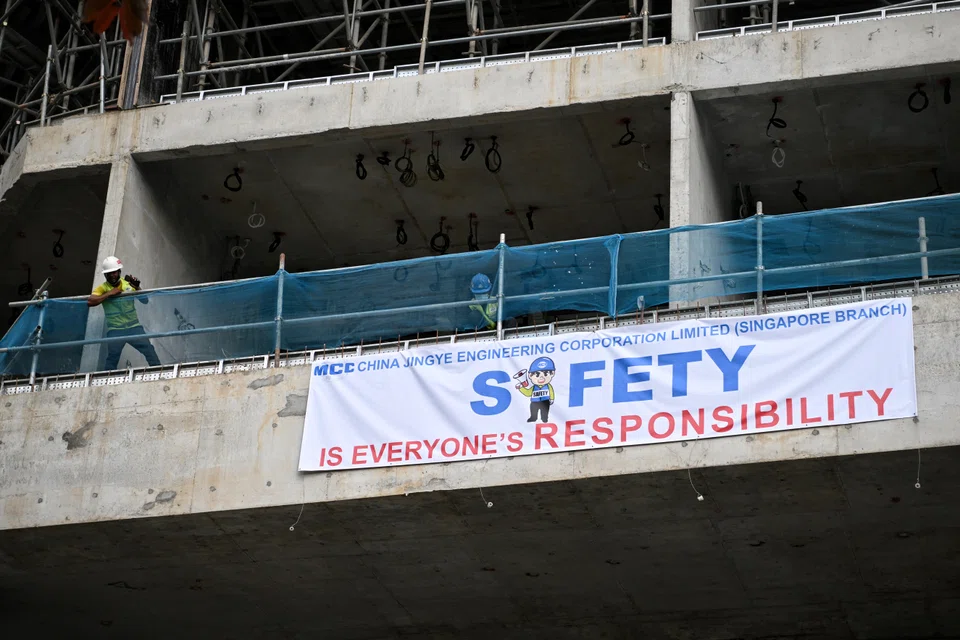
AS BUSINESSES usher in the new year, one resolution that surely must be top of the mind would be to reduce the number of workplace fatalities, following the poor showing in 2022.
The number of workplace fatalities in Singapore rose to 46 in 2022, the highest since 2016. In comparison, the number of workplace fatalities in 2021, 2020 and 2019 stood at 37, 30 and 39, respectively.
This jump is not entirely surprising. Increased activity as the economy recovers and a rush to meet Covid-19 delayed timelines have probably made lapses and accidents more likely.
But people’s safety is at stake, and lives are not an acceptable cost.
The authorities have been highlighting the higher death toll and reminding employers to take workplace safety more seriously, with a six-month “heightened safety” period imposed from Sep 1, 2022.
The number of accidents has nevertheless continued to rise, with another two fatalities coming in the last week of 2022.
More has to be done by all stakeholders about this, and directors and management of companies must take the lead to set the tone from the top.
For listed companies, ensuring a safe working environment also ties in with environmental, social and governance (ESG) responsibilities.
Top-driven
The Ministry of Manpower (MOM) has been pushing for more responsibility from the top, when it comes to workplace safety.
For instance, there is a new code of practice on chief executives’ and board of directors’ workplace safety and health (WSH) duties – part of broader measures to address the spate of accidents in 2022.
The four principles under the code include ensuring that WSH is integrated into business decisions, with clarity of roles and responsibilities of the chief executive officer (CEO) and members of the board in leading WSH.
The code also calls on directors to continuously build a strong WSH culture, and to “set the tone and demonstrate visible leadership in embodying and communicating highly effective WSH standards”.
In the event of a WSH offence, the board and management could also be prosecuted if found culpable for safety lapses.
Under the current period of “heightened safety”, serious WSH lapses could also result in companies being unable to employ new foreign employees for up to three months. And CEOs must be personally accountable to MOM and take responsibility for rectifications.
Such top-down responsibility is important because some accidents could have been avoided.
Senior Minister of State for Manpower Zaqy Mohamad noted in Parliament last August that an analysis of recent fatal accidents showed that many companies did not conduct risk assessments or follow safe work procedures. “Simple and totally avoidable mistakes” had resulted in fatalities.
Should the authorities go further in requiring greater accountability at the top?
A letter to The Straits Times on Tuesday (Jan 3) suggested that directors who blatantly disregard workplace safety should be disqualified from being company directors for up to five years if their companies are convicted of an offence under the Workplace Safety and Health Act.
While such a move may seem extreme, it could be worth considering in instances of egregious breaches or inaction by directors.
Having stricter rules and personal accountability from directors and management may be one way to incentivise company leaders to do right by their workers.
ESG push
Listed companies should be particularly mindful of this topic, as it ties in with investors’ focus on ESG.
Occupational health and safety is one topic under the social pillar of the Singapore Exchange’s list of core ESG metrics for sustainability reporting.
Companies that utilise these metrics need to report on the number of fatalities, high-consequence injuries and recordable injuries. Such reports should include both employees, and workers who are not employees but whose work and/or workplace is controlled by the organisation.
A number of the workplace accidents last year involved listed companies, or took place within their premises.
Last week, a 31-year-old died in an accident at a worksite occupied by ST Engineering Advanced Material Engineering. In August, the collapse of a concrete pier at Keppel Shipyard in Tuas resulted in the death of a 38-year-old Bangladeshi worker.
There have also been workplace fatalities coming from traffic accidents, including the death of an SBS Transit bus driver in November and a Grab driver in October.
Not all accidents are avoidable. Thorough investigations are needed in each instance to determine whether companies could have done better.
Even if companies are not at fault for an accident, however, investors would prefer those that are reporting low numbers, or even zeros, when it comes to metrics such as workplace injuries or fatalities.
As scrutiny increases on this important topic, boards and management would benefit from placing extra emphasis on workplace safety to take their companies forward in the new year.
TRENDING NOW
MAS allocates S$1.45 billion to five asset managers in third EQDP batch: Chee Hong Tat
‘My grandfather’s legacy’: Sherman Kwek lays out three-year plan for CDL to drive returns
He built the Vingroup empire. Now South-east Asia’s richest man is handing some key roles to his sons
‘How many will survive?’: Bubble fears arise as China’s humanoid robotics face reality check