

World Bank warns of growing geopolitical commodity shocks, beyond oil crisis
Increasing geopolitical risk, despite the market resilience displayed so far, is weakening the global order
AFTER Russia’s invasion of Ukraine in 2022, the World Bank warned that the biggest commodities shock since the 1970s had hit. Now only four years later, the war in the Middle East represents a new “historic shock”, underpinned by sustained geopolitical fragility.
This high geostrategic volatility has also been highlighted by the International Monetary Fund, which pointed to how much such uncertainty has grown in recent years.
The Commodity Markets Outlook published by the World Bank on Apr 28 mentions the word “geopolitical” around 200 times, and even has a special section that dives into these challenges for the global economy.
The report found that in the last four decades, shocks caused by conflicts between nations have had a larger, more lasting impact on prices than other big changes. This even includes the discovery of new oil reserves or limits on production agreed by leading suppliers.
The World Bank estimates that a 1 per cent drop in oil production driven by “surging geopolitical risk” triggers an average price rise of 11 per cent. It rightly flags that this is “a much larger increase than previous studies have reported for oil supply shocks in general”.
The data points are so fascinating as they imply that growing geopolitical risk, despite the market resilience displayed so far, is inevitably weakening the global order. The economic impact of these risks for the commodities sector is increasing, too, with knock-on effects on inflation, growth and poverty.
The report’s base-case forecast is troubling: Even if the most acute disruption from the Middle East ends in May, with a sustainable peace deal, and shipping volumes via the Strait of Hormuz waterway return to near pre-war levels by October, energy prices will surge by around a quarter (24 per cent) in 2026.
These are the highest levels since the Ukraine war began.
The spike is so severe because energy infrastructure attacks and Middle East shipping disruptions have already triggered what the International Energy Agency has called the world’s largest, most complex energy crisis – worse than the 1973, 1979 and 2002 crises combined.
Already this has led an estimated initial reduction in global oil supply of around 10 million barrels per day. Global oil production is likely to fall by 1.5 per cent in 2026 – the third-largest drop in a single year across four decades.
Crucially, the remaining risks are still “markedly tilted” towards even higher prices, warns the World Bank. Oil and wider commodity prices could surge further if hostilities re-escalate and supply disruptions last longer than anticipated.
The growing expense of fossil fuels – for instance, oil and coal – is fuelling demand for alternatives such as biodiesel and ethanol, whose ingredients include edible oils, sugar and maize.
“Given the World Bank’s findings, a key question is not only how bad the current Middle East crisis may prove to be, but also when the next big challenge might come.”
Iran war’s impact on metals
With supplies of other raw materials tightening, the World Bank has revised its outlook, projecting a 16 per cent rise in broader commodity prices – a level some 25 per cent higher than its January forecast, and the first annual increase since 2022.
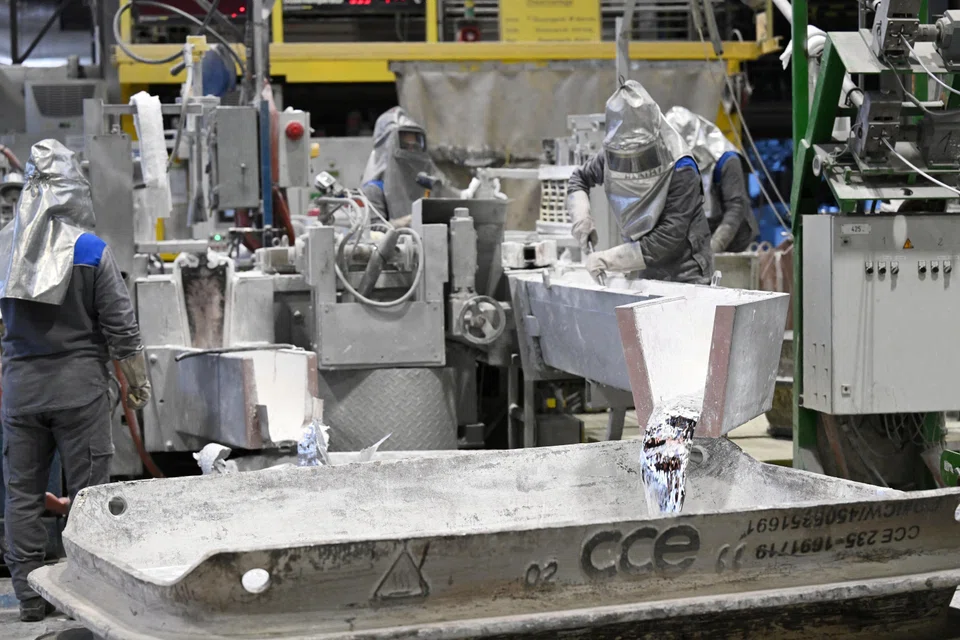
This surge is driven in part by record-high prices for base metals, particularly aluminium, which is projected to jump 22 per cent in 2026 to reach an all-time high. The spike reflects the metal’s sensitivity to the Middle East crisis, which has directly affected smelting capacity and inflated energy input costs.
These supply-side shocks, compounded by shipping constraints, have forced recent price revisions. Without the Middle East conflict, projected increases would have been more moderate.
Prices are expected to decline by about 6 per cent in 2027 as supply conditions gradually ease. This forecast assumes weaker global growth, particularly a sharper slowdown in China, which accounts for about half of global base metal consumption.
However, the World Bank report highlights “notable uncertainty” regarding this outlook. Continued trade disruptions may further tighten markets and push prices above current projections.
While the impact is most direct for aluminium, effects on copper and nickel are more indirect, stemming from disruptions to intermediate inputs and higher energy costs for smelters.
New trade restrictions could further fragment markets and amplify price pressures. Moreover, the accelerated expansion of artificial intelligence-related data centres could boost demand for aluminium and copper.
Fertiliser and food price increases
While metals are at record highs, the price of urea is also expected to jump by a whopping 60 per cent in 2026, one of the biggest percentage increases. Urea is the most widely used solid nitrogen fertiliser, produced from natural gas.
Overall fertiliser prices are projected to increase by 31 per cent, which will drive higher food prices and wider inflation. Correspondingly, this will fuel pressures on food supply, with the World Food Programme estimating that 45 million more people could face acute food insecurity in the coming months.
Rising food prices, added to energy pressures, will push up interest rates, making debt more expensive, a particular challenge for highly indebted developing countries. A scenario of stagflation is indeed plausible.
Under the World Bank’s baseline scenario, inflation in developing economies will average at least 5.1 per cent in 2026, a full percentage point higher than pre-war forecasts. This could rise as high as 5.8 per cent if the Iran war re-escalates and prolongs.
Meanwhile, projections for developing economy growth in 2026 are being downgraded from 4 per cent to 3.6 per cent.
Geopolitical risk
Given the World Bank’s findings, a key question is not only how bad the current Middle East crisis may prove to be, but also when the next big challenge might come.
While this is hard to exactly foresee, it is increasingly clear that the world’s increasing interdependence in recent decades may have left it more vulnerable.
The 21st century is only a quarter way through, but it has already seen a succession of disparate geopolitical crises from the 9/11 terror attacks in the US and their aftermath in Afghanistan and Iraq, through to wars in Ukraine and Iran.
The threats, and also opportunities, are apparently seamless, running across the boundaries of defence, foreign affairs, and domestic and social life.
Crucially, the degree of instability and uncertainty accompanying this high measure of interdependence could now mean that crises are recurrent. In other words, they increasingly become the rule, rather than the exception.
The writer is an associate at LSE Ideas at the London School of Economics
TRENDING NOW

Once staunchly pro-China, Malaysian Chinese businesses are now distancing themselves from Beijing

Looking beyond looming CEO succession, should UOB potentially pursue a transformative merger?

Could stablecoins be the future of money?

Grab CEO’s wife Chloe Tong on life with Anthony Tan and finding her purpose

