The world is burning power for AI – Singapore wants to do it differently
As data centres strain energy systems worldwide, the city-state is proving that growth in the AI era doesn’t have to come at the planet’s expense
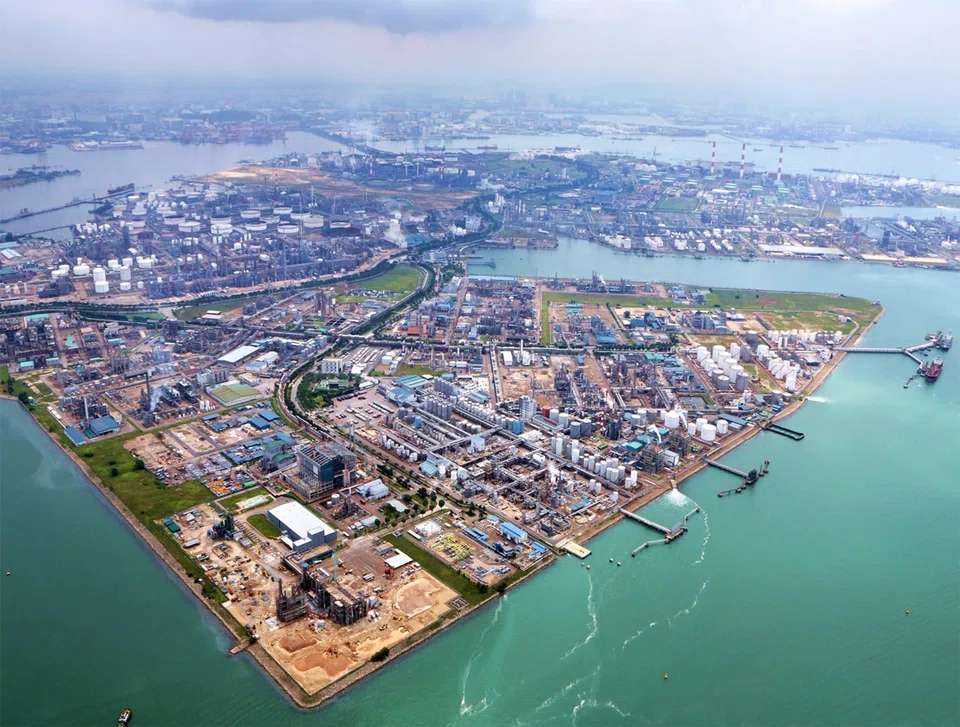
WHEN Singapore announced plans for a 700-megawatt (MW) data centre park on Jurong Island, the industry cheered. It meant new capacity for the artificial intelligence (AI) age and confirmed the city-state still sees digital infrastructure as central to its future.
But for those familiar with cooling systems, energy contracts or grid limits, the news also raised a question: How much more growth can one island sustain before the cost outweighs the benefit?
Across the world, the answer has not been encouraging. From Mexico to Ireland, rapid AI expansion has triggered competition for power and water. Residents near new clusters have endured blackouts and dry taps, while governments struggle to keep up. The smarter our machines become, the hungrier they are for resources, and public patience is wearing thin.
That tension has fuelled what some call the race for “AI sovereignty”. Every country wants computing independence, but many face an uncomfortable trade-off: build for the future at significant environmental cost or risk falling behind. Singapore is trying to chart a third path, one defined by discipline, planning and shared responsibility.
Yet, that ambition sits atop a constrained reality. A 700-MW allocation is substantial for a nation with limited reserve margins. Singapore’s grid is finely calibrated, with fuel contracts and peak-load planning mapped years ahead.
Adding AI-class loads at this scale increases pressure on prices, buffers and long-term stability. Capacity cannot simply expand indefinitely.
Learning before leaping
Singapore’s caution is not hesitation but strategy. When the government paused new data centre construction in 2019, critics feared a loss of competitiveness.
Instead, the review that followed produced the 2022 pilot Data Centre – Call for Application (DC-CFA) – now a model for balancing growth with efficiency. A new generation of projects is being designed for low-carbon operation and high-density performance, not expansion for its own sake.
The green data centres position paper released by Sustainable Energy Association of Singapore and SGTech (Singapore’s trade association for the technology industry) reflects this mindset. It calls for stronger coordination, cleaner energy procurement and financing structures aligned with sustainability – recognising that energy and digital infrastructure must evolve together.
Developments on Jurong Island reinforce this approach. JTC and the National University of Singapore will study a Phase 2 Sustainable Tropical Data Centre Testbed in 2026. Operators will be able to trial AI-optimised cooling, seawater-based thermal systems, and microgrids integrating solar, biofuels, fuel cells and battery storage.
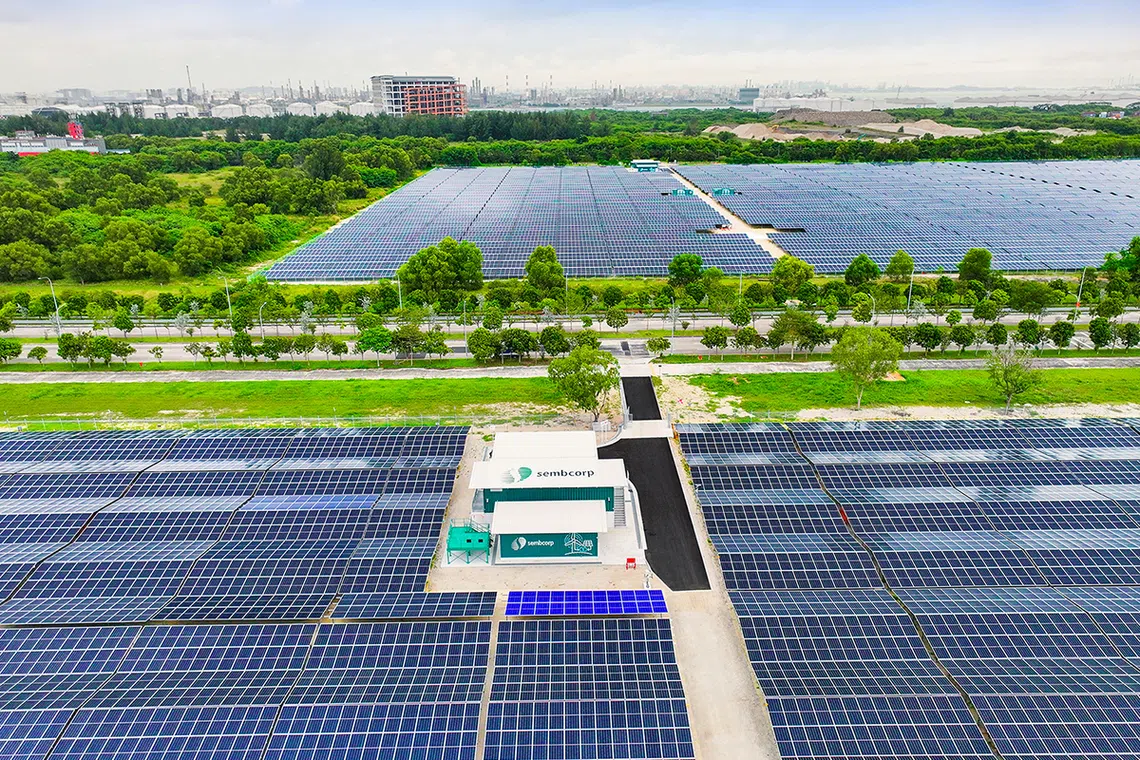
These efforts show Singapore’s intent to validate next-generation green compute technologies before scaling them.
Bits and volts
Modern data centres are no longer isolated facilities, but are instead part of the energy ecosystem. AI workloads demand high power densities, and cooling can account for nearly half of total consumption. A small miscalculation can ripple through the grid.
That is why collaboration matters. Efficiency comes from orchestration: connecting data, power and operations so every kilowatt works harder. Singapore’s low-carbon park on Jurong Island applies this principle nationally by integrating compute and energy systems from the outset.
New partnerships are also expanding Singapore’s energy options. Aster and Air Liquide’s collaboration on low-carbon hydrogen, paired with hydrogen-ready turbines and carbon-capture systems, offer one pathway.
Microgrid pilots involving JTC, Keppel and the Energy Market Authority will test how renewables, batteries and demand-response tools can stabilise loads as AI adoption grows. These initiatives do not eliminate constraints, but they provide more ways to manage them.
Breaking old habits
For decades, technologists, energy planners and developers worked in silos. But AI, high-performance computing and sustainability are converging too quickly for disconnected planning. Cities that fail to integrate these disciplines risk bottlenecks like those that forced Dublin to pause new grid connections.
Singapore is ahead because it treats coordination as a form of innovation. Still, its approach carries risks. Low-carbon fuels remain commercially immature. Renewable imports face geopolitical uncertainty. Efficiency mandates may increase development costs, and innovation may not keep pace with demand.
Singapore’s model depends on close coordination across government, utilities and developers – an advantage, but also a dependency that requires disciplined execution.
Culture shift needed
The challenge is not only technical, but cultural. In competitive markets, cooperation can feel unnatural. Companies guard data, suppliers guard intellectual property, and everyone optimises for their own bottom line. Yet, the scale of the sustainability challenge demands something rarer: trust.
When partners see results, such as lower emissions, faster deployment and fewer outages, that trust strengthens. Initiatives like the Energy Hub for Data Centres, linking utilities, vendors and operators in real time to balance power and cooling loads – show what is possible.
The payoff is measurable: less waste, more resilience and shared progress.
The government’s role
Singapore’s leadership understands that collaboration must be built into the system.
At the Singapore International Energy Week 2025, Minister-in-charge of Energy and Science and Technology Tan See Leng outlined a blueprint aligning national energy goals with private-sector execution. The Jurong Island park will require developers to meet strict efficiency benchmarks, adopt advanced cooling and integrate renewable or low-carbon sources.
With new test beds and hydrogen-ready systems coming online, the island is becoming a platform for green digital-energy innovation. These efforts will give policymakers clearer insights into how AI-class facilities interact with emerging fuels, alternative cooling and distributed energy resources – shaping future DC-CFA standards and long-term planning.
Partnerships with the US on advanced nuclear research show how Singapore is hedging for the long term, exploring multiple energy paths while keeping the grid stable. Policy sets the boundaries, industry innovates within them, and academia tests what works. That triangle gives the city-state its advantage.
Beyond infrastructure
AI will shape the next phase of economic growth, but it does not have to define our environmental footprint. When designed well, data centres can support community resilience by feeding excess heat into district systems, balancing renewable intermittency and stabilising the grid during surges.
Doing so will require leaders to view infrastructure as a shared national asset. Singapore’s energy story shows that success in the AI era is not about building the most; it is about building what lasts.
Singapore may not have endless land or limitless energy, but it has something rarer: a system capable of learning, adapting and working together.
Its success will depend less on how fast it builds and more on how wisely it grows. In the race to power AI, efficiency may prove to be the most intelligent innovation.
The writer is Asean solutions director at Hitachi Vantara