THINKING ALOUD

In a world of long-drawn crises, ‘wait and see’ may be a decreasingly tenable stance

The end of optimism in a post-common-sense era of geopolitics

Summarise
Janice Heng
Published Tue, Jun 9, 2026 · 07:00 AM
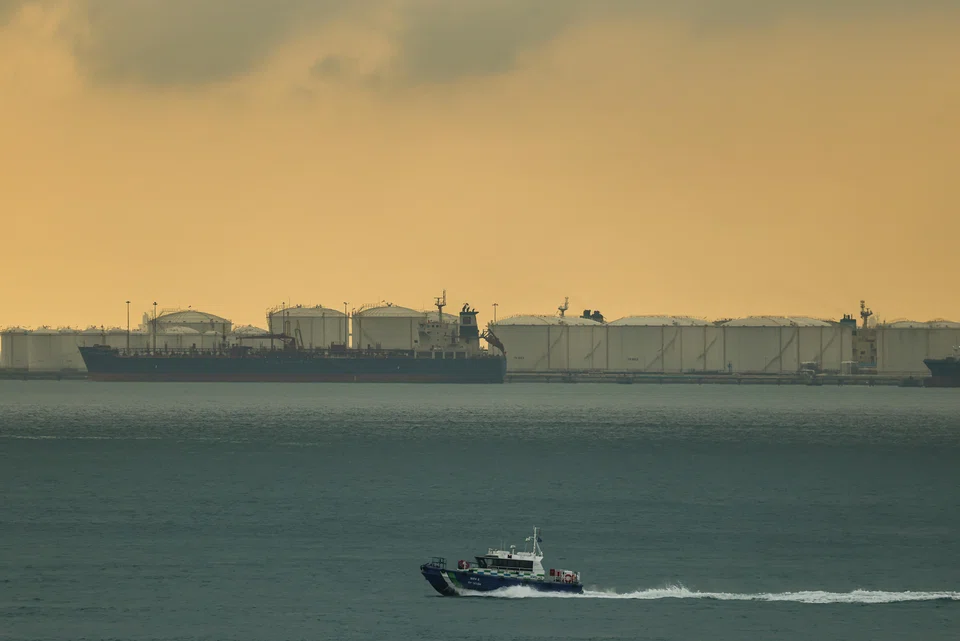
    • Maritime vessels off Singapore's waters. The war on Iran, which has disrupted global supply chains, entered its 100th day on Jun 6.
    • Maritime vessels off Singapore's waters. The war on Iran, which has disrupted global supply chains, entered its 100th day on Jun 6. PHOTO: YEN MENG JIIN, BT

    AT VARIOUS points in the geopolitical roller-coaster ride of the last one-and-a-half years, ordinary citizens of the world could be forgiven for still retaining some optimism.

    Early in US President Donald Trump’s second term, some thought that his tariff threats were mostly posturing, aimed at scoring concessions rather than remaking the global trading order.

    More than a year later, after earlier rounds of tariffs were deemed illegal, Trump’s administration shows no sign of letting up. Last week, the US proposed a new round of tariffs on 60 countries, including Singapore, under a different legal provision.

    This February, when the US and Israel launched a surprise attack on Iran, some – not least the markets – thought the conflict would end within weeks. On Jun 6, the conflict entered its 100th day.

    Undergirding this optimism, perhaps, is the basic assumption that actions should make sense. Economists might be particularly prone to wishful thinking about rational actors.

    Surely a major economy would not want to hobble its own importers, hurt consumers and risk a global recession? Surely no one would start a war without reason?

    Sadly, none of that is for sure any longer. Rather than expecting common sense to eventually prevail, this new era might require us to accept absurdity and get on with things.

    Uncertainty and volatility may not be waves that we can simply ride out. Stability itself may be an outdated concept – at least for the next two-odd years, with the next US presidential election not due until November 2028.

    In for the long haul

    Last July, after months of on-and-off-again tariff moves by the US, Singapore announced that it was preparing to launch a tariff-related grant for affected businesses in October.

    At the time, the timeline might have seemed surprisingly extended. The Business Adaptation Grant was launched half a year after “Liberation Day” tariffs, and made available for two years, through Oct 6, 2027.

    At the launch, Deputy Prime Minister Gan Kim Yong noted that this period of availability may be extended if necessary. He added: “Once the tariffs have stabilised, we may need to look at other schemes and programmes to support the companies in a new environment.”

    Nine months later, the question might be when exactly – if ever – the tariffs will stabilise. Trump’s new proposed tariffs remain subject to questioning before a government trade panel, with hearings to begin in July.

    As tariff uncertainty drags on indefinitely, deferring investment decisions to see how things shape up may be a decreasingly tenable approach for companies.

    All bets are off

    Then there is geopolitics. You might think that a country embroiled in a pointless, costly and damaging war would have no desire to start another one.

    But there, again, you might be relying too much on common sense. Some observers now worry that the unpopularity of the war on Iran may push Trump into seeking a supposed “quick win” in Cuba – though whether that can be achieved is another question.

    As a small country, Singapore has to take geopolitical realities as given. For the government, this has meant accepting that old norms may no longer hold, even while working with “like-minded partners” – a tired phrase, yes, but an increasingly vital asset – to uphold what remains of the multilateral rules-based order.

    For the rest of us, this might mean accepting that today’s crises are harder to simply ride out. The Business Adaptation Grant suggests that it is time to change, rather than “wait and see”.

    And rather than holding out for some certainty about global energy supplies, you might as well go ahead and book that summer holiday – while being prepared that it could fall through.