Would a subsidy clawback of 20% or more for top HDB BTO projects be excessive?
A Pearl’s Hill BTO flat may not be a slam dunk with tighter restrictions in place for Prime flats

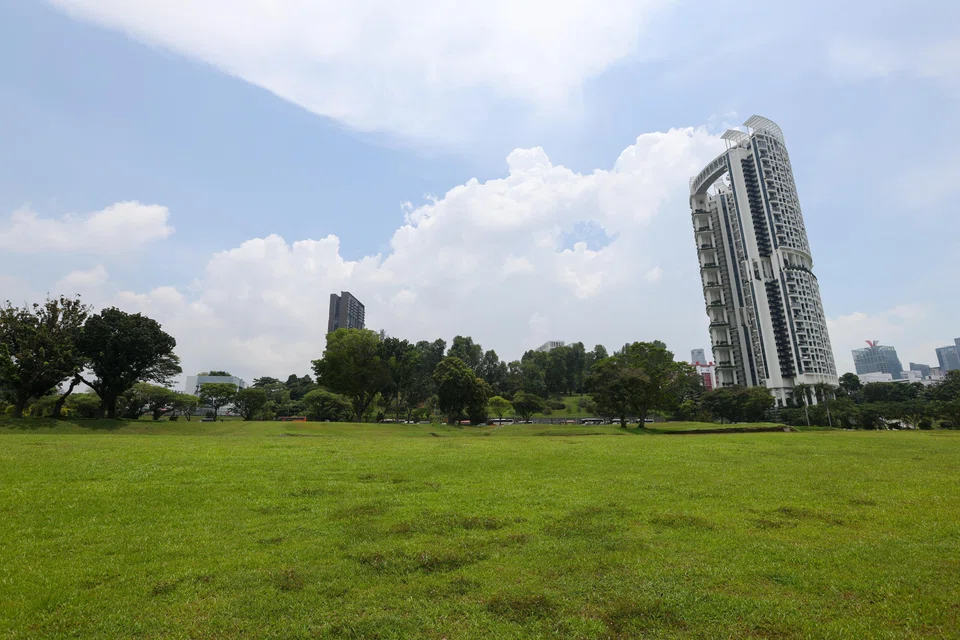
POTENTIAL new Housing & Development Board (HDB) flat buyers can look forward to the Build-To-Order (BTO) project at Pearl’s Hill in Outram, which will become Singapore’s tallest public housing project, with an over-60-storey block.
Located adjacent to Outram Park MRT station, the Pearl’s Hill project will have about 1,700 two-room flexi, three and four-room units, and over 140 public rental flats. It will be the first public housing project to be launched in the area in over four decades.
Imagine living near the Central Business District and enjoying spectacular views from a high-floor Pearl’s Hill HDB flat.
However, applying for a Pearl’s Hill BTO flat may hardly be a no-brainer.
Analysts expect the BTO units at Pearl’s Hill to fall under the Prime category. And several analysts anticipate a subsidy clawback rate of between 18 per cent and 20 per cent because the government may have to provide substantially higher subsidies to keep flat prices affordable. Such a rate would easily top the highest subsidy recovery rate to date of 14 per cent for Berlayar Residences BTO flats on the former Keppel Club site in the Greater Southern Waterfront.
Upon selling or transferring a Plus or Prime flat bought from HDB, an owner must return a percentage of the resale flat’s price to HDB. The subsidy recovery rate reflects the extent of the additional subsidy provided for the flat to ensure a fair system of subsidies for all buyers. Where HDB assesses that a valuation is required, the subsidy recovery will be a percentage of the higher of the flat’s valuation or resale price.
Financial returns
If the subsidy clawback rate is 20 per cent or more for Pearl’s Hill BTO flats, might a buyer be better off purchasing a Standard BTO flat in a convenient suburban location instead?
Assume the Pearl’s Hill BTO flat is priced at about S$780,000 when it is offered for booking, and the buyer sells the flat after 15 years – accounting for time to build the flats and the minimum occupation period (MOP) of 10 years for a Prime project.
Assume the Prime Pearl’s Hill flat fetches S$1.7 million on resale, which would represent a gain of 118 per cent above the purchase price.
A S$1.7 million resale price after 15 years is by no means far-fetched. Factor in how the most desirable HDB resale flats today, which trade at about S$1.5 million, can rise in price to S$2.1 million in 15 years – appreciating 40 per cent over the period or at a compound annual growth rate of about 2.3 per cent. Take away close to 20 per cent of the S$2.1 million price to account for the tighter restrictions on resale of a Prime flat, and it’s conceivable that the Pearls Hill flat will sell for S$1.7 million.
After applying a 20 per cent subsidy recovery rate, the owner’s net gain is S$580,000 excluding stamp duties and other transaction costs. Such a gain amounts to 74 per cent of the purchase price.
Assume one purchases a BTO Standard flat for S$550,000 instead and sells the flat after 15 years for S$1.13 million or 105 per cent more than the purchase price. The net gain excluding transaction costs is also S$580,000. However, such a gain translates to 105 per cent of the purchase price and represents a higher return on equity compared with buying the Pearl’s Hill flat.
Importantly, should an owner of a Prime BTO flat with a high subsidy clawback rate sell his unit when the HDB resale market is weak, the clawback on resale proceeds may significantly erode his gains.
Resale prices
Certainly, prized resale HDB flats can fetch robust prices. After all, paying S$1.5 million for a sought-after HDB resale flat can get one a more spacious home that is in a better location versus a resale condo unit.
Nonetheless, any Prime or Plus flat buyer should be mindful that his unit’s resale price could be constrained by the more limited pool of buyers.
A couple comprising two permanent residents can buy an unclassified or Standard HDB resale four-room or five-room flat but not a resale Plus or Prime flat.
Also, with resale Prime flats, eligible singles are restricted to 2-room flexi units.
Crucially, an income ceiling applies to buyers of resale Plus or Prime flats but not other resale units.
Today, an eligible couple has to meet the monthly household income ceiling of S$14,000 to buy a new HDB four-room or five-room flat, or a resale Plus or Prime flat.
Assume the income ceiling rises to S$20,000 per month in 15 years time – for a couple earning S$20,000 a month or S$240,000 annually, a resale flat priced at S$1.7 million is about 7.1 times annual income which may imply fairly stretched affordability.
In addition, the MOP - the time period when an owner must physically reside in the flat - for Plus and Prime flats is ten years compared with five years for Standard units. And renting out the whole unit is allowed for Standard flats after MOP but disallowed for Plus and Prime flats.
Sure, cash-rich buyers who meet the income ceiling may be fine paying lofty prices for resale Prime flats. Nonetheless, any buyers might temper the amount he will pay for a resale Prime flat due to tight restrictions governing such flats.
For young couples on fast income growth trajectories, buying an HDB BTO flat can be a stepping stone to achieving condo ownership as it allows them to recycle gains from selling the BTO home post-MOP towards funding a condo purchase.
While couples on career fast tracks might be fine paying relatively high prices for a new HDB Prime flat, these couples could make a lifestyle sacrifice by opting for a Standard BTO flat instead as choosing the latter may provide a better path to fulfilling the condo ownership dream.
A Prime BTO flat’s high subsidy recovery rate may be largely irrelevant to a buyer who does not intend to sell the unit.
Still, such a buyer would be wise to consider the restrictions that come with owning a Prime BTO unit as unforeseen and changing circumstances can lead a buy-to-hold BTO homeowner to sell his flat far sooner than planned.
The Standard, Plus and Prime framework for HDB flats helps limit the windfall effect of some owners of BTO flats in attractive locations near the city centre selling them for an outsized profit and ensures more fairness among buyers across different projects.
Singaporeans are fortunate that they can buy high quality new HDB homes at affordable prices including in top locations such as Pearl’s Hill.
Rightly, Prime BTO flats in the best locations should come with the highest subsidy clawback rates. And there may be sound rationale to apply subsidy recovery rates of at least 20 per cent for the choicest BTO Prime flats.
Applicants will need to carefully weigh the trade-offs such a high subsidy recovery rate before applying for a unit in a highly desirable BTO Prime project.