Xi Jinping is at his boldest and brashest. How will Donald Trump fare this week?
What 14,000 communications over 13 years tell you about China’s evolving leader
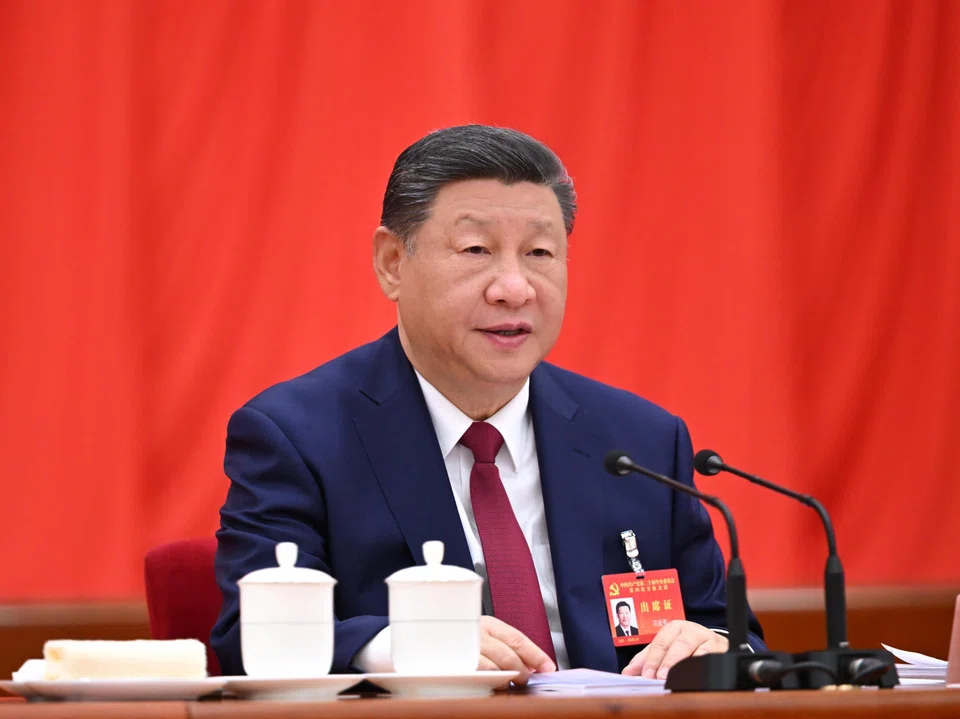
IT IS the start of the most important week of diplomacy for Donald Trump since he returned to office. A meeting between the American president and his Chinese counterpart, Xi Jinping, is planned for Thursday (Oct 30) and comes after Trump’s whistle-stop tour of many of his country’s most important Asian allies.
It will be the first time that Trump and Xi have sat down together in six years. The Chinese leader has changed in that time. A new analysis by The Economist of more than 14,000 of his speeches, writings and other communications since 2013 offers a window into his mind. Xi appears more assured and less tentative than ever before – a tough leader to sit across from at a negotiating table.
His personal megaphone is not Truth Social, but the People’s Daily, a Communist Party mouthpiece, which meticulously records his spoken and written output and publishes it in an online database. Since 2013 there have been entries which together contain more than 20 million characters (for comparison, the Bible in Chinese contains fewer than one million).
Analysts pore over this vast mound to glean insights; The Economist has adopted a computational approach. Using an algorithm to chop up Xi’s sayings into individual words, we looked at which ones have gained and lost the most in usage, measured as the share of speeches containing a word in a given year. (The analysis does not contain, however, the 130 books that Xi has apparently found time to write while in power.)
China’s leader strikes an increasingly confident note.
China is now a “strong country” (up from 7% of speeches in 2013 to 23% this year), Xi insists. It stands at the precipice of “changes unseen in a hundred years” (0% to 10%), a phrase he repeated to other leaders, including Vladimir Putin of Russia, this year. It may denote his strengthening conviction that the global balance of power is shifting in China’s direction.
Xi also speaks of the “great enterprise” (1% to 15%) of China’s renaissance. Its growing global heft may be one reason why he’s talking about Taiwan a little more often, too (4% to 7%).
It’s clear that Xi is turbocharging China’s efforts to be a tech hub. Between 2013 and this year, the phrase that has increased the most in frequency is “high quality”, appearing in 40 per cent of his speeches, up from 3 per cent. It relates to Xi’s desire for growth to come from technological innovation. “Digital” (up from 1% to 14%) and “technology” (17% to 27%) are, understandably, fast-rising terms.
Xi is keen that his country be at the forefront of new developments. Although he mentions electric vehicles and drones, he fixes upon one thing: “artificial intelligence” has cropped up in 13 per cent of speeches this year, whereas it was little mentioned before.
Perhaps it is unsurprising that Xi’s tone also appears to have become more imperious. The word that has declined the most in usage is “hope”, down to 24 per cent this year from 47 per cent in 2013. Now he likes to “govern” things (11% to 29%).
Xi also “cares” less than before (19% to 9%). “The people can eat with peace of mind, that is what I care about most,” he told a shopkeeper in 2013. No such display of fellowship with the people took place this year. Xi now feels less of a need to “strive” (53% to 38%) or to “believe” (21% to 8%), but more of a desire to “defend” (2% to 17%) and “protect” (35% to 49%). He sees fewer “problems” (52% to 36%) in China today than he used to, and greater “order” (4% to 17%).
There may be signs of hubris. Xi appears less interested in trying to “understand” (24% to 5%) than to “point out” (46% to 69%). There are fewer “discussions” (16% to 6%), and he is less keen on “opinions” (25% to 10%).
“I would like to hear your opinions and communicate with you,” he told business leaders at the Boao Forum in 2013. This year Xi has mainly exchanged views with other heads of state.
Though “self-criticism” has never been prominent (1% in 2013), it has disappeared from his lexicon for the first time this year. He speaks like a leader at the top of his game. But the line between confidence and arrogance can be thin. ©2025 The Economist Newspaper Limited. All rights reserved