The Xi-Putin show may steal the spotlight at Tianjin
The upcoming SCO summit will highlight the deepening cooperation between Beijing and Moscow
THE recent summer months have been a busy period of global diplomacy, from the Asia-Pacific to the Americas.
Yet, the season continues with what is being billed as the largest ever Shanghai Cooperation Organization (SCO) summit, starting on Saturday (Aug 31).
The upcoming leadership event in Tianjin will see leaders from more than 20 countries attend. The host, Chinese President Xi Jinping, will reportedly announce a Tianjin Declaration, including new measures to support the SCO, with the intent of giving it a new shot of life in the years ahead.
Moreover, for the first time, the SCO will adopt an “SCO+” model, inviting Asean, the Commonwealth of Independent States (CIS), the UN Development Programme and several other international organisations. For instance, Asean Secretary-General Kao Kim Hourn will lead a delegation to look at issues including potential synergy between the SCO and Asean in areas such as the digital economy.
Collectively, the 10 full members of the SCO – Belarus, China, India, Iran, Kazakhstan, Kyrgyzstan, Pakistan, Russia, Tajikistan and Uzbekistan – account for around three-fifths of the Eurasian continent, nearly half of the world’s population, and more than 20 percent of global gross domestic product.
The bloc’s influence is extended by two observer states and 14 dialogue partners. Energy interdependence is also a key dimension, with SCO members holding over 25 per cent of oil reserves, 50 per cent of gas, 35 per cent of coal, and around half the world’s uranium.
The SCO’s origins date back around 2½ decades ago, as an initiative by China, Russia, Kazakhstan, Kyrgyzstan and Tajikistan to resolve border tensions. In 2001, with the inclusion of Uzbekistan, SCO developed a wider, shared commitment to combat broader challenges of terrorism and separatism.
Over time, however, the group has evolved into an economic forum too.
The China-SCO Local Economic and Trade Cooperation Demonstration Area (Scoda) in China’s coastal city of Qingdao has, for instance, grown into a hub for international trade, integrating transport modes such as sea, road, air and rail. Scoda’s trade with SCO countries reportedly grew to 8.1 billion yuan (S$1.45 billion) in 2022 from 850 million yuan in 2019.
While some recent summits have seen a more unified SCO voice, key divisions remain. This is a challenge, as the group’s requirement for unanimity means a single member can block action – an inevitability in such a diverse group that includes rivals such as India and Pakistan.
As the current SCO chair, China has already hosted over 100 events in recent months, spanning politics, security, military, economy and trade, investment, energy, education, connectivity, technological innovation, green industry, digital economy and people-to-people exchanges.
Cumulatively, this marks a long, intensive lead-up to the leadership summit.
The summit guest list includes Xi, Indian Prime Minister Narendra Modi, Indonesian President Prabowo Subianto, Iranian President Masoud Pezeshkian, Pakistani Deputy Prime Minister Ishaq Dar, Turkish President Recep Tayyip Erdogan, Malaysian Prime Minister Anwar Ibrahim, and UN Secretary-General Antonio Guterres.
While the event ends on Sep 1, some leaders will stay on for a Sep 3 military parade commemorating the 80th anniversary of the end of World War II.
Much attention is focused on Modi’s visit which is his first to China since the pandemic. However, the trip’s importance should not be overstated. Immediately before the SCO, Modi will visit pro-Western Tokyo from Aug 29 to 30 for the 15th India-Japan annual summit.
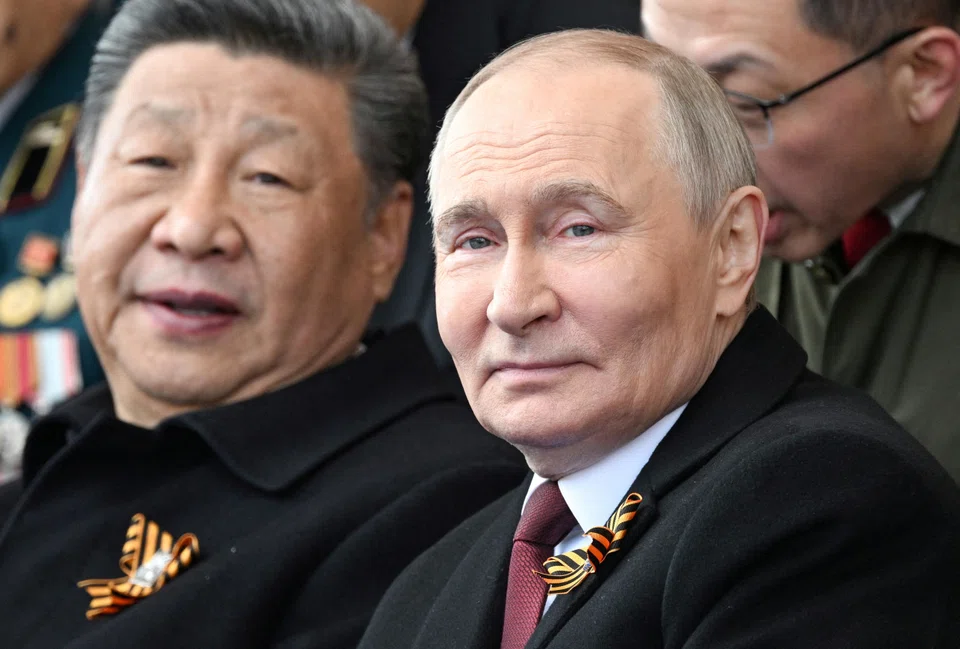
So, yet again, it will likely be the relationship between Xi and Russian President Vladimir Putin that will attract the most attention, especially after the latter’s recent Alaska summit with US President Donald Trump.
Xi has stuck with Putin in public, despite the challenges Moscow has faced in Ukraine, even asserting that bilateral relations are at “the highest-level, most profound and strategically most significant relationship between major countries in the world”, while also praising Putin as “my best, most intimate friend”.
In this context, Xi and Putin will have their own intensive bilateral dialogue in Tianjin, ranging from Ukraine to North Korea. However, the agenda will also be economic in nature, given the warming of ties in this area in the last decade.
A key turning point here was Moscow’s 2014 annexation of Crimea, after which Western sanctions began to proliferate against Russia.
In the years since, Putin has announced plans for numerous cooperation projects with Xi. This includes new methods of interbank transfers, and a joint credit agency to create a shared financial and economic infrastructure, allowing the two powers to function more independently of Western-dominated financial institutions.
China and Russia are also among the states involved in creating alternative fora to the World Bank and International Monetary Fund, including the New Development Bank. This will finance infrastructure and other projects in the Brics states, and a related special currency reserve fund.
Moreover, in the energy sector, the two states have signed a US$400 billion natural gas supply deal which envisages an approximately 3,200 km gas pipeline from eastern Siberia to north-east China. Beijing and Moscow have also agreed to move forward with a second major gas pipeline from Western Siberia to China’s Xinjiang province.
Putin has also opened parts of its upstream oil and gas sector to direct investment from Beijing. Chinese firms have also stepped in to increasingly provide Russian counterparts with technology, and Chinese banks have become a key source of loans for Russian businesses, in the wake of Western sanctions.
Taken together, the SCO summit will highlight the deepening cooperation between Beijing and Moscow. Despite disagreements from time to time, and limited progress on some bilateral projects, the positive mood music between the two presidents continues to underpin a warming of ties and a stronger alignment on regional and global issues – a strategic dialogue both will look to enhance this weekend.
The writer is an associate at LSE IDEAS at the London School of Economics