A split Democratic party echoes the 1968 race
The Dems would do well to recall that with infighting, the party could lose the Big Prize
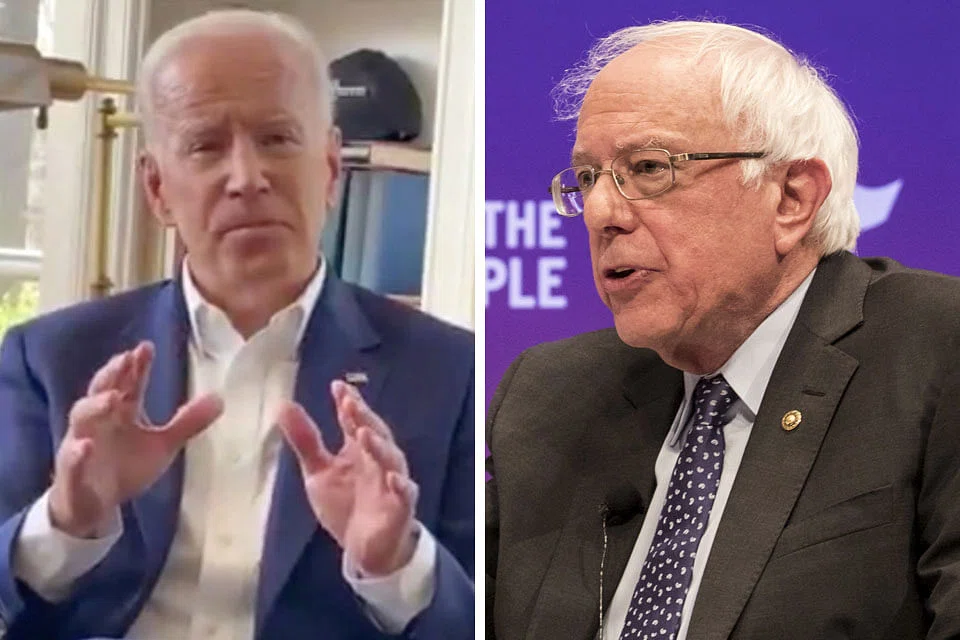
HE was considered to be one of the Democratic Party's most popular politicians. A former vice-president and senator who espoused progressive but mainstream positions on social and economic issues. Well-liked by African-Americans as well as by white blue-collar workers, he seemed to have an excellent chance of winning when he announced that he was going to run for the presidency against an unpopular Republican politician.
But major ideological and policy divisions were driving American politics and in the process, polarising the Democratic Party with left-leaning young activists challenging the mainstream Democratic presidential candidate, who was perceived as being too tied to the party's old political establishment. The youthful radicals rallied behind a more liberal candidate, dividing the Democrats and creating a sense that the party was being torn apart and tilting towards its loony left.
This explains in part why the Democratic presidential candidate and former vice-president and Minnesota senator Hubert Humphrey lost the 1968 presidential race by a very narrow margin to his Republican adversary Richard Nixon - 43.1 per cent for Nixon (31,783,783 votes) to 42.7 per cent (31,271,839) for Humphrey.
More than six decades later, another former vice-president and senator who embraces progressive but mainstream positions on social and economic issues - one of the Democratic Party's most liked leaders, popular among African-Americans as well as among white blue-collar workers - has announced that he will run for the presidency against a very unpopular Republican politician.
BEST CHANCE IN A BIG FIELD
And according to opinion polls, Candidate Joe Biden - former President Barack Obama's VP who had served as a Senator from Delaware for several terms - is now leading in the Democratic presidential primaries and has the best chance among the more than 20 candidates of beating Republican President Donald Trump in 2020.
But like in 1968, American politics in 2019 is dominated by the rage of warring tribes with no patience for compromise. Then the debate was about the war in Vietnam, civil rights and race relations. Now the fight is over social-economic inequalities, sexual abuse and identity politics. Then, as now, there is not much interest in listening to the other side, with the street protests of 1968 being replaced by online fights in 2019.
And not unlike 60 years ago, the political polarisation in the country is spilling into the Democratic Party - part inter-generational struggle, part ideological conflict.
Back then, the young students demonstrating and battling the police in front of the Democratic Presidential Convention in Chicago demanded that the party embrace a more radical agenda on the issues of the Vietnam War and civil rights. They rejected Candidate Humphrey as a representative of the Old Guard and purveyor of old ideas, and gravitated towards the anti-war presidential candidate and a symbol of change, Senator Eugene McCarthy.
History does not repeat itself but rhymes, novelist Mark Twain once quipped. And while American society and politics has changed dramatically since 1968 - with many of the ideas advanced by the young Democrats demonstrating in Chicago that year since adopted by their party if not the entire country - it seems that very similar inter-generational and ideological debates are again splitting the Democratic Party and threatening its unity, and by extension, its chances of regaining control of the White House in 2020.
The current crop of young progressive Democratic politicians - represented by the likes of Congresswoman Alexandria Ocasio-Cortez (AOC) from New York - has been dominating their party's political "conversation", describing themselves as "socialists" and promoting such plans as the Green New Deal, abolishing the electoral college, free college, Medicare-for-all, "reparations" for slavery and even votes for 16-year-olds.
Candidate Biden and his allies in the moderate "Clintonite" wing of the Democratic Party recognise that running on these and similar radical ideas would antagonise independent and centrist middle-class voters who are exhausted by three years of mismanagement and polarisation under President Donald Trump and could be persuaded to vote for a pragmatic politician like Mr Biden, an old Washington hand who would be ready and able to "normalise" the presidency and unite the country.
After all, Mr Trump had beaten Democratic presidential candidate Hillary Clinton by only a few thousand votes in states like Michigan, Wisconsin and Pennsylvania and the electable Candidate Biden could deny him re-election, especially when one considers his popularity among blue-collar voters in these states who delivered the victory to the real estate tycoon in 2016.
The role of Eugene McCarthy of 1968 is now being played by Vermont Senator Bernie Sanders, a self-proclaimed social democrat who is ready to embrace the ideas propagated by AOC and other progressives and is willing to even go beyond them. Most recently, he proposed that all the felons serving in America's jails - including the terrorist who bombed the 2013 Boston Marathon - be allowed to vote in the coming presidential elections.
One likely scenario is that Senator Sanders - who is now running a close second to Mr Biden in the Democratic primaries - will end up losing to the former VP who enjoys strong support among older voters, labour union members and African-Americans, in the same way that Candidate Humphrey defeated Senator McCarthy, the left-leaning senator who was backed by the brigades of the young anti-war Democratic activists in 1968.
But Candidate Humphrey's victory came with a big price. Many of Candidate McCarthy's supporters, including the senator himself, refused to vote for the Democratic presidential candidate in the general election.
A TORN PARTY
And the image of a torn Democratic Party and the sense among voters that the party was being hijacked by a bunch of radicals, made it very difficult for former VP Humphrey to reach out to centrist middle-class voters.
A similar political bloodbath that could take place in the Democratic Party if the former VP wins the presidential nomination, and a public perception of a party being overrun by young radicals seeking to nationalise parts of the American economy and allow felons to vote, will play directly into the hands of President Trump and ensure his re-election.
And then there is the other scenario under which the Democratic progressives win and Senator Sanders is nominated as the party's presidential candidate.
That kind of outcome may recall the other political trauma the Democrats had experienced four years later, during the 1972 presidential election when the left wing of the party, led by anti-Vietnam War activists, that had failed to smash the establishment in 1968, succeeded in getting its preferred presidential candidate, Senator George McGovern of South Dakota, nominated.
Calling for the immediate pullout of US troops from Vietnam in exchange for the return of American prisoners of war, amnesty for draft evaders who had left the country, a huge cut in defence spending and more spending on social-welfare programmes, Candidate McGovern's plans excited the political base of the party - but were rejected by the American electorate.
Republican President Nixon went on to win by a landslide, with Candidate McGovern carrying only the state of Massachusetts and the District of Columbia, and failing to win even in his own state of South Dakota. In short, the ideologues had won, but the Democrats lost.