

As Singapore infrastructure goes underground
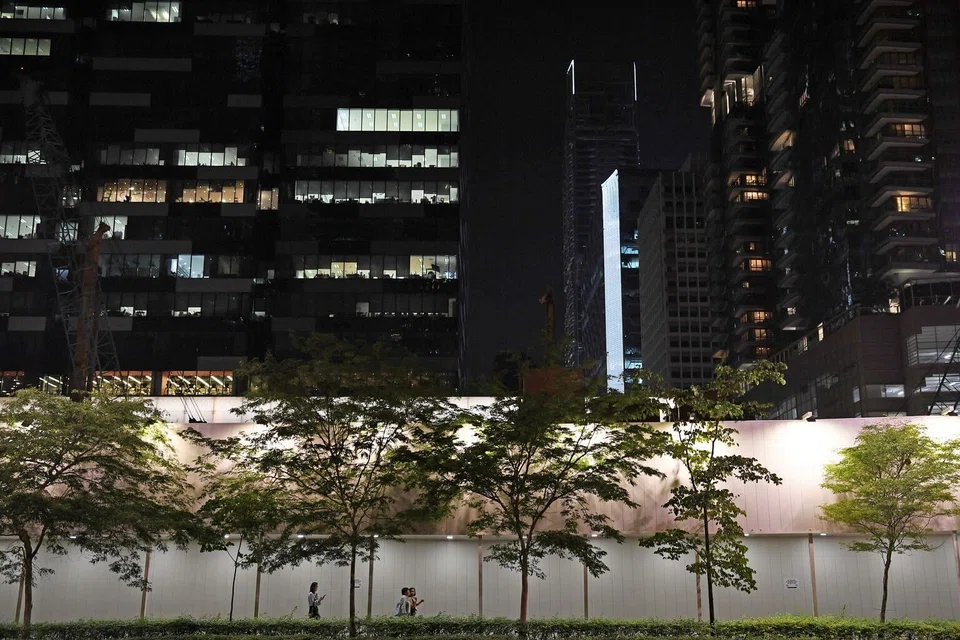
IT is estimated that by 2050, 70 per cent of the world's population will live in urban spaces, creating more megacities with limited space, facilities, and supporting infrastructure. Underground spaces are becoming an increasingly viable solution to this urban challenge.
Utilising underground spaces is not something new - for years, these spaces have been used to house industry, utility and transport infrastructure in the heart of urban areas, especially in addressing space issues in an existing city landscape.
Earlier this year, the URA revealed underground plans for Marina Bay, Jurong Innovation District and Punggol digital district, as part of its Draft Master Plan. The URA's Draft Master Plan 2019 details how Singapore will eventually need to expand underground to meet future demand for space. The city state plans to use its underground space for infrastructure such as rail lines, utilities, warehousing and storage facilities and even reservoirs. The plan, when implemented, will make Singapore one of the world's most densely built up cities both above and below ground.
In heavily developed areas, underground infrastructure can redirect urban development into more sustainable patterns. New support infrastructure can be added unobtrusively, with minimal disruption to existing activities on the same space. Going underground relieves surface congestion and makes very efficient use of spaces and existing utility infrastructure. Many cities go underground to guarantee efficient transportation systems and reliable utilities such as water, power, sewerage and communication systems.
Complex planning
Singapore has been successfully growing its underground infrastructure such as its world-renowned subway system - the world's longest fully automated metro network. Upcoming new underground projects include an underground bus interchange at Bidadari as well as the world's largest underground cooling system at Marina Bay. In land scarce Singapore, urban planners are increasingly moving below ground to free up precious space on the surface and in the process, making us a global leader in the subterranean urbanism movement.
In fact, subterranean infrastructure is becoming so commonplace that people are even beginning to take it for granted.
Underground infrastructure building is in fact more complex than surface building and must be carried out with extreme precision. In addition, skilled labour and expertise is required to mitigate issues such as structural soundness, soil conditions and waterproofing, among others. Ease of maintenance and longevity of the space are also key considerations. Tearing down or retrofitting spaces above ground to suit future needs are less complicated. Taking the effort underground requires a whole new level of considerations.
A top challenge of urban planners lies in the careful understanding of the unknown. Especially in places such as Singapore, where there is already infrastructure hidden underground, builders must study the existing area to avoid disruption to existing activities. For instance, accidentally hitting buried water and sewerage pipes, power grids and telecommunications cables can be quite costly. For example, over the last three years, Singapore has suffered 26 cases of telecommunication cable cuts, mostly due to a lack of due diligence.
Tapping technology
Another challenge when constructing underground is assessing the soil condition correctly. Typically, boreholes are drilled in the soil to take samples. These are used to determine the soil's strength, permeability, compressibility and other engineering properties. Soil analysis carried out before an underground project starts and typically lasts one to six months and makes up a whopping 10 per cent of an underground project's cost. Apart from being expensive, the boreholes drilled also create a huge risk of sinkholes.
Luckily, there is a better way to do these tasks and successfully build underground.
As Singapore continues on its journey to create sustainable, green spaces of the future, technology can help improve the safety, efficiency and productivity of underground building.
New technologies that allow underground assets to be mapped with greater precision helps identify underground utility profile before the start of any work. For instance, companies such as Futurus Construction have a ground penetrating radar that uses a non-intrusive and non-destructive method to detect utilities underground to help clients detect issues and increase efficiency and productivity. Technology has also enabled detailed underground pipeline mapping of utilities presented in 3D precision to aid builders in their decision making.
Singapore is known for its heavy tropical rainfall that can sometimes cause flash floods, subjecting roads and utility networks on the surface to more wear and tear. Placing such networks and utilities underground is therefore seen as an increasingly viable solution. Companies such as HPC AG, who provide heavy rain hazard maps and flood hazard assessments and risk analysis, are vital to successful underground developments in these weather conditions.
As underground building becomes more integral to Singapore's future, the build environment industry is gearing up its capabilities and solutions to help improve the quality of such underground construction and in turn improve the experience of users in the spaces. The inaugural International Built Environment Week happening later this year will see a congregation of players who will shape the future of Singapore's underground spaces. Some of these may not be obvious to the layman.
Underground building is expensive and complex, but the benefits outweighs the investment. Investing and tapping the latest technologies in this area will help us enable the full potential of a compact yet liveable city.
TRENDING NOW

32 companies, 6 individuals bag accolades at Singapore Corporate Awards 2026

He built the Vingroup empire. Now South-east Asia’s richest man is handing some key roles to his sons
URA to review guidelines on floor space to give developers more design flexibility: Chee Hong Tat

Chagee, Mixue and Luckin won the market. Sustaining their edge is the harder part

