Be alert to Reits using leverage and paying fees in units to prop up distribution per unit

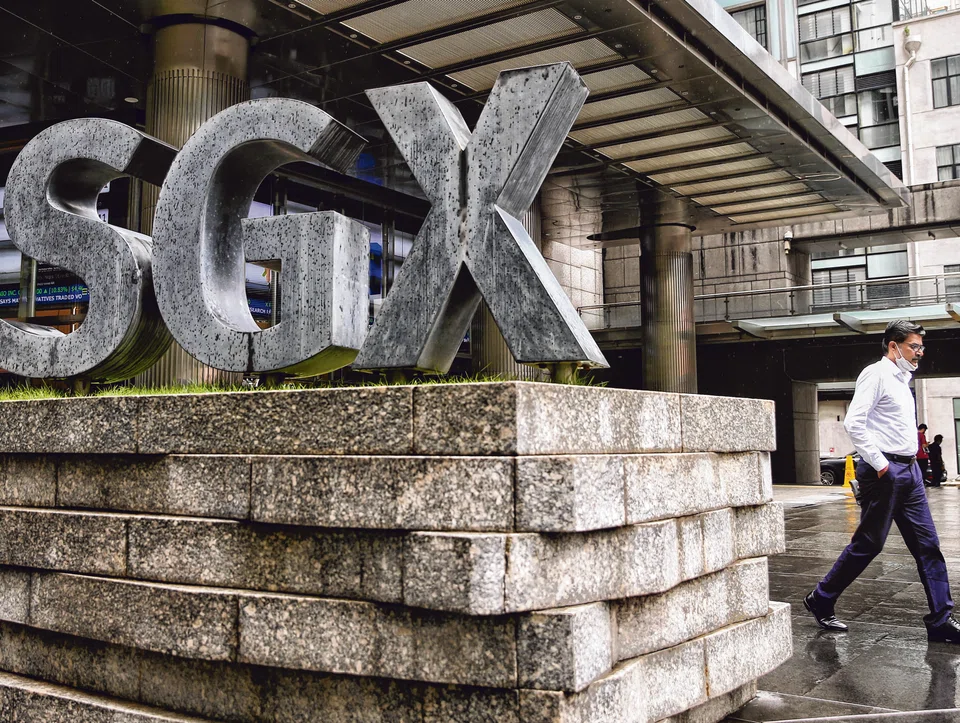
NUMEROUS Singapore-listed real estate investment trusts (Reits) posted growth in distribution per unit (DPU) from a year ago for the latest quarter or half-year ended June 2022. Some trusts are benefiting from Singapore’s opening up amid living with Covid.
DPU matters greatly to many Reit investors - typically, this is money that is paid out to the investors. For retirees, receiving recurring distribution income from Reits, which may grow over time, is very useful, especially with rising inflation.
Still, many Reit managers expressed caution on the path ahead. Several managers were at pains to highlight efforts made to manage their borrowings amid rising interest rates, such as having a high proportion of fixed rate debt, a long average debt maturity and well-spread out debt maturities.
Like many businesses, Reits benefited from low borrowing costs. The DPU of Reits could be boosted by trusts taking on more borrowings at low interest rates. Perhaps it is useful for investors, who focus on DPU, to understand how the use of leverage and payment of fees to the manager in the form of units can be used to boost a Reit’s DPU.
Use of debt
Typically, a Reit owns a portfolio of properties, which is bought by using a mix of debt and equity, with unitholders of the trust contributing the equity.
Often, rental income contributes almost all of gross revenue. Net property income (NPI) is derived after deducting property operating expenses from revenue. Distribution income is the NPI less expenses such as debt costs and management fees. Distribution income is divided by the number of Reit units outstanding to get the DPU.
If interest costs on debt is less than the NPI yield, using more debt will boost the returns that a Reit’s unitholders can receive. Generally, using more floating rate debt instead of fixed rate debt helps lower debt cost. However, when interest rates rise, a trust, which borrows more at floating rather than fixed rates, is less insulated from the adverse impact of rising interest rates.
Paying fees in units
Many Reits pay their managers fees via a mix of cash and new units of the Reit. The initial public offering prospectuses of Singapore’s two newest Reits - Daiwa House Logistics Trust (DHLT) and Digital Core Reit (DC Reit) - show that the management fee, which comprises base fee and performance fee, as well as the acquisition fee and divestment fee payable to the manager can be paid via cash and/or units as the manager may elect.
With DHLT, the manager will collect 50 per cent of the base fee and performance fee, if any, in the form of units and the remaining 50 per cent of the fees in cash for 2022. The manager of DC Reit will collect 100 per cent of the base fee and performance fee in the form of units for 2022 and 2023.
Where a Reit pays its manager fees in cash, this expense reduces the distributable income. If a Reit pays its manager fees in units, there is no immediate hit to the distributable income. In such an instance, the number of units in issue rises, which can negatively impact the DPU in future.
Results of simulation
I ran a simulation to analyse the impact of the use of leverage and payment of fees to the manager in units on dpu. I assumed that a Reit owns S$2 billion of property that generates NPI yield of 4.5 per cent. I used borrowing costs of 2.5 per cent per annum, annual management fees of 0.6 per cent of assets and other expenses of S$2 million.
Under Scenario A, the Reit is funded 80 per cent by equity and 20 per cent by debt, and the manager’s fees are paid all in cash. Under Scenario B, the Reit is funded 60 per cent by equity and 40 per cent by debt, and the manager’s fees are paid all in units.
The result, as shown in the table, is that DPU under Scenario B is 37 per cent higher than under Scenario A. An investor, who focuses on DPU, may price a Reit structured along the lines of that in Scenario B much more richly than that in Scenario A.
But there can be costs related to using more debt and paying fees via units. When a Reit uses more debt, there is less capacity to borrow more in order to fund a potentially attractive investment opportunity, as Reits have to adhere to borrowing limits under Singapore’s framework.
If credit market conditions tighten, the refinancing risk when loans mature is higher for a more highly-geared Reit. Also, a more highly-geared Reit risks breaching borrowing limits should property valuations fall substantially.
The issuing of new Reit units to pay the manager’s fees can dilute the interest of existing unitholders and hamper the rate of DPU growth. Some Reit investors may also be less sensitive to the amount of fees that are being paid to the manager in such a situation. For a Reit that trades below book value, issuing new units based on market price means new equity is being issued at less than book value, which may not make sense.
Reits are structured real estate products. Clever structuring can prop up the return being generated from the underlying real estate, be it from using rental income support, paying fees in units or using debt among others.
Much as DPU matters, investors may do well to place as much emphasis on the net asset value (NAV) per unit. So long as the valuations behind the NAV are robust, the NAV gives a good estimation of the value of the assets in the Reit that can be potentially realised.
While it is hard to buy a physical property in Singapore at below market value, one can find Reits that trade at a substantial discount to NAV. Some Reits that trade below book value may offer superior value to buying physical properties and thus merit serious consideration by investors.