

Behind the human error that crashed NETS

Angela Tan
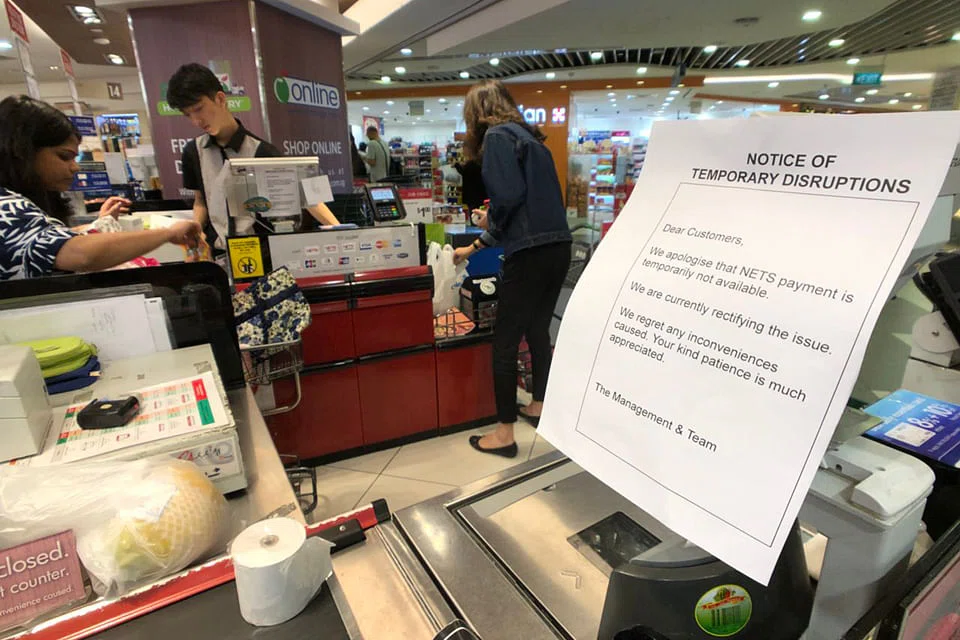
"AN inadvertent human error during system maintenance" has been blamed for the nation-wide crash of the NETS system on Feb 2.
The widespread disruption that afternoon affected millions of users of the 30-year-old cashless payment scheme. Many angry customers took to social media to vent their frustration at the unavailability of the NETS services, including those for point-of-sales transactions and top-up services.
NETS, a national debit scheme owned by DBS Bank, OCBC Bank and United Overseas Bank, enables customers with accounts in these banks and other banks (like Standard Chartered, HSBC and Maybank) to use their ATM cards to make payments.
For about two hours on Feb 2, transactions at some 100,000 acceptance points island-wide (at major retailers, food courts and supermarkets, for example) ground to a halt. Besides online payments, NETS serves 35,000 Unified Point-Of-Sale terminals and 30,000 QR acceptance points.
On Tuesday, NETS announced that it had completed investigations into the cause of the incident, and that an inadvertent human error during system maintenance, which disrupted the NETS EFTPOS connection to participating banks, was the cause.
"The incident was not due to any systemic risk or security issues. Nonetheless, such an error should not have occurred. NETS has submitted an investigation report to the Monetary Authority of Singapore. It has also engaged an independent consultant to validate and further enhance its processes to prevent the recurrence of similar incidents."
Indeed, the error should not have occurred. The incident was a serious blow to the reputation of Singapore's most ubiquitous form of cashless payment - and came at a time when the government has put its drive towards a cashless society into fifth gear too.
In 2016, NETS processed some S$24 billion in transaction value.
Experts say the incident again raises wider questions about how robust the Singapore bank system and safeguards are.
Modern banking depends on effective, reliable and resilient IT systems. Over the decades, the IT systems of the banks have evolved into a complex web of processes that make them vulnerable to all sorts of failings. Has the NETS system made the necessary technological improvements needed to keep ahead of changing consumer needs?
A complete overhaul of NETS IT architecture may be extreme and too costly, but IT experts say the solution is to develop back-up systems in case anything fails.
Studies have shown that human error accounts for up to 80 per cent of accidents and lapses, so if human error can be eliminated, any service provider would have gone a long way to prevent accidents.
Core processes should thus be streamlined and automated to achieve better control. For example, by automating manual checks, human error can be eliminated; more up-to-date and accurate data retrieval can also be done, allowing for a fast fix for glitches and problems.
As payments are the most frequent financial services that consumers engage in, consumers expect any payment system to be resilient, so that banking activities can withstand the effect of disruptive events, with no margin for error.
NETS needs to assure consumers that its system is built to meet the demands of the digital age if it wants to stay relevant.
READ MORE: MAS sets out e-payment guidelines for banks, consumers
TRENDING NOW

One-third of Singapore-listed firms at risk in severe AI downturn: MAS

‘Not done’: Keppel CEO Loh Chin Hua transformed the group, but says there’s ‘still a lot to do’

He built the Vingroup empire. Now South-east Asia’s richest man is handing some key roles to his sons

‘We don’t want to stay as we are’: CEO Patrick Ng builds a more resilient Huationg

