

Betting on Singapore banking trio to keep their blue-chip status this decade

Leslie Yee
THE past decade or so has been a rough one for many big Singapore-listed groups. Keppel Corporation and Sembcorp Marine have seen their fortunes, founded on building oil rigs, turn south. Singtel’s dividend per share was 7.5 Singapore cents for financial year ended Mar 31, 2021 (FY21), versus 17.5 Singapore cents for FY19.
Singapore Airlines had to raise large sums of capital amid the ravages of the Covid-19 pandemic. Facing a decline in its traditional print media business, Singapore Press Holdings undertook a restructuring, spinning off its media business.
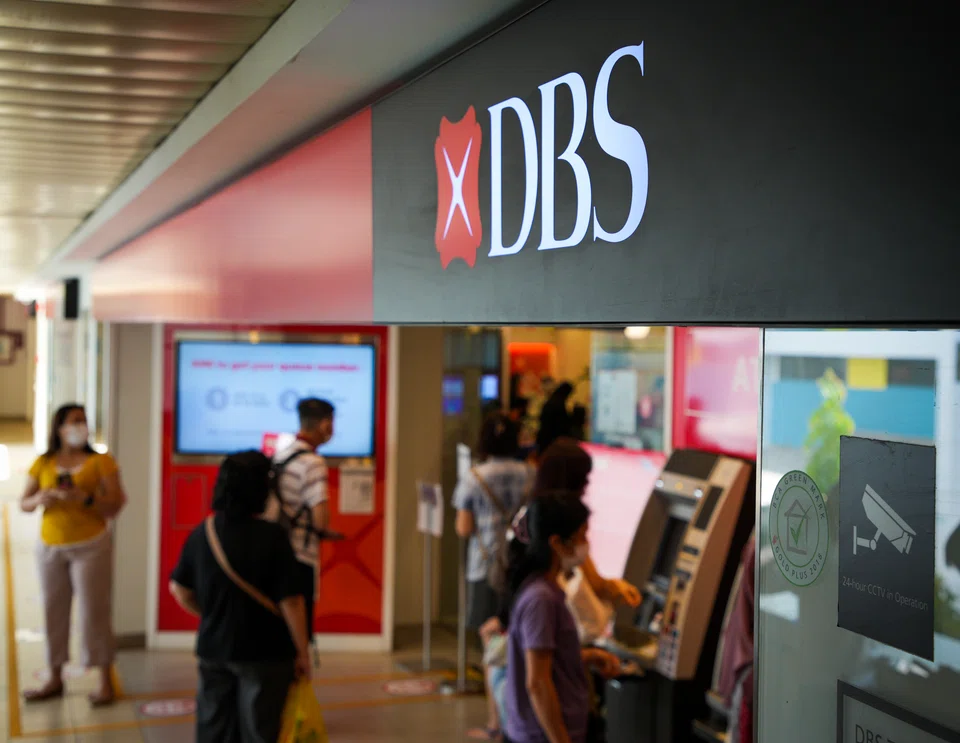
Amid events such as the global financial crisis of 2007-2008 and the pandemic, the trio of local banks, DBS, OCBC and UOB, have thus far proved to be true blue-chip companies on the local bourse.
Typically, a blue-chip stock is a large, well-established and financially sound company that has operated for many years and has dependable earnings, often paying dividends to investors.
Compared with pre-pandemic share prices as at end-2019, DBS, OCBC and UOB are up by around 28 per cent, 9 per cent and 12 per cent, respectively, based on share prices at May 6, 2022. For 2021, the 3 banks posted growth in net profit from a year ago of between 35 and 44 per cent. Their return on equity (ROE) was 12.5 per cent, 9.6 per cent and 10.2 per cent, respectively, in 2021. Shareholders of each bank received a higher dividend in 2021 versus 2020.
Positive outlook
While all 3 banks saw Q1 2022 net profit fall by 10 per cent from a year ago, their outlook looks generally positive.
Despite uncertainties in the global growth outlook given the war in Ukraine, China’s Covid-related lockdowns, higher inflation and rising interest rates, the economies of Singapore and its regional neighbours are growing. The banks may also gain from rising interest rates, as net interest margin could expand should interest rates on loans rise faster than deposit rates.
Can investors continue to bank on the trio over the longer term?
Going forward, the ability of management to grow the loan book, manage credit quality, market products, master technology and build their brands may lead to differences in performance among the trio. Also, exposure to different geographic markets and customer segments can contribute to relative outperformance or underperformance.
However, what matters most is whether the banks’ business models can function in this decade and beyond. Globally, many corporate giants may see fortunes wane amid disruption.
How will oil majors fare in a world that is embracing carbon neutrality? Can traditional automobile giants thrive as the world moves to electric vehicles?
Digitalisation creates huge opportunities for banks. Digital tools enable customers to manage their funds more efficiently and effectively. Corporate and retail customers can access information and a host of investment options easily, quickly and cheaply.
Digital-only banks
But digitalisation also brings a threat in the form of digital-only banks. In Singapore, a Grab Holdings-Singtel consortium and technology giant Sea each bagged a digital full-bank licence, while a unit of Ant Group and a consortium comprising Greenland Financial Holdings Group, Linklogis Hong Kong Ltd, and Beijing Co-operative Equity Investment Fund Management secured digital wholesale bank licences.
Armed with capital injections, infrastructure investments and mass hirings, Singapore’s digital-only banks may make their debuts soon. Near term, the new players may not dent the performance of DBS, OCBC and UOB - all of whom have invested heavily in technology, loyal customers, sticky deposit bases and strong branding.
Founded in 2012, Grab disrupted ride hailing services in Singapore and elsewhere. In 2021, Grab went public by merging with a special-purpose acquisition company, in a deal which raised US$4.5 billion.
In this digital age, some upstarts, backed by capital and talent, can quickly become formidable disruptors.
Without costly physical branches to run, a digital-only bank can potentially be more cost efficient in serving retail customers, especially by focusing on more profitable segments or business lines. As more customers become comfortable banking and investing digitally, the acceptance of digital-only banks may grow.
Still, it could take several years of pain and further investments for the new entrants to gain traction and be profitable. Will the new entrants have staying power?
Meanwhile, favourable trends buoy the local banking trio. Singapore is a leading wealth management hub tapping into Asia’s growing wealth. Households here are growing in affluence amid rising incomes and asset prices. Singapore’s corporates and investors are pursuing growth in the region and beyond. Singapore, after all, is a hub for trade and business activities.
The 3 banks have built up sizeable regional footprints, whether in South-east Asia or Greater China, and can ride on growth in these populous and dynamic regions.
The banks’ credit standing is strong, and they benefit from being headquartered in Singapore, where regulations are robust and forward-thinking.
Invariably, there will be future global crises, which strain the global financial system and adversely impact many banks in an inter-connected world. There is also a growing risk of a global recession. Still, Singapore’s ability to support the economy in a crisis, with assistance for businesses and people as it did during the pandemic, means that a rapid deterioration of Singapore banks’ loan books can be kept at bay.
Bright and motivated leaders are driving the growth of the 3 banks. As strong performing businesses, the banks are also able to attract and retain talent amid a war for talent. It is likely that the 3 would continue to deliver solid returns, with ROE possibly in the double digits.
Nonetheless, investors must not be complacent about the challenges, whether from digital-only banks or the likelihood that financial transactions could shift to other platforms, and weaken the banks’ competitive positions.
While shareholders should be able to sleep well, they should not be lulled into missing potential chinks in the armour.
TRENDING NOW

World’s largest offshore wind platform by Seatrium consortium on track to be completed by 2028

Is stamp collecting enjoying an analogue revival or are its best days over?

GovTech retrenches another 38 staff in second round of layoffs
MBS adjusted property Ebitda falls 20.6% in Q3 with fewer high-roller visits, weaker hold

